


Blow Molding Machine
Your Professional Blow Molding Machine Supplier
Our goal is to become your true partner in the field of blow molding machine in China. Taizhou Huangyan Maiwei Machinery Co.,Ltd with advanced technology and ideas adopted at home and aborad. We beat our competitors with excellent quality and advanced technology in fierce market, and we grow up together with customers.
Why choose us
Product Application
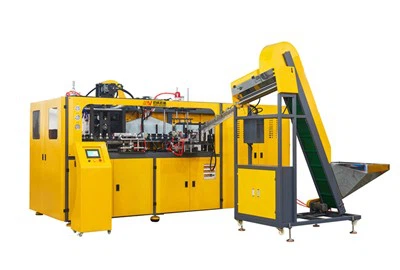
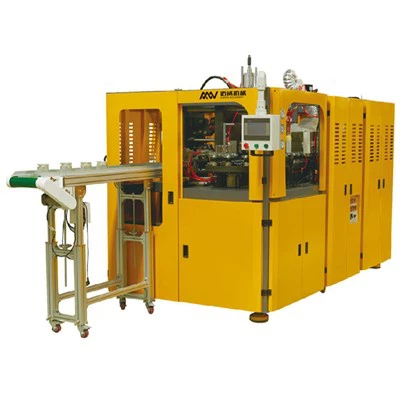
We specialize in designing, manufacturing and selling more than 20 models of fully automatic, semi-automatic and manual bottle blowing machines in three categories of PET, PP and PE, which are used to produce plastic containers such as mineral water, beverages, cosmetics, milk, oils, etc. from 5ml to 40L.
Product Market
Excellent quality, stability and good cost performance have won us customers from China, Southeast Asia, the Middle East, Africa, Europe and America.
Our Service
The company has a professional sales team to provide you with high-quality pre-sales consulting services. During the order production process, customers can communicate with us at any time to understand the production progress. At the same time, we provide high-quality after-sales service to meet the different needs of customers.





Advantages of Blow Molding Machine
Cost-Efficiency
Blow molding is a cost-effective manufacturing process, particularly for high-volume production. It allows for the efficient use of materials, minimizing waste, and reducing production costs.
Versatility
Blow molding machines can produce a wide range of products with varying shapes, sizes, and complexities. This versatility makes them suitable for industries such as food and beverage, pharmaceuticals, cosmetics, and automotive.
Lightweight Products
Blow molding can create lightweight containers and parts, which is essential for industries where weight is a critical factor, such as transportation and packaging. Lightweight materials reduce shipping costs and fuel consumption.
Speed and Efficiency
Blow molding is a high-speed process, capable of producing a large number of products in a relatively short time. This efficiency is valuable for meeting tight production schedules and market demands.
Durability and Strength
Blow-molded products can be designed to meet specific strength and durability requirements, making them suitable for applications where robustness is essential, such as automotive components.
Consistency and Quality
Modern blow molding machines incorporate advanced technology and automation, resulting in consistent product quality and reduced defects.
Raw Materials Used in Blow Molding Machine Production


High-density Polyethylene (HDPE)
Among the types of polyethylene, HDPE is the more dominant raw material in terms of market share. Its molecular structure is linear with little branching resulting in higher intermolecular forces.
Low-density Polyethylene (LDPE)
LDPE has a branched polymer chain that has weak intermolecular forces. This results in lower tensile strength and barrier properties. Nevertheless, it has better impact strength and resilience than HDPE.
Polyethylene Terephthalate (PET)
PET, specifically biaxially oriented PET, is known for its low permeability to carbon dioxide. This makes the material desirable for producing bottles for carbonated beverages. The downside of using PET, however, is its affinity with water.
Polypropylene (PP)
Polypropylene is a polymer that can have a wide range of properties that depends on its molecular weight, morphology, crystalline structure, additives, and copolymerization. It can be made into polymers with a high degree of crystallinity.
Polyvinyl Chloride (PVC)
Polyvinyl Chloride is another versatile material that can be formulated with different stabilizers, plasticizers, impact modifiers, processing aids, and other additives. It can be made into rigid or flexible plastics by modifying the amount of plasticizers.
Nylon or Polyamide (PA)
Polyamide is considered as an engineering plastic characterized by its high toughness, high impact strength, resistance to solvents, good abrasion resistance, and can be modified to have high heat resistance. PA production mostly goes into the manufacture of fibers.
Polycarbonate (PC)
Polycarbonate is easily processed by different molding methods, with injection molding and sheet extrusion being the most common. In blow molding, its usual application is bottle production.
Copolyester
Copolyesters are described as having very high thermal oxidation stability, inherent flame resistance, chemical inertness, excellent clarity, and good mechanical properties. It can be molded into thin-walled containers at high speeds.
Cyclic Olefin Copolymer (COC)
COC is a family of fully amorphous polymer resins that are desired because of its comparable properties with PVC without the negative effects. It is best suited for food packaging, medicine bottles, and vials production because of its low water vapor permeability.
Acrylonitrile Butadiene Styrene (ABS)
ABS is a common plastic that is characterized by having good hardness and rigidity while having some degree of toughness. When blow molded, they can have a very good surface finish making them suitable for the manufacture of consumer goods.

Blow molding machines are widely used in automobiles, home appliances, agriculture, construction, electrical and electronic, light industry and other industries. In recent years, with the vigorous development of automobile, electrical, electronics, communication and machinery industries, the demand for modified engineering plastics will increase significantly, and various heat-resistant engineering plastics will be widely used. High-performance engineering plastics such as polyphenylene sulfide (PPS), polyimide (PIM), polyetheretherketone (PEEK), polysulfone (PSF) and liquid crystal polymer (LCP), because of their good motor performance and smoothness. The size is not disordered and other characteristics, and some also have good flame retardancy, radioactive resistance, chemical resistance and mechanical properties, so it is used in electronic appliances, automobiles, instruments and meters, home appliances, aviation, paint industries, petrochemicals and rockets, Aerospace and other fields have applications where the more the meter is, the more important it is.
Installation Requirements of Blow Molding Machine
Although the new products of engineering plastics are constantly increasing, the application fields are constantly being developed, and the cost is gradually reduced due to the expansion of production equipment, but today, with the continuous development of modification equipment and modification technology, general thermoplastic resins continue to have engineering properties through modification. It has already seized the application market of some traditional engineering plastics and has become a new driving force for the sustainable development of the plastics industry.
The layout of the machine in the plant should meet the convenience of changing the mold and maintaining. Generally leave 1~1.5 meters of space around it, and there should be a distance of about 2 meters between the two machines.
In order to avoid vibration during work, the machine should be placed on the cement foundation. The foundation thickness is ≥459mm, the concrete mark is not less than 200#, and the horizontal error of the foundation is 1/1000. The exposed part of the pit in the foundation should be prepared with a suitable cover plate (installed in the tunnel pipeline) to prevent accidents. The load capacity of the installed foundation is not less than 8MPa.
Installation is divided into fixed installation and mobile installation. Fixed installation is to transport the machine to the foundation slab, install anchor bolts, initially adjust the level, and then pour concrete into the anchor bolt holes, and then fine-tune the level after the concrete is solidified. It can also be fixed directly on the foundation slab with expansion bolts. The tilt angle of the machine is not more than 3°.
Before starting the operation, check the blow molding machine to see whether lubricant needs to be added. Before production, check the reliability of all parts of the machine. If loose parts are found, strengthen them in time to prevent adverse consequences. Before starting the machine, check the power supply, air pressure and water. When starting the blow molding machine, check the relevant measures, for example, whether the grille and emergency stop are normal.
Check whether the lamp tubes and lighting equipment related to the blow molding machine are normal, replace them in time in case of damage, and check whether the devices related to equipment leak air or water.
Before the operation of the machine, the machine should be cleaned first, and the mold should be cleaned and protected at the beginning and end of the operation. The blow molding machine should be preheated for half an hour before starting operation. If there is no problem after a period of time, it will be officially put into production.
