

In the dynamic landscape of manufacturing, preform mold prototyping plays a pivotal role in bringing innovative product designs to life. As a seasoned preform mold supplier, I've witnessed firsthand the transformative power of 3D printing in this field. This blog post aims to explore how 3D printing can be effectively utilized in preform mold prototyping, offering insights and practical tips based on my years of experience.
Understanding Preform Mold Prototyping
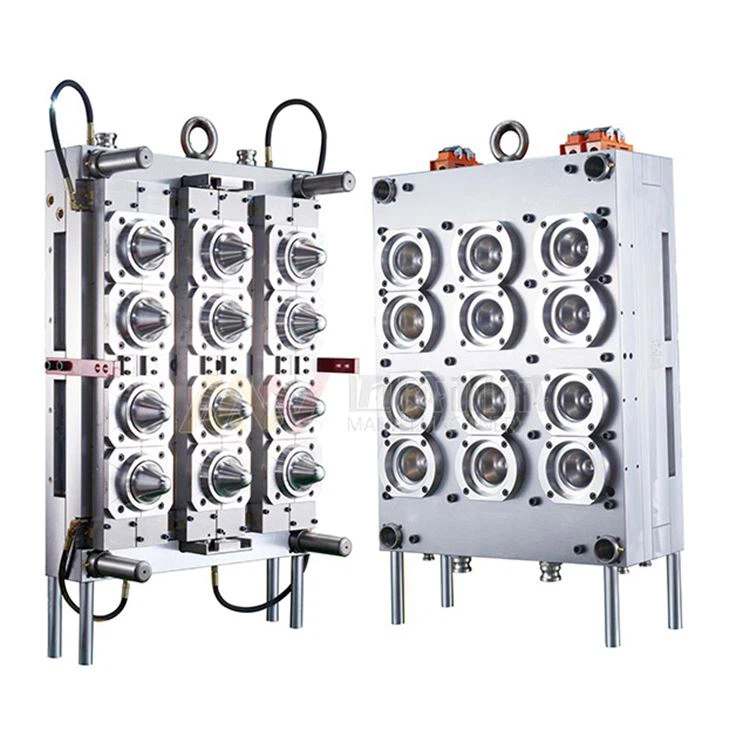
Before delving into the application of 3D printing, it's essential to understand what preform mold prototyping entails. Preform molds are used to create preforms, which are intermediate products that are later blow - molded into final plastic containers such as bottles. Prototyping these molds is a crucial step in the product development process, allowing manufacturers to test the design, functionality, and performance of the preform before mass production.
Traditional methods of preform mold prototyping often involve machining processes like CNC milling. While these methods can produce high - quality molds, they are time - consuming and expensive, especially for complex designs. This is where 3D printing comes in as a game - changer.
The Advantages of 3D Printing in Preform Mold Prototyping
1. Design Flexibility
One of the most significant advantages of 3D printing in preform mold prototyping is its unparalleled design flexibility. With 3D printing, it is possible to create molds with intricate geometries and internal structures that would be extremely difficult or even impossible to achieve using traditional machining methods. For example, complex cooling channels can be integrated directly into the mold design, improving the cooling efficiency during the preform molding process. This not only reduces the cycle time but also enhances the quality of the preforms.
2. Rapid Prototyping
Time is of the essence in the manufacturing industry, and 3D printing enables rapid prototyping of preform molds. Unlike traditional machining, which can take weeks or even months to complete a mold, 3D printing can produce a prototype in a matter of days or even hours, depending on the complexity of the design. This rapid turnaround time allows manufacturers to quickly iterate on their designs, test different concepts, and bring products to market faster.
3. Cost - Effectiveness
For small - scale production or prototyping, 3D printing can be a more cost - effective option compared to traditional machining. Since 3D printing builds the mold layer by layer, there is less material waste, and the setup costs are significantly lower. Additionally, the ability to make design changes easily without incurring high tooling costs makes 3D printing an attractive choice for preform mold prototyping.
How to Use 3D Printing in Preform Mold Prototyping
Step 1: Design the Mold
The first step in using 3D printing for preform mold prototyping is to create a detailed 3D model of the mold. This can be done using computer - aided design (CAD) software. When designing the mold, it is important to consider factors such as the shape and size of the preform, the material to be used, and the cooling requirements. For example, if the preform has a unique shape, the mold design should be optimized to ensure uniform filling and cooling.
Step 2: Select the Right 3D Printing Technology
There are several 3D printing technologies available, each with its own advantages and limitations. Some of the commonly used technologies for preform mold prototyping include Stereolithography (SLA), Selective Laser Sintering (SLS), and Fused Deposition Modeling (FDM).
- SLA: This technology uses a laser to cure a liquid resin, creating a solid object layer by layer. SLA offers high resolution and smooth surface finishes, making it suitable for creating molds with fine details.
- SLS: SLS uses a laser to sinter powdered materials, such as nylon, into a solid object. It is known for its strength and durability, making it a good choice for molds that need to withstand high pressures during the molding process.
- FDM: FDM works by extruding a thermoplastic filament through a nozzle to build the object layer by layer. It is a cost - effective option and can be used to quickly produce large - scale molds.
The choice of 3D printing technology depends on factors such as the required accuracy, surface finish, material properties, and budget.
Step 3: Choose the Appropriate Material
The material used for 3D printing the preform mold is crucial as it affects the performance and durability of the mold. Some of the materials commonly used for 3D - printed preform molds include:
- Resins: Resins are often used in SLA 3D printing. They can provide high - resolution molds with good surface finishes. However, they may not be as strong as some other materials and may require post - processing to improve their mechanical properties.
- Nylon: Nylon is a popular material for SLS 3D printing. It has excellent strength, flexibility, and chemical resistance, making it suitable for molds that need to withstand high pressures and temperatures.
- Thermoplastics: Thermoplastics, such as ABS and PLA, are commonly used in FDM 3D printing. They are relatively inexpensive and easy to work with, but they may have lower heat resistance compared to other materials.
Step 4: Print the Mold
Once the design, technology, and material have been selected, it's time to print the mold. This involves loading the 3D model into the 3D printer and setting the appropriate printing parameters, such as layer height, print speed, and temperature. During the printing process, it is important to monitor the printer to ensure that the mold is being printed correctly.
Step 5: Post - Processing
After the mold has been printed, it may require some post - processing to improve its performance. This can include sanding, polishing, and coating the mold to achieve a smooth surface finish and improve its durability. Additionally, any support structures that were used during the printing process need to be removed.

Step 6: Test the Mold
Once the post - processing is complete, the 3D - printed preform mold is ready to be tested. This involves using the mold to produce preforms and evaluating their quality, such as the dimensional accuracy, surface finish, and mechanical properties. Based on the test results, any necessary adjustments can be made to the mold design or the printing process.
Case Studies
To illustrate the effectiveness of 3D printing in preform mold prototyping, let's look at a few case studies.
Case Study 1: A beverage company
A beverage company wanted to develop a new bottle design with a unique shape. Using traditional machining methods, it would have taken a long time and a large budget to create a prototype mold. Instead, they decided to use 3D printing. They designed the mold using CAD software and printed it using SLA technology. The 3D - printed mold was produced in just a few days, allowing the company to quickly test the new bottle design. Based on the test results, they were able to make some design adjustments and produce a final mold using traditional machining methods. This approach saved them a significant amount of time and money in the prototyping phase.
Case Study 2: A medical device manufacturer
A medical device manufacturer needed to create a preform mold for a small - scale production of plastic containers for medical samples. They chose to use 3D printing with nylon material using SLS technology. The 3D - printed mold was able to withstand the high pressures and temperatures during the molding process and produced high - quality preforms. The cost - effectiveness and rapid turnaround time of 3D printing allowed the manufacturer to quickly start the production of the medical containers.
Conclusion
3D printing offers numerous advantages in preform mold prototyping, including design flexibility, rapid prototyping, and cost - effectiveness. By following the steps outlined in this blog post, manufacturers can effectively use 3D printing to create high - quality preform molds and bring their product designs to market faster.
As a preform mold supplier, I am committed to helping our customers leverage the latest technologies, such as 3D printing, to achieve their manufacturing goals. Whether you are looking for a Preform Die, a Wide Mouth Preform Mold, or an Injection Preform Mold, we have the expertise and resources to provide you with the best solutions. If you are interested in learning more about how we can assist you with your preform mold prototyping needs, please feel free to contact us for a consultation.
References
- Gibson, I., Rosen, D. W., & Stucker, B. (2014). Additive Manufacturing Technologies: 3D Printing, Rapid Prototyping, and Direct Digital Manufacturing. Springer.
- Wohlers, T., & Gornet, P. (2018). Wohlers Report 2018: 3D Printing and Additive Manufacturing State of the Industry. Wohlers Associates.
- Campbell, I. A., Williams, R. B., & Tuck, C. J. (2011). A review of the machinability of additively manufactured metals. International Journal of Machine Tools and Manufacture, 51(6), 455 - 462.


