

In the competitive landscape of the plastic packaging industry, the efficiency of preform die production is a critical factor that directly impacts a company's bottom line. As a preform die supplier, we understand the challenges and opportunities that come with optimizing this process. In this blog post, we will explore several strategies to improve the efficiency of preform die production, drawing on our experience and industry best practices.
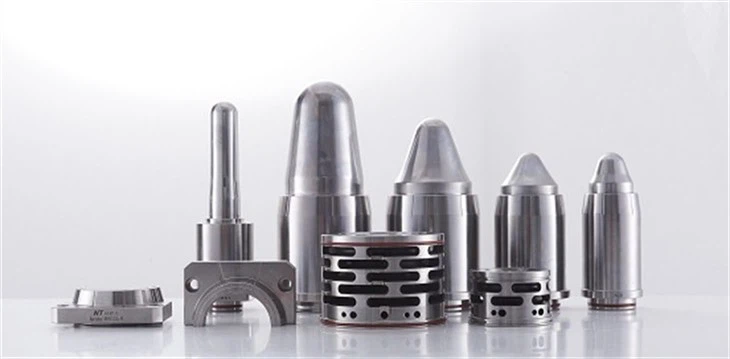

1. Advanced Design and Engineering
The foundation of efficient preform die production lies in advanced design and engineering. By leveraging the latest computer-aided design (CAD) and computer-aided manufacturing (CAM) technologies, we can create highly precise and optimized die designs. These technologies allow us to simulate the manufacturing process, identify potential issues, and make necessary adjustments before production begins.
For example, using CAD software, we can model the preform die in three dimensions, analyzing factors such as material flow, cooling, and ejection. This helps us to optimize the design for maximum efficiency, reducing cycle times and improving the quality of the final product. Additionally, CAM technology enables us to generate accurate machining programs, ensuring that the die is manufactured with the highest level of precision.
Moreover, our team of experienced engineers is constantly researching and implementing new design concepts to improve the performance of our preform dies. We stay up-to-date with the latest industry trends and innovations, incorporating features such as hot runner systems, multi-cavity designs, and advanced cooling channels into our products. These design enhancements not only improve the efficiency of the production process but also enhance the quality and consistency of the preforms.
2. High-Quality Materials and Manufacturing Processes
The choice of materials and manufacturing processes has a significant impact on the efficiency and durability of preform dies. At our company, we use only the highest quality materials, such as high-grade steel and aluminum alloys, to ensure the longevity and performance of our products. These materials are carefully selected for their strength, hardness, and resistance to wear and corrosion.
In addition to using high-quality materials, we also employ advanced manufacturing processes to ensure the precision and accuracy of our preform dies. Our state-of-the-art machining facilities are equipped with the latest CNC machines, which allow us to manufacture complex die components with tight tolerances. We also use advanced surface treatment techniques, such as nitriding and coating, to improve the surface hardness and wear resistance of the dies.
Furthermore, we have implemented a strict quality control system to ensure that every preform die meets our high standards of quality. Our quality control team conducts rigorous inspections at every stage of the manufacturing process, from raw material inspection to final product testing. This ensures that our preform dies are free from defects and perform reliably in production.
3. Lean Manufacturing Principles
Lean manufacturing principles are essential for improving the efficiency of preform die production. By eliminating waste, reducing lead times, and improving productivity, we can optimize our production process and deliver high-quality products to our customers in a timely manner.
One of the key principles of lean manufacturing is the concept of value stream mapping. This involves identifying the value-added and non-value-added activities in the production process and eliminating or reducing the non-value-added activities. By streamlining the production process, we can reduce cycle times, improve quality, and lower costs.
Another important aspect of lean manufacturing is the implementation of a pull-based production system. This means that production is based on customer demand, rather than on forecasts or estimates. By producing only what is needed, when it is needed, we can reduce inventory levels, minimize waste, and improve cash flow.
In addition to value stream mapping and pull-based production, we also focus on continuous improvement. We encourage our employees to identify opportunities for improvement and implement changes to the production process on an ongoing basis. This helps us to stay competitive in the market and meet the evolving needs of our customers.
4. Automation and Robotics
Automation and robotics are increasingly being used in the preform die production industry to improve efficiency and productivity. By automating repetitive tasks, such as material handling, machining, and assembly, we can reduce labor costs, improve quality, and increase production speed.
At our company, we have invested in a range of automated equipment and robotics to enhance our production capabilities. For example, we use robotic arms to load and unload the CNC machines, reducing the need for manual labor and improving the accuracy and consistency of the machining process. We also use automated inspection systems to detect defects and ensure the quality of the preform dies.
In addition to using automation and robotics in the production process, we also offer automated solutions for our customers. For example, we can provide turnkey solutions that include automated preform production lines, which can significantly improve the efficiency and productivity of our customers' operations.
5. Training and Development
Investing in the training and development of our employees is essential for improving the efficiency of preform die production. By providing our employees with the skills and knowledge they need to perform their jobs effectively, we can improve the quality of our products, reduce waste, and increase productivity.
At our company, we offer a comprehensive training program for our employees, which includes both on-the-job training and classroom instruction. Our training program covers a wide range of topics, such as die design, manufacturing processes, quality control, and lean manufacturing principles. We also encourage our employees to pursue further education and training opportunities to enhance their skills and knowledge.
In addition to providing training and development opportunities for our employees, we also foster a culture of continuous learning and improvement. We encourage our employees to share their ideas and suggestions for improving the production process, and we reward them for their contributions. This helps us to create a positive and innovative work environment, where everyone is committed to achieving our goals.
Conclusion
Improving the efficiency of preform die production is a complex and ongoing process that requires a combination of advanced design and engineering, high-quality materials and manufacturing processes, lean manufacturing principles, automation and robotics, and training and development. As a preform die supplier, we are committed to providing our customers with the highest quality products and services, while continuously improving our production process to meet their evolving needs.
If you are interested in learning more about our preform die products or would like to discuss your specific requirements, please visit our website at Preform Die. We also offer a range of other products, such as Wide Mouth Preform Mold and Injection Preform Mold. Our team of experts is always available to answer your questions and provide you with the support you need. Contact us today to start a conversation about how we can help you improve the efficiency of your preform die production.
References
- Lean Manufacturing Institute. (n.d.). Lean Manufacturing Principles. Retrieved from [Website URL]
- Society of Plastics Engineers. (n.d.). Plastics Manufacturing Handbook. Retrieved from [Website URL]
- Tooling U-SME. (n.d.). Die Design and Manufacturing Training. Retrieved from [Website URL]


