

As a leading supplier of Pet Preform Molds, I've witnessed firsthand the evolution and diversification of these essential tools in the plastic packaging industry. Understanding the difference between single - cavity and multi - cavity Pet Preform Molds is crucial for manufacturers aiming to optimize their production processes, improve efficiency, and meet market demands. In this blog, I'll delve into the key distinctions between these two types of molds, exploring their features, advantages, and applications.
Structure and Design
The most fundamental difference between single - cavity and multi - cavity Pet Preform Molds lies in their structure. A single - cavity mold, as the name suggests, has only one cavity where the preform is formed. This simple design makes it relatively easy to manufacture and maintain. The mold consists of a core and a cavity that together define the shape and dimensions of the preform.
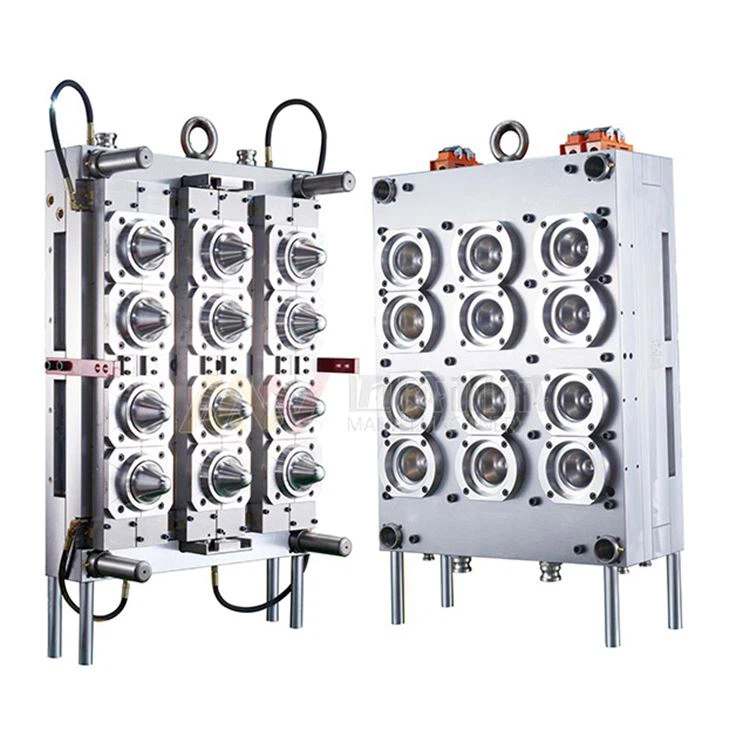
On the other hand, multi - cavity molds contain multiple cavities, ranging from a few to dozens or even hundreds, depending on the specific requirements. These cavities are arranged in a precise pattern within the mold, and each cavity is designed to produce an identical preform. The design of multi - cavity molds is more complex, requiring advanced engineering and manufacturing techniques to ensure uniform filling, cooling, and ejection of the preforms from all cavities.
Production Efficiency
One of the most significant differences in practical terms is the production efficiency. Single - cavity molds have a lower production capacity compared to multi - cavity molds. Since only one preform can be produced per cycle, the output is limited. For small - scale production or prototyping, single - cavity molds can be a cost - effective solution. They allow manufacturers to test new designs, materials, or production processes without investing in a large - scale mold.
Multi - cavity molds, however, are designed for high - volume production. With multiple cavities, they can produce several preforms in a single injection cycle, significantly increasing the production rate. This makes them ideal for large - scale manufacturing operations where meeting high - demand orders is essential. For example, in the beverage industry, where millions of preforms are needed daily, multi - cavity molds are the norm.
Quality and Consistency
Quality and consistency are critical factors in the production of Pet preforms. Single - cavity molds generally offer better control over the production process, which can result in higher - quality preforms. Since there is only one cavity, the injection pressure, temperature, and cooling rate can be more precisely regulated. This reduces the likelihood of defects such as warping, sink marks, or uneven wall thickness.
In multi - cavity molds, ensuring consistent quality across all cavities can be more challenging. Variations in the flow of molten plastic, cooling rates, or ejection forces between cavities can lead to differences in the quality of the preforms. However, with advanced mold design and process control technologies, modern multi - cavity molds can achieve a high level of consistency. For instance, the use of balanced hot runner systems can ensure uniform distribution of the molten plastic to all cavities, minimizing quality variations.
Cost Considerations
Cost is another important aspect to consider when choosing between single - cavity and multi - cavity Pet Preform Molds. The initial investment for a single - cavity mold is relatively low. The simpler design and fewer components result in lower manufacturing costs. Additionally, maintenance and repair costs are also generally lower, as there are fewer parts to replace or service.
Multi - cavity molds, on the other hand, require a higher upfront investment. The complex design, advanced manufacturing techniques, and additional components such as hot runner systems increase the cost of the mold. However, when considering the long - term cost per preform, multi - cavity molds can be more cost - effective for high - volume production. The increased production rate means that the fixed cost of the mold is spread over a larger number of preforms, reducing the unit cost.
Design Flexibility
Single - cavity molds offer greater design flexibility. They can be easily modified or customized to produce different preform designs. This is particularly useful for product development or when producing specialized preforms for niche markets. Manufacturers can quickly make changes to the mold design, such as altering the shape, size, or thread design of the preform, without significant investment.
Multi - cavity molds, due to their complex design, are less flexible in terms of design changes. Modifying a multi - cavity mold to produce a different preform design can be time - consuming and expensive. It may require significant re - engineering of the mold, including changes to the cavity layout, hot runner system, and ejection mechanism. Therefore, they are more suitable for producing a standardized preform design in large quantities.
Applications
The choice between single - cavity and multi - cavity molds also depends on the specific application. Single - cavity molds are commonly used in the following scenarios:
- Prototyping: To test new preform designs before mass production.
- Small - batch production: For specialized products or limited - edition runs.
- Customized products: When producing unique preforms with specific requirements.
Multi - cavity molds are widely used in industries with high - volume production needs, such as:
- Beverage industry: For the production of preforms for water, soda, juice, and other beverages.
- Food industry: To manufacture preforms for food containers.
- Cosmetics and personal care industry: For producing preforms for bottles of lotions, shampoos, and other products.
Conclusion
In conclusion, the difference between single - cavity and multi - cavity Pet Preform Molds is significant in terms of structure, production efficiency, quality, cost, design flexibility, and applications. Single - cavity molds are suitable for small - scale production, prototyping, and customized products, offering high - quality control and design flexibility at a lower initial cost. Multi - cavity molds, on the other hand, are designed for high - volume production, providing increased efficiency and cost - effectiveness for large - scale manufacturing operations.
As a Pet Preform Mold supplier, we understand the unique needs of our customers and can provide customized solutions based on their production requirements. Whether you are looking for a Pet Preform Mould for small - scale production or a high - performance Injection Preform Mold for large - volume manufacturing, we have the expertise and technology to meet your needs. Our Hot Runner Preform Mold solutions are designed to ensure uniform filling, cooling, and high - quality production across all cavities.

If you are interested in learning more about our Pet Preform Molds or discussing your specific production requirements, please feel free to contact us. Our team of experts is ready to assist you in making the right choice for your business.
References
- "Plastic Injection Molding Handbook" by Rosato, Rosato, and Schott.
- "Mold Design for Plastic Injection Molding" by Throne.
- Industry reports and case studies on Pet preform production.


