




Pet Preform Mould
What is Pet Preform Mould
A PET (Polyethylene Terephthalate) preform mould is a specialized tool used in the manufacturing process of PET bottles and containers. This mould is the first step in the transformation of raw plastic material into a bottle. The mould creates preforms, which are small, tube-like pieces that will eventually be blown into the final bottle shape.
Preforms Are Non-Reactive
The main problem with plastic containers is that the contents can react negatively to the packaging and cause damage over time as a result. This leads to bottle degradation and the spoiling of whatever's inside. With the use of Pet Preform Mould, this problem is solved. PET preforms can hold a wider range of liquids and these containers are routinely inspected to ensure that nothing damages the contents inside the bottle.
Preforms Are Leak-Proof
Minor handling errors can cause damage to normal plastic bottles, spoiling the contents inside or spilling the liquid contained within. This wastes the contents, leading to monetary losses and possible damage to the environment. It also creates a mess in the production line. These unique PET containers do not allow any form of leakage, helping keep the product safe, protected, and in good condition for consumers. In contrast to regular plastic bottles, PET containers will not be adversely affected by a little rough handling.
Preforms Are Easy to Store
Preforms are incredibly easy to store and manage for production. Warehouse space is valuable, and preforms are much smaller compared to plastic bottles, so you can store many more of them. Plastic bottles' delicate construction makes storage challenging, even for highly effective solutions like foldable wire mesh containers. Preform containers allow for easy storage inside racks or other storage management systems, assuring the safety and security of the bottle's contents and packaging.



Mold Cavity Creation
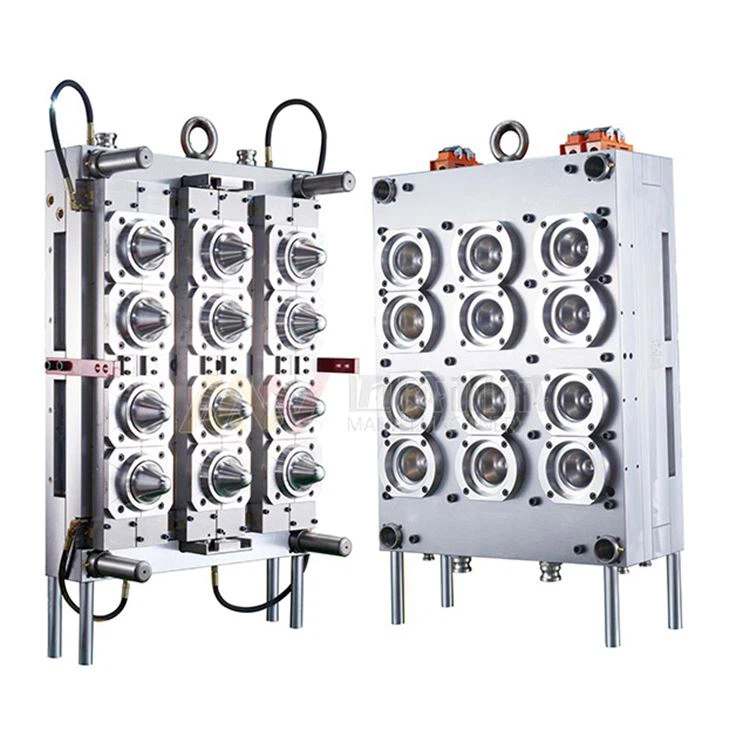
The process begins with the design of a mold cavity, which represents the desired shape of the PET preform. These cavities are typically made from high-grade steel to withstand the stress and high temperatures of the injection molding process.
Plastic Resin Injection
Small pellets of PET resin are fed into the injection molding machine's hopper. The pellets are heated and melted, forming a molten plastic material.
Injection Into the Mold
The molten plastic is then injected into the mold cavity under high pressure. This ensures that the material flows into every nook and cranny of the cavity, creating a precise and uniform preform shape.
Cooling and Solidification
After injection, the mold with the molten plastic is allowed to cool and solidify. Cooling time is carefully controlled to achieve optimal results.
Ejection
Once the preform has solidified, the mold is opened, and ejector pins push the preform out of the cavity.
Design Considerations for Pet Preform Mould
Creating a successful PET plastic preform mold requires a thorough understanding of the product's design and manufacturing processes. Some crucial design considerations include:
Wall Thickness
The wall thickness of the preform must be uniform to ensure consistent quality and minimize defects during the blow molding process.
Gate Design
The gate is the entry point for the molten plastic into the mold cavity. Proper gate design is critical for ensuring minimal waste, smooth filling, and easy removal of the preform.


Cooling System
An efficient cooling system is essential to regulate the cooling process and maintain a consistent cycle time.
Ejection Mechanism
The ejection system must be designed to gently remove the preform from the mold without causing any damage.
How to Choose Pet Preform Mould
Durability: Choose a mould made from high-grade steel or aluminum, as these materials offer better durability and resistance to wear and tear.
Corrosion Resistance: Ensure the mould is resistant to corrosion, especially if it will be used in environments with high humidity or exposure to chemicals.
Cavity Design: The number of cavities in the mould should match your production needs. Multi-cavity moulds are suitable for high-volume production.
Accuracy: Check the precision of the mould design to ensure that it meets the dimensional requirements of the preforms.
Efficiency: A well-designed cooling system in the mould can significantly reduce cycle times and improve production efficiency.
Uniform Cooling: Ensure the mould provides uniform cooling to prevent defects in the preforms.
Specific Requirements: Look for a mould supplier who can customize the mould according to your specific needs, such as different neck sizes or shapes.
Flexibility: The mould should be adaptable to produce various types of preforms without extensive modifications.
Simple Design: Choose a mould with a design that allows for easy cleaning and maintenance to reduce downtime.
Spare Parts Availability: Ensure that spare parts for the mould are readily available to avoid production delays.
Frequently Asked Questions
Hot Tags: pet preform mould, China pet preform mould manufacturers, suppliers, factory, quality check of preform mold, market share of preform mold, square preform mold, environmental certification of preform mold, affordable preform mold, industry of preform mold
Previous
Wide Mouth Preform MoldYou Might Also Like



Send Inquiry