

Hey there! As a supplier of Preform Die, I often get asked about how to select the appropriate forming speed for a preform die. It's a crucial aspect that can significantly impact the quality and efficiency of the preform manufacturing process. In this blog, I'll share some insights and tips on this topic.
First off, let's understand what forming speed means in the context of preform dies. The forming speed refers to how fast the plastic material is injected into the preform die cavity to create the preform. It's measured in various units, like cubic centimeters per second or pounds per hour, depending on the specific equipment and industry standards.
Now, why is selecting the right forming speed so important? Well, if the forming speed is too slow, it can lead to a bunch of issues. For starters, the plastic material might start to cool down before it fully fills the die cavity. This can result in incomplete filling, leading to preforms with thin walls, uneven thickness, or even short shots. Short shots are when the preform doesn't fully form, leaving parts of it unfilled. On the other hand, if the forming speed is too fast, it can cause excessive shear stress on the plastic material. This can lead to material degradation, which means the plastic loses some of its mechanical properties. It can also cause flash, which is when the plastic material leaks out of the die cavity and forms unwanted thin layers around the preform.
So, how do we go about selecting the appropriate forming speed?
Consider the Plastic Material
Different plastic materials have different flow properties. For example, Polyethylene Terephthalate (PET), which is commonly used for preforms, has a relatively high viscosity compared to some other plastics. Viscosity is a measure of a fluid's resistance to flow. If you're using a high - viscosity material like PET, you might need a higher forming speed to ensure it fills the die cavity properly. But you also have to be careful not to go too fast and cause shear stress issues. On the other hand, if you're using a low - viscosity plastic, a lower forming speed might be sufficient. You can find the recommended forming speed ranges for different plastic materials from the material suppliers. They usually provide technical data sheets that include information on processing parameters, including forming speed.
Analyze the Preform Design
The design of the preform itself plays a big role in determining the forming speed. Preforms come in various shapes and sizes, with different wall thicknesses and geometries. If the preform has a complex shape with thin walls or small features, you'll need a higher forming speed to ensure that the plastic material can reach all the corners of the die cavity. For example, a preform with a long and narrow neck might require a faster forming speed compared to a simple, cylindrical preform. The wall thickness also matters. Thicker walls generally require a slower forming speed to allow the plastic to flow evenly and solidify properly.
Evaluate the Die Design
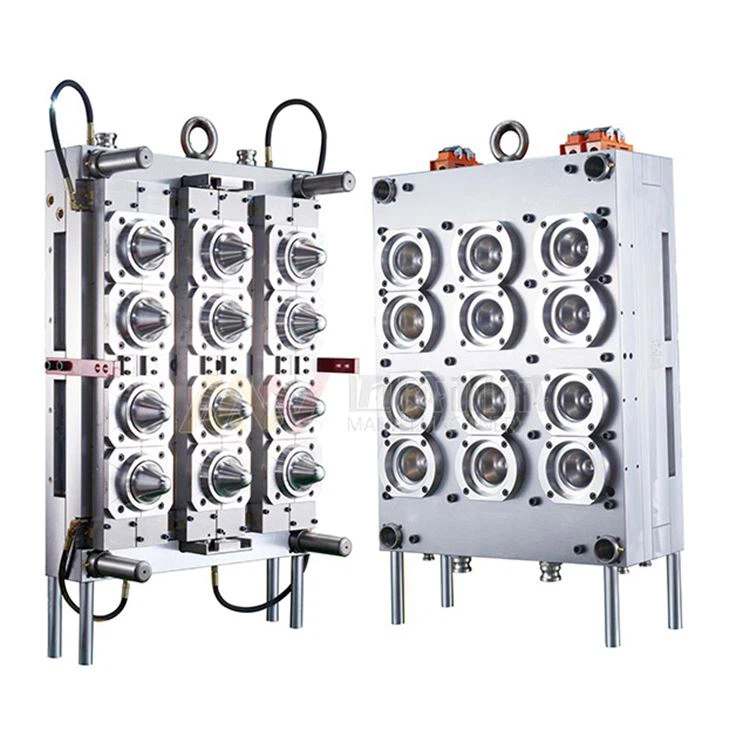
The design of the preform die is another crucial factor. The size and shape of the gates, runners, and cavities in the die can affect the flow of the plastic material. Gates are the small openings through which the plastic enters the die cavity. If the gates are too small, they can restrict the flow of the plastic, and you might need a higher forming speed to overcome this restriction. However, if the gates are too large, it can cause uneven filling or other issues. The runners are the channels that carry the plastic from the injection unit to the gates. Their design, including their length and diameter, can also impact the flow and thus the required forming speed.
Equipment Capabilities
The injection molding machine you're using also has a say in the forming speed. Different machines have different maximum and minimum injection speeds. You need to make sure that the forming speed you select is within the capabilities of your machine. If you try to run the machine at a speed that's beyond its limits, it can cause mechanical problems, such as excessive wear and tear on the injection unit, or it might not be able to maintain a consistent speed. You should also consider the machine's control system. A good control system can help you accurately set and maintain the desired forming speed.

Trial and Error
Sometimes, the best way to find the appropriate forming speed is through trial and error. Start with the recommended speed ranges based on the plastic material, preform design, and die design. Then, run a few test shots and carefully inspect the preforms. Look for any signs of incomplete filling, flash, or material degradation. If you notice any issues, adjust the forming speed accordingly. Keep making small adjustments and running test shots until you achieve the best results.
Use Simulation Software
In modern manufacturing, simulation software can be a great tool. There are various software programs available that can simulate the injection molding process, including the flow of the plastic material in the die cavity. You can input the details of the plastic material, preform design, die design, and machine parameters into the software. It will then simulate the process and predict how the plastic will flow at different forming speeds. This can help you narrow down the appropriate forming speed range before you even start running test shots on the actual machine.
In conclusion, selecting the appropriate forming speed for a preform die is a complex process that involves considering multiple factors. By taking into account the plastic material, preform design, die design, equipment capabilities, and using techniques like trial and error and simulation software, you can find the optimal forming speed for your specific application.
If you're in the market for high - quality Preform Die, Injection Preform Mold, or Hot Runner Preform Mold, we're here to help. We have a wide range of products and the expertise to assist you in your preform manufacturing process. Don't hesitate to reach out for a consultation and let's discuss how we can meet your specific needs.
References
- "Injection Molding Handbook" by OSSWALD, TIMOTHY A.; TURNG, LUNG - SHIANG; GRAESSEL, PAUL
- Technical data sheets from plastic material suppliers.


