

The screw design of an injection molding machine plays a pivotal role in the performance and quality of injection preform molds. As a dedicated Injection Preform Mold supplier, I've witnessed firsthand how the intricacies of screw design can significantly influence the preform molding process. In this blog, we'll delve into the various aspects of screw design and explore its far - reaching impacts on injection preform molds.
1. Plasticizing Capacity and Homogeneity
The plasticizing capacity of the screw is a fundamental factor. A well - designed screw can efficiently melt and homogenize the plastic material before it is injected into the preform mold. The length - to - diameter ratio (L/D) of the screw is a critical parameter. A higher L/D ratio generally allows for better plasticizing. When the screw has a longer length relative to its diameter, the plastic material spends more time in the screw, undergoing more thorough melting and mixing.

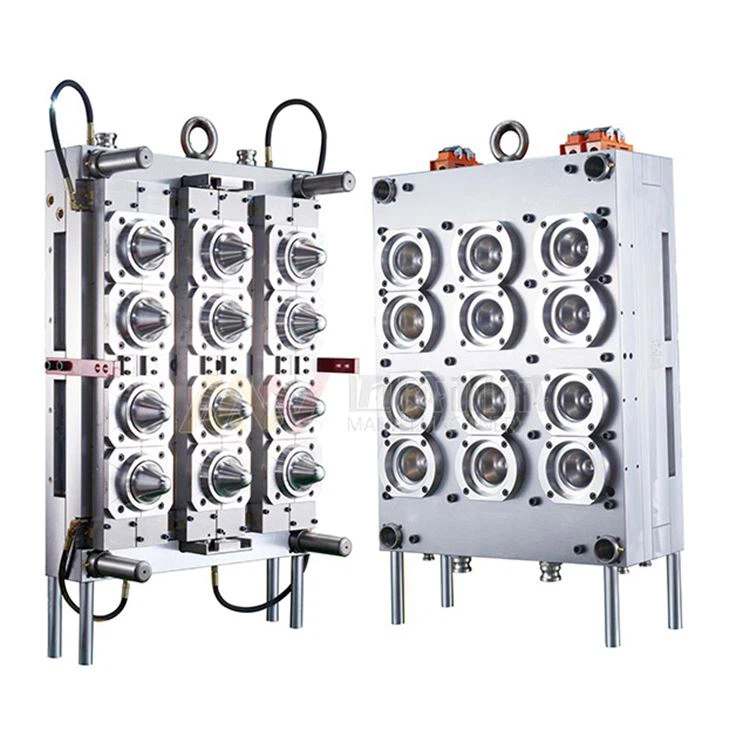
For instance, if the L/D ratio is too low, the plastic may not be fully melted, leading to inhomogeneous preforms. These preforms can have visible streaks or inconsistent physical properties, which are unacceptable in the market. As an Injection Preform Mold supplier, we often encounter customers who face such issues due to improper screw design in their injection molding machines.
The screw's compression ratio also affects plasticizing. A proper compression ratio helps to compress the plastic material, driving out air and ensuring a more uniform melt. If the compression ratio is too high, it can cause excessive shear heating, which may degrade the plastic material. On the other hand, a low compression ratio may result in insufficient melting and poor plasticizing.
2. Injection Speed and Pressure Control
The screw design has a direct impact on the injection speed and pressure that can be achieved during the preform molding process. The screw's flight geometry, such as the pitch and depth of the flights, influences the flow of the molten plastic. A screw with a larger pitch can transfer the plastic material more quickly, allowing for higher injection speeds.
However, high injection speeds need to be balanced with proper pressure control. The screw's ability to build and maintain pressure is crucial for filling the preform mold completely. If the screw cannot generate enough pressure, the preform may have short - shots, where the mold cavity is not fully filled. This can lead to defective preforms that do not meet the required specifications.
As an Injection Preform Mold supplier, we work closely with our customers to understand their injection molding machine's screw capabilities. We can then design preform molds that are compatible with the available injection speed and pressure, ensuring high - quality preform production.
3. Wear and Tear Resistance
The screw in an injection molding machine is subject to significant wear and tear due to the high - pressure and high - temperature environment during the plasticizing and injection processes. A well - designed screw should have good wear resistance to maintain its performance over time.
The material of the screw is a key factor in its wear resistance. Screws made of high - quality alloy steels or with special surface treatments can withstand the abrasive nature of the plastic materials better. For example, some screws are nitrided or coated with hard materials to reduce wear.
If the screw wears out quickly, it can lead to inconsistent plasticizing and injection performance. This, in turn, can affect the quality of the preforms produced in our Injection Preform Mold. As a supplier, we often recommend that our customers choose injection molding machines with high - quality, wear - resistant screws to ensure the long - term stability of preform production.
4. Compatibility with Different Plastic Materials
Different plastic materials have different properties, such as melting points, viscosities, and shear sensitivities. The screw design needs to be compatible with the specific plastic material used for preform production.
For example, when molding preforms from PET (polyethylene terephthalate), a screw with a relatively high L/D ratio and a moderate compression ratio is often preferred. PET has a relatively high melting point and requires sufficient time and heat for proper plasticizing. In contrast, for polypropylene (PP), which has a lower melting point and lower viscosity, a screw with a different design may be more suitable.
As an Injection Preform Mold supplier, we have experience working with a wide range of plastic materials. We can provide advice to our customers on how to select the appropriate screw design for their specific plastic material to achieve the best preform quality.
5. Impact on Preform Quality and Design Flexibility
The screw design ultimately affects the quality of the preforms produced. A well - designed screw can produce preforms with consistent wall thickness, smooth surfaces, and accurate dimensions. This is essential for the subsequent blow - molding process, where the preforms are transformed into final plastic containers.
Moreover, the screw design can also influence the design flexibility of the preform molds. If the screw can provide stable and precise injection performance, it allows for more complex preform designs. For example, Hot Runner Preform Mold systems often require a high - level of injection control to ensure uniform filling of the mold cavities. A suitable screw design can support the use of such advanced mold technologies, enabling the production of high - quality preforms with unique shapes and features.
6. Energy Efficiency
In today's environmentally conscious world, energy efficiency is an important consideration in injection molding. The screw design can impact the energy consumption of the injection molding machine.
A well - designed screw can plasticize the plastic material more efficiently, reducing the energy required for melting and injection. For example, a screw with a proper L/D ratio and flight geometry can minimize the amount of shear heating, which is often an inefficient way of melting the plastic. By reducing energy consumption, our customers can lower their production costs while also contributing to a more sustainable manufacturing process.
Conclusion
In conclusion, the screw design of an injection molding machine has a profound influence on the injection preform mold. It affects plasticizing capacity, injection speed and pressure control, wear and tear resistance, compatibility with different plastic materials, preform quality, design flexibility, and energy efficiency.
As an Injection Preform Mold supplier, we understand the importance of the screw - mold interaction. We are committed to working closely with our customers to ensure that they have the optimal combination of injection molding machine screw design and preform mold design. Whether you are looking for a Wide Mouth Preform Mold or a standard preform mold, we can provide you with high - quality products and professional advice.
If you are interested in our injection preform molds or have any questions about the impact of screw design on preform molding, please feel free to contact us for procurement and further discussions. We look forward to working with you to achieve excellent preform production results.
References
- "Injection Molding Handbook" by O. Olszewski
- "Plastic Materials and Processes" by Charles A. Harper
- Industry reports on injection molding technology advancements.


