

As a preform mould supplier, I am often asked about the optimization process of a preform mould. In this blog, I will share our in - depth understanding and practical experience of this process.
1. Initial Design and Conceptualization
The optimization journey of a preform mould begins long before any physical work is done. It starts with a clear understanding of the client's requirements. We sit down with our customers to discuss their product specifications, such as the volume of the preform, the shape, and the type of plastic material to be used. For example, if the client is in the beverage industry and wants to produce small - sized preforms for single - serve drinks, we need to design the mould accordingly.
During this phase, we also consider the production volume. High - volume production requires a mould that can withstand frequent use and has a fast cycle time. Our design team uses advanced 3D modeling software to create a virtual prototype of the preform mould. This allows us to visualize the design from all angles and make necessary adjustments before moving on to the next stage.
2. Material Selection
The choice of materials for a preform mould is crucial for its performance and longevity. We carefully select high - quality steel that can resist wear, corrosion, and high temperatures. Different types of steel have different properties, and we match the steel grade with the specific requirements of the preform production. For instance, if the plastic material has a high abrasive nature, we choose a steel with high hardness and wear - resistance.
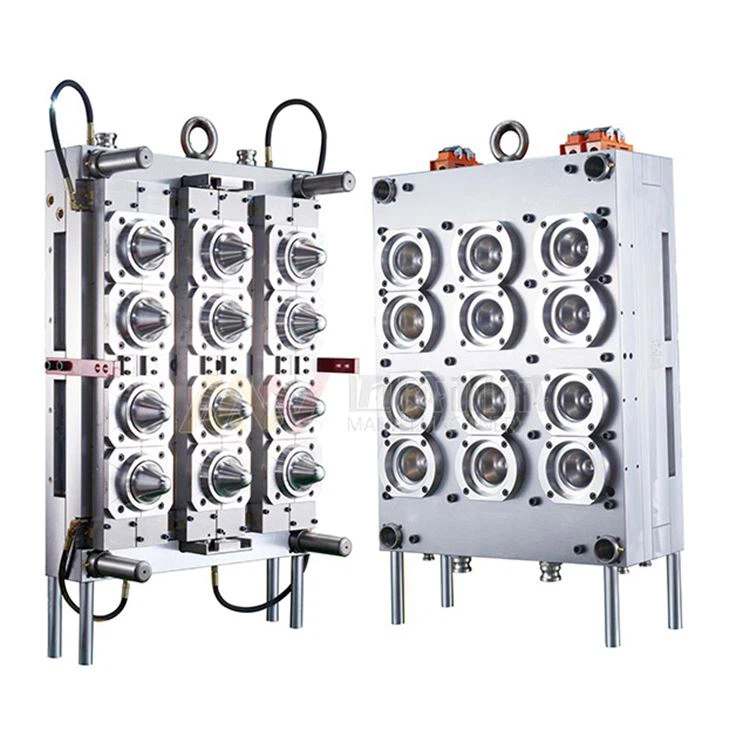
In addition to the steel for the core and cavity of the mould, we also pay attention to the materials used for other components such as the hot runner system. A well - designed Hot Runner Preform Mold can significantly improve the quality of the preforms and reduce production costs. The hot runner system ensures that the plastic remains in a molten state throughout the injection process, which helps to create uniform preforms.
3. Precision Machining
Once the design is finalized and the materials are selected, the precision machining process begins. We use state - of - the - art CNC (Computer Numerical Control) machines to manufacture the mould components. These machines can achieve extremely high levels of accuracy, ensuring that the dimensions of the mould are within the tightest tolerances.
The machining process includes operations such as milling, turning, and grinding. Each step is carefully monitored to ensure that the surface finish and the overall quality of the components meet our standards. After the machining is completed, the components are thoroughly inspected using advanced measuring equipment, such as coordinate measuring machines (CMMs). Any deviations from the design specifications are corrected immediately.
4. Assembly and Testing
After all the components are machined and inspected, they are assembled into the complete preform mould. Our experienced technicians follow a strict assembly procedure to ensure that all the parts fit together perfectly. During the assembly process, we also lubricate the moving parts and install the necessary sensors and actuators.
Once the mould is assembled, it undergoes a series of rigorous tests. We first conduct a dry run to check the mechanical movement of the mould. Then, we perform injection tests using the actual plastic material. These tests help us to identify any potential issues, such as uneven filling, flashing, or warping of the preforms.
If any problems are detected during the testing phase, we go back to the design and machining stages to make the necessary adjustments. This iterative process continues until the mould meets all the quality and performance requirements.
5. Fine - Tuning and Optimization
Even after the mould passes the initial testing, there is still room for fine - tuning and optimization. We collect data from the production runs, such as cycle time, preform weight, and quality metrics. By analyzing this data, we can identify areas where the mould can be further improved.
For example, if the cycle time is longer than expected, we may adjust the cooling system of the mould. A more efficient cooling system can reduce the time it takes for the preform to solidify, thereby increasing the production rate. We may also optimize the gate design to improve the flow of the plastic material and reduce the occurrence of defects.
6. Continuous Improvement
The optimization process of a preform mould is not a one - time event. We believe in continuous improvement. As new technologies and materials become available, we incorporate them into our mould design and manufacturing processes. We also keep an eye on industry trends and customer feedback to stay ahead of the competition.
For instance, with the increasing demand for sustainable packaging, we are exploring ways to use biodegradable plastics in our preform moulds. This requires us to optimize the mould design and process parameters to ensure that the preforms made from these new materials meet the same high - quality standards as traditional plastics.
7. Importance of After - Sales Service
As a preform mould supplier, we understand the importance of after - sales service. Even the best - optimized mould may encounter issues during its long - term use. Our technical support team is always ready to provide assistance to our customers. We offer on - site maintenance, repair, and replacement services to minimize the downtime of the production line.
We also provide training to our customers' operators on how to properly use and maintain the preform mould. This helps to extend the lifespan of the mould and ensure consistent production quality.
Conclusion
The optimization process of a preform mould is a complex and multi - stage journey that requires a combination of technical expertise, advanced technology, and a commitment to quality. From the initial design and material selection to the final fine - tuning and continuous improvement, every step is crucial in creating a high - performance preform mould.
If you are in the market for a Preform Die or an Injection Preform Mold, we are here to help. Our team of experts can work with you to understand your specific needs and provide you with the best - optimized preform mould solutions. Contact us today to start the procurement and negotiation process, and let us help you take your preform production to the next level.
References
- "Handbook of Plastic Mold Design" by R. A. Mallick
- "Injection Molding Handbook" by O. Olabisi


