

The production capacity of a Jar Preform Mold is a crucial factor that significantly impacts the efficiency and profitability of plastic packaging manufacturing. As a leading supplier of Jar Preform Molds, I understand the importance of this aspect and am eager to share insights into what determines the production capacity of these molds.
Understanding Jar Preform Molds
Before delving into production capacity, it's essential to grasp what a Jar Preform Mold is. A Jar Preform Mold is a specialized tool used in the injection molding process to create preforms, which are the initial shapes of plastic jars. These preforms are then blow - molded into the final jar products. The Jar Preform Mold is designed with precision to ensure the quality and consistency of the preforms.
Factors Affecting Production Capacity
1. Cavity Number
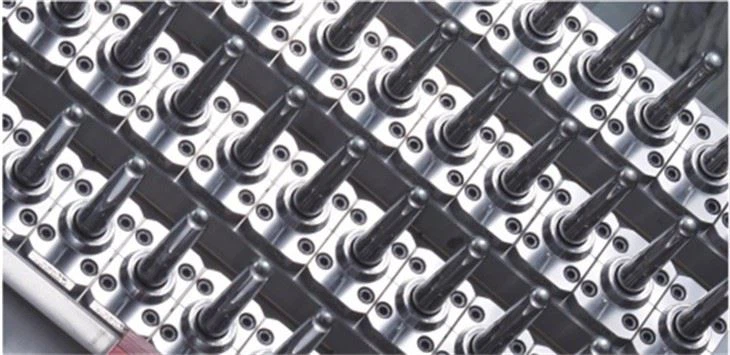
One of the most significant factors influencing the production capacity of a Jar Preform Mold is the number of cavities. Cavities are the hollow spaces within the mold where the plastic material is injected to form the preforms. A mold with more cavities can produce multiple preforms in a single injection cycle. For example, a 32 - cavity Jar Preform Mold can produce 32 preforms at once, while a 64 - cavity mold can double that output. As a supplier, we offer a range of cavity options to meet different production requirements. Customers with high - volume production needs often opt for molds with a larger number of cavities to maximize their output.
2. Cycle Time
Cycle time is another critical factor. It refers to the time taken to complete one full injection molding cycle, which includes the injection of plastic, cooling, and ejection of the preforms. A shorter cycle time means more cycles can be completed within a given period, thereby increasing the production capacity. Our Jar Preform Molds are engineered with advanced cooling systems and optimized flow channels to reduce cycle times. For instance, by using high - conductivity materials in the cooling circuits, we can accelerate the cooling process of the preforms, allowing for quicker ejection and the start of the next cycle.
3. Mold Design and Construction
The design and construction of the mold also play a vital role in production capacity. A well - designed mold ensures smooth plastic flow, uniform cooling, and easy ejection of preforms. Our molds are designed using state - of - the - art CAD/CAM technology to optimize the internal geometry for efficient plastic distribution. Additionally, the use of high - quality materials and precision machining techniques ensures the durability and reliability of the mold, reducing downtime due to maintenance or repairs. For example, our molds are made from high - grade steel alloys that can withstand the high pressures and temperatures of the injection molding process, resulting in a longer service life and consistent production performance.
4. Machine Compatibility
The compatibility of the Jar Preform Mold with the injection molding machine is crucial. The machine must have sufficient clamping force, injection volume, and injection speed to work effectively with the mold. Our technical team works closely with customers to ensure that the mold they choose is compatible with their existing injection molding machines. If necessary, we can also provide recommendations for suitable machines to achieve the best production results.
Measuring Production Capacity
Production capacity is typically measured in terms of the number of preforms produced per hour or per day. To calculate the production capacity, we use the following formula:
Production Capacity (per hour)= (Number of Cavities × 60) / Cycle Time (in minutes)
For example, if a 48 - cavity Jar Preform Mold has a cycle time of 2 minutes, the production capacity per hour would be (48 × 60) / 2 = 1440 preforms per hour.
Comparing with Other Preform Molds
When comparing Jar Preform Molds with other types of preform molds, such as Valve Gate Preform Mold and Hot Runner Preform Mold, there are some differences in production capacity. Valve Gate Preform Molds offer better control over the plastic flow and can produce high - quality preforms with precise gate locations. However, their production capacity may be slightly lower due to the more complex valve - gate system, which can increase the cycle time. Hot Runner Preform Molds, on the other hand, have the advantage of reducing plastic waste and improving the overall efficiency of the injection molding process. They can often achieve relatively high production capacities, especially when combined with a large number of cavities.
Meeting Customer Needs
As a supplier, our goal is to provide customers with Jar Preform Molds that meet their specific production capacity requirements. We offer customized mold solutions, taking into account factors such as the desired output volume, preform size and shape, and the available production space. Our experienced sales and technical teams are always ready to assist customers in selecting the most suitable mold for their needs.

The Importance of Production Capacity in the Market
In today's competitive plastic packaging market, having a high - production - capacity Jar Preform Mold can give manufacturers a significant edge. It allows them to meet large - scale orders quickly, reduce production costs per unit, and improve their overall competitiveness. By investing in a high - quality mold with a suitable production capacity, manufacturers can increase their market share and enhance their profitability.
Conclusion
The production capacity of a Jar Preform Mold is determined by multiple factors, including cavity number, cycle time, mold design, and machine compatibility. As a supplier, we are committed to providing customers with molds that offer high production capacities, excellent quality, and long - term reliability. If you are in the market for a Jar Preform Mold and want to discuss your production requirements, please feel free to reach out to us. We look forward to partnering with you to achieve your production goals.
References
- "Injection Molding Handbook" by O. Olszewski
- "Plastic Packaging Technology" by A. L. Brody and K. S. Marsh


