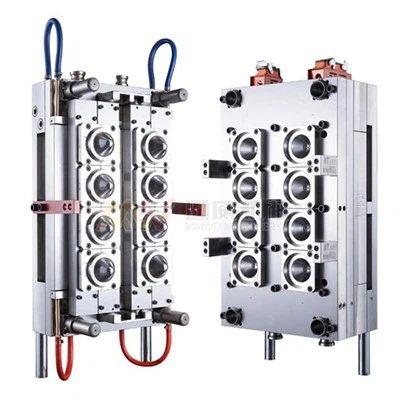
What materials are used to make Pet Preform Molds?
As a supplier of Pet Preform Molds, I've witnessed firsthand the critical role that materials play in the manufacturing process. The choice of materials for Pet Preform Molds is a complex decision that impacts the quality, durability, and performance of the molds. In this blog post, I'll delve into the various materials commonly used in making Pet Preform Molds, their properties, and the reasons behind their selection.
Steel Alloys
Steel alloys are the most widely used materials for Pet Preform Molds due to their excellent combination of strength, hardness, and wear resistance. These alloys can be tailored to meet specific requirements by adjusting the composition of elements such as carbon, chromium, nickel, and molybdenum.
Stainless Steel
Stainless steel is a popular choice for Pet Preform Molds, especially in applications where corrosion resistance is crucial. It contains a minimum of 10.5% chromium, which forms a protective oxide layer on the surface, preventing rust and corrosion. Stainless steel molds are ideal for producing preforms that will come into contact with acidic or alkaline substances, such as beverages or cleaning products.
One of the advantages of stainless steel is its high polishability, which allows for the production of preforms with a smooth surface finish. This is important for achieving a high-quality appearance and ensuring proper sealing during the bottling process. Additionally, stainless steel molds are relatively easy to clean and maintain, reducing downtime and production costs.
Tool Steel
Tool steel is another commonly used material for Pet Preform Molds. It is specifically designed to withstand the high pressures and temperatures associated with the injection molding process. Tool steel has excellent hardness, toughness, and wear resistance, making it suitable for producing molds with complex geometries and tight tolerances.
There are several types of tool steel available, each with its own unique properties and applications. For example, cold work tool steel is often used for molds that require high hardness and wear resistance, while hot work tool steel is better suited for molds that are subjected to high temperatures and thermal cycling.
The choice of tool steel depends on factors such as the size and complexity of the mold, the production volume, and the type of plastic being used. By selecting the appropriate tool steel, manufacturers can ensure the longevity and performance of their Pet Preform Molds.
Aluminum Alloys
Aluminum alloys are increasingly being used in the manufacturing of Pet Preform Molds due to their lightweight, high thermal conductivity, and good machinability. These alloys offer several advantages over steel alloys, especially in applications where rapid cooling and cycle times are critical.
High-Strength Aluminum Alloys
High-strength aluminum alloys, such as 7075 and 6061, are commonly used for Pet Preform Molds. These alloys have excellent strength-to-weight ratios, allowing for the production of lightweight molds without sacrificing durability. The high thermal conductivity of aluminum also enables faster cooling of the preforms, reducing cycle times and increasing production efficiency.
In addition to their thermal properties, high-strength aluminum alloys are relatively easy to machine, which can result in lower manufacturing costs. They can be easily shaped and finished to achieve the desired mold geometry and surface finish. However, aluminum molds may require additional surface treatments, such as anodizing or coating, to improve their wear resistance and corrosion protection.
Aluminum-Copper Alloys
Aluminum-copper alloys, such as 2024 and 2219, are another option for Pet Preform Molds. These alloys offer a good balance of strength, hardness, and thermal conductivity. They are particularly suitable for molds that require high stiffness and dimensional stability.
Aluminum-copper alloys are often used in applications where the mold will be subjected to high pressures and stresses, such as in the production of large or thick-walled preforms. They can also be heat-treated to further enhance their mechanical properties, making them a versatile choice for a wide range of molding applications.
Other Materials
In addition to steel and aluminum alloys, there are several other materials that can be used in the manufacturing of Pet Preform Molds. These materials are typically used in specialized applications or for specific performance requirements.
Beryllium-Copper Alloys
Beryllium-copper alloys are known for their high thermal conductivity, excellent electrical conductivity, and good mechanical properties. They are often used in applications where rapid heat transfer is essential, such as in the production of small or thin-walled preforms.
Beryllium-copper alloys can be easily machined and formed into complex shapes, making them suitable for molds with intricate designs. However, it's important to note that beryllium is a toxic material, and proper safety precautions must be taken during the handling and processing of beryllium-copper alloys.
Composite Materials
Composite materials, such as carbon fiber reinforced polymers (CFRP) and glass fiber reinforced polymers (GFRP), are also being explored for use in Pet Preform Molds. These materials offer several advantages, including high strength-to-weight ratios, good corrosion resistance, and low thermal expansion coefficients.
Composite molds can be designed to have specific thermal and mechanical properties, allowing for optimized performance in different molding applications. They can also be easily customized to meet the unique requirements of each customer. However, the use of composite materials in Pet Preform Molds is still relatively new, and further research and development are needed to fully understand their potential.
Conclusion
The choice of materials for Pet Preform Molds is a critical decision that can have a significant impact on the quality, performance, and cost of the molds. Steel alloys, such as stainless steel and tool steel, are the most commonly used materials due to their excellent strength, hardness, and wear resistance. Aluminum alloys, on the other hand, offer lightweight, high thermal conductivity, and good machinability, making them a popular choice for applications where rapid cooling and cycle times are important.
In addition to steel and aluminum alloys, other materials such as beryllium-copper alloys and composite materials are also being explored for use in Pet Preform Molds. These materials offer unique properties and advantages that can be tailored to specific applications.
As a supplier of Pet Preform Molds, we understand the importance of selecting the right materials for each project. We work closely with our customers to understand their requirements and recommend the most suitable materials based on factors such as the size and complexity of the mold, the production volume, and the type of plastic being used.
If you're in the market for Pet Preform Molds, I encourage you to [contact us] to discuss your specific needs. Our team of experts will be happy to provide you with more information and help you make an informed decision. Whether you're looking for a Preform Die, a Wide Mouth Preform Mold, or an Injection Preform Mold, we have the experience and expertise to deliver high-quality molds that meet your expectations.


References
- ASM Handbook, Volume 1: Properties and Selection: Irons, Steels, and High-Performance Alloys
- Aluminum Association: Aluminum Design Manual
- Composite Materials Handbook, Volume 1: Polymer Matrix Composites