Can a 20L preform be used for mineral water products? This is a question that often arises in the bottled water industry. As a 20L preform supplier, I'll delve into the technical aspects, market feasibility, and other related factors to provide a comprehensive answer.
Technical Feasibility
Material Suitability
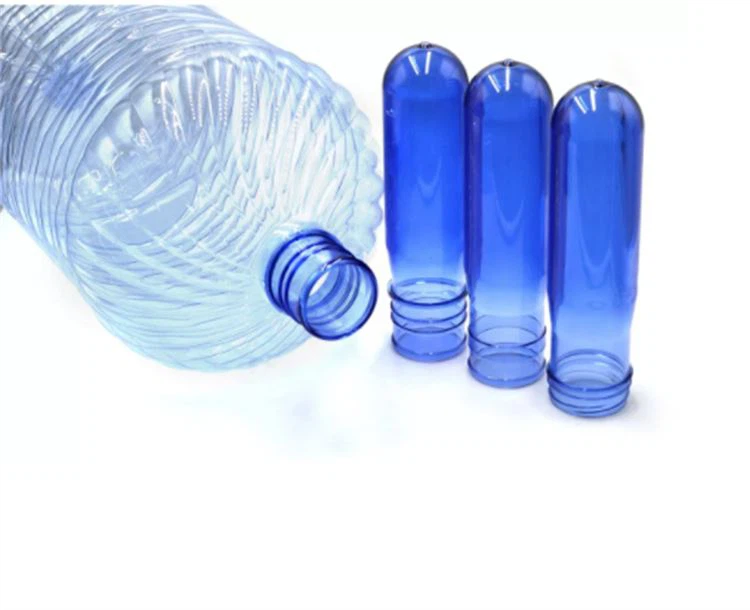
The most common material for 20L preforms is polyethylene terephthalate (PET). PET is known for its excellent chemical resistance, which means it won't react with the mineral water inside. It can safely contain a wide range of minerals and chemical components commonly found in mineral water, such as calcium, magnesium, and bicarbonate ions.
Moreover, PET has good gas - barrier properties. It can prevent the entry of oxygen and the escape of carbon dioxide (if the mineral water is carbonated), thus preserving the quality and taste of the mineral water for an extended period. For non - carbonated mineral water, it helps in maintaining the freshness by reducing the oxidation of any organic substances present in the water.
Structural Integrity
A 20L preform needs to be able to withstand internal pressures during the bottling process. When the preform is blow - molded into a bottle, it must acquire a shape that can hold 20 liters of water without deformation or leakage. The design of the preform plays a crucial role here. It should have a uniform wall thickness after blow - molding to ensure equal distribution of stress.
The neck finish of the 20L preform is also significant. It needs to be compatible with the caps used for mineral water bottles. A well - designed neck finish ensures a tight seal, preventing any leakage during storage, transportation, and handling. This is of utmost importance for mineral water products, as any leakage can lead to contamination and loss of product quality.
Market Feasibility
Consumer Demand
In many regions, there is a growing demand for larger - sized bottled mineral water, especially in commercial settings such as offices, factories, and schools. A 20L bottle of mineral water can serve a group of people for a certain period, reducing the frequency of refilling and waste generation from smaller bottles.
Consumers also appreciate the cost - effectiveness of larger bottles. Generally, the price per liter of mineral water in a 20L bottle is lower than that in smaller bottles. This makes it an attractive option for both consumers and businesses looking to save on water costs.

Distribution and Storage
From a distribution perspective, 20L bottles of mineral water are relatively easy to handle in bulk. They can be stacked on pallets and transported efficiently using trucks or other large - scale delivery vehicles. In terms of storage, a 20L bottle takes up less shelf space compared to multiple smaller bottles with the same total volume.
However, it's important to note that the weight of a 20L bottle of water is approximately 20 kilograms, which can pose challenges for some consumers, especially those with limited physical strength or when the water needs to be carried over a long distance.
Comparison with Other Preform Sizes
5 Gallon Pet Preform
A 5 - gallon pet preform is equivalent to approximately 18.9 liters, which is close to the 20L size. The main difference between a 20L and a 5 - gallon preform is often in the market preference and regional standards. In some regions, the 5 - gallon size is more commonly used and recognized, while in others, the 20L size is gaining popularity.
The manufacturing process for both preforms is quite similar. They are both made from PET and require similar blow - molding equipment. However, slight adjustments may be needed in the preform design to ensure the proper shape and wall thickness of the final bottle.
3 Gallon Water Bottle Preform
A 3 - gallon water bottle preform is much smaller, with a volume of about 11.4 liters. The 3 - gallon bottles are more suitable for households with smaller water consumption or for individual use in some cases. They are lighter and easier to handle compared to 20L bottles.
However, for commercial users, the 3 - gallon size may require more frequent refilling, which can be inconvenient. The cost per liter of water in 3 - gallon bottles may also be higher compared to 20L bottles.
5 Gallon Water Bottle Preform
Similar to the 5 - gallon pet preform, the 5 - gallon water bottle preform also has a volume close to 20L. The choice between them often depends on the manufacturer's preference and the specific requirements of the market. Some bottling plants may have existing equipment that is optimized for a particular size, which can influence the decision.
Quality Control and Standards
When using 20L preforms for mineral water products, strict quality control measures must be in place. The preforms should comply with international food - contact material standards, such as those set by the Food and Drug Administration (FDA) in the United States or the European Union's regulations on food - contact plastics.
Regular testing should be conducted on the preforms to ensure that they are free from any contaminants or harmful substances. This includes testing for the presence of heavy metals, residual monomers, and other impurities. Any non - compliant preforms can have a significant impact on the quality and safety of the mineral water products.
Conclusion
In conclusion, a 20L preform can definitely be used for mineral water products. It has both technical and market feasibility. From a technical standpoint, the material and design of the 20L preform can meet the requirements for safely containing mineral water. In the market, there is a growing demand for larger - sized bottled water, especially in commercial settings.
If you are in the business of producing bottled mineral water and are considering using 20L preforms, I encourage you to reach out for a detailed discussion. We can provide high - quality 20L preforms that meet all relevant standards and can work with you to ensure that your bottling process runs smoothly. Feel free to contact us to start a purchase negotiation.
References
- "Pet Packaging: Design, Processing, and Application" by an industry - recognized author.
- International food - contact material standards documents from FDA and EU.
- Market research reports on the bottled water industry.