

In the manufacturing industry, maintaining consistent product quality is crucial for the success of any business, especially when it comes to bottle making machines. As a supplier of bottle making machines, I understand the challenges that manufacturers face in achieving and sustaining high - quality, consistent bottle production. In this blog, I will share some strategies and techniques that can be employed to improve the product quality consistency of a bottle making machine.
Understanding the Basics of Bottle Making Machines
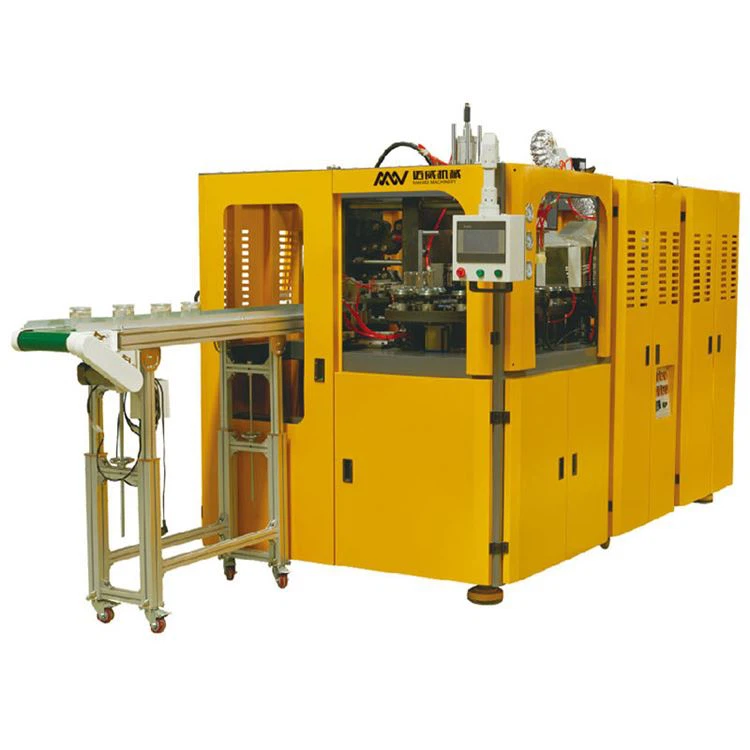
Before delving into the methods of improving quality consistency, it is essential to have a basic understanding of how bottle making machines work. Bottle making machines typically use blow - molding technology, which involves heating a plastic preform and then blowing it into a mold to create the desired bottle shape. There are different types of bottle making machines, such as the Pc Bottle Making Machine, Hand Feeding Blow Molding Machine, and Medicine Bottle Blow Molding Machine, each with its own specific features and applications.
Quality Control at the Preform Stage
The quality of the preform is the foundation of a high - quality bottle. Inconsistent preforms can lead to significant variations in the final bottle product. Therefore, it is vital to implement strict quality control measures at the preform stage.
- Material Selection: Choose high - quality plastic materials that have consistent properties. Different plastics have different melting points, flow rates, and mechanical properties. By selecting materials from reliable suppliers and conducting regular material testing, you can ensure that the preforms have uniform characteristics.
- Preform Manufacturing Process: Monitor and optimize the preform manufacturing process. Factors such as injection molding temperature, pressure, and cooling time can have a significant impact on the preform's quality. Use advanced sensors and control systems to maintain precise process parameters and detect any deviations early.
Machine Calibration and Maintenance
Proper calibration and regular maintenance of the bottle making machine are essential for ensuring consistent product quality.
- Calibration: Regularly calibrate all the critical components of the machine, such as the heating elements, blow nozzles, and mold clamping mechanisms. Incorrect calibration can lead to uneven heating, improper blowing, and misaligned molds, resulting in inconsistent bottle shapes and wall thicknesses.
- Maintenance: Establish a comprehensive maintenance schedule for the bottle making machine. This includes cleaning, lubricating, and replacing worn - out parts. Regular maintenance helps prevent breakdowns and ensures that the machine operates at its optimal performance level. For example, a clogged blow nozzle can cause uneven air distribution during the blowing process, leading to inconsistent bottle quality.
Process Optimization
Optimizing the bottle making process is another key factor in improving quality consistency.
- Heating Process: The heating process is crucial for softening the preform to the right temperature for blowing. Use advanced heating technologies, such as infrared heating, to ensure uniform heating across the preform. Adjust the heating time and intensity based on the type of plastic and the size of the preform.
- Blowing Process: Control the blowing pressure and time accurately. The blowing pressure determines the shape and wall thickness of the bottle, while the blowing time affects the overall bottle quality. Conduct experiments to find the optimal blowing parameters for different bottle designs and plastic materials.
- Cooling Process: A proper cooling process is necessary to set the shape of the bottle and prevent deformation. Use efficient cooling systems, such as water - cooled molds, to ensure rapid and uniform cooling. The cooling rate can affect the internal stress distribution in the bottle, which in turn can impact its strength and durability.
Operator Training
Well - trained operators play a vital role in maintaining product quality consistency.
- Technical Training: Provide comprehensive technical training to the operators on how to operate the bottle making machine correctly. This includes understanding the machine's functions, setting the process parameters, and performing basic troubleshooting.
- Quality Awareness Training: Train the operators to have a high level of quality awareness. Teach them how to identify and address quality issues during the production process, such as visual inspection of the bottles for defects like surface scratches, uneven wall thickness, and improper sealing.
Quality Monitoring and Inspection
Implement a rigorous quality monitoring and inspection system to detect and correct any quality issues in a timely manner.
- In - line Inspection: Use in - line inspection equipment, such as cameras and sensors, to monitor the bottle production process continuously. These devices can detect defects such as cracks, holes, and improper shapes in real - time.
- Sampling Inspection: Conduct regular sampling inspections of the finished bottles. This includes measuring the bottle's dimensions, wall thickness, and weight, as well as performing functional tests, such as leak testing. Analyze the inspection data to identify any trends or patterns of quality issues and take corrective actions accordingly.
Data Analysis and Continuous Improvement
Collect and analyze production data to drive continuous improvement in product quality consistency.

- Data Collection: Use data logging systems to record all relevant process parameters and quality inspection results. This data can provide valuable insights into the performance of the bottle making machine and the production process.
- Root Cause Analysis: When quality issues occur, conduct a root cause analysis to identify the underlying reasons. Use tools such as fishbone diagrams and Pareto charts to analyze the data and determine the most significant factors contributing to the quality problems.
- Continuous Improvement: Based on the results of the data analysis and root cause analysis, implement corrective and preventive actions to improve the production process. Continuously monitor the effectiveness of these actions and make further adjustments as needed.
Conclusion
Improving the product quality consistency of a bottle making machine requires a comprehensive approach that includes quality control at the preform stage, machine calibration and maintenance, process optimization, operator training, quality monitoring, and data - driven continuous improvement. By implementing these strategies, manufacturers can produce high - quality, consistent bottles that meet the strict requirements of their customers.
If you are interested in our bottle making machines or need more information on how to improve your bottle production quality, please feel free to contact us for procurement and further discussions. We are committed to providing you with the best solutions and support to help you achieve your production goals.
References
- Groover, M. P. (2010). Fundamentals of Modern Manufacturing: Materials, Processes, and Systems. John Wiley & Sons.
- Rosato, D. V., & Rosato, D. V. (2000). Injection Molding Handbook. Kluwer Academic Publishers.
- Osswald, T. A., & Turng, L. - S. (2007). Polymer Processing: Modeling and Simulation. Hanser Publishers.


