

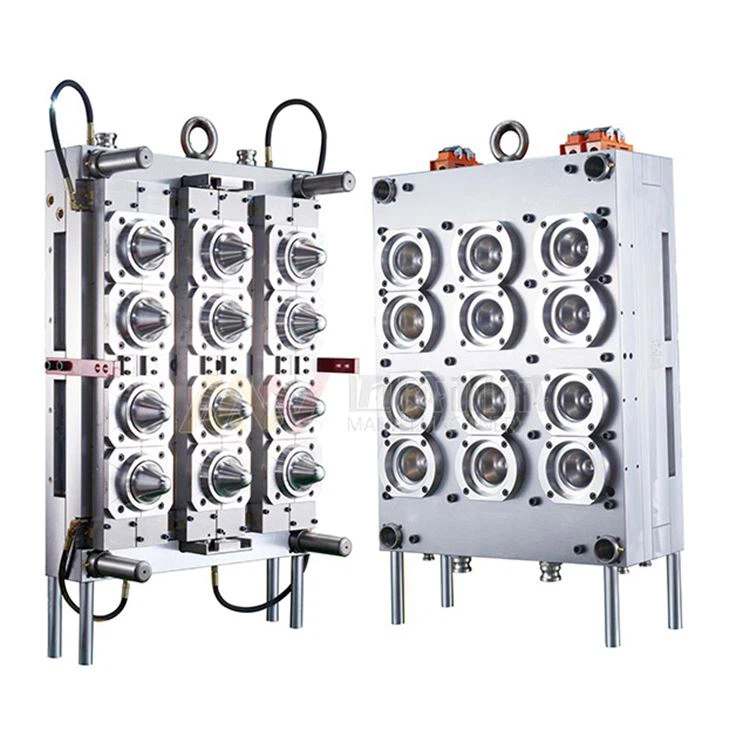
Testing the performance of an injection preform mold is a critical process that ensures the quality, efficiency, and longevity of the mold. As a leading Injection Preform Mold supplier, we understand the importance of rigorous testing to meet the high - standards of our clients. In this blog, we will explore the various aspects of testing an injection preform mold, from initial setup to final evaluation.
Initial Inspection and Setup
Before any actual testing, a thorough initial inspection of the mold is necessary. This involves checking the physical condition of the mold, including its dimensions, surface finish, and the integrity of all components. Any signs of damage, such as cracks, scratches, or misaligned parts, should be addressed immediately.
The mold should be properly installed on the injection molding machine. This includes aligning the mold with the machine's platens, connecting the cooling and heating systems, and ensuring that all electrical and hydraulic connections are secure. Incorrect installation can lead to uneven clamping force, poor cooling, and ultimately, defective preforms.

Material Compatibility Testing
One of the first steps in performance testing is to verify the compatibility between the mold and the plastic material to be used. Different plastics have different melting points, flow characteristics, and shrinkage rates. For example, PET (polyethylene terephthalate), which is commonly used in preform production, has a relatively high melting point and requires precise temperature control during the injection process.
We conduct material compatibility tests by running a series of trial injections with the selected plastic. During these trials, we monitor the filling pattern of the mold cavities. If the material does not flow evenly into all cavities, it could indicate issues with the gating system or the mold design. Additionally, we check for any signs of material degradation, such as discoloration or charring, which could be caused by excessive heat or improper injection speed.
Cavity Balance Testing
A well - balanced injection preform mold ensures that each cavity produces preforms with consistent quality. Cavity balance testing is crucial to identify and correct any differences in the filling time, pressure, and weight of the preforms produced in each cavity.
To perform cavity balance testing, we use specialized sensors installed in the mold cavities. These sensors measure the pressure and temperature inside each cavity during the injection process. By comparing the data from each sensor, we can determine if there are any imbalances. If one cavity is filling faster or with more pressure than the others, it could be due to differences in the gating size, the length of the flow path, or the cooling efficiency of that particular cavity.
We also weigh the preforms produced in each cavity after the injection process. A significant difference in the weight of the preforms can indicate a problem with the cavity balance. Once any imbalances are identified, we can make adjustments to the gating system, such as changing the gate size or adding flow restrictors, to ensure that all cavities are filled evenly.
Cooling System Efficiency
The cooling system of an injection preform mold plays a vital role in determining the cycle time and the quality of the preforms. An efficient cooling system helps to solidify the plastic quickly and evenly, reducing the cycle time and preventing defects such as warping and sink marks.
We test the cooling system by measuring the temperature distribution across the mold surface. Infrared thermography is a commonly used technique for this purpose. By taking thermal images of the mold during the injection process, we can identify any hot spots or areas with poor cooling.
Another way to test the cooling system efficiency is to measure the cooling water flow rate and temperature. The flow rate should be sufficient to carry away the heat generated during the injection process, and the temperature difference between the inlet and outlet water should be within an acceptable range. If the cooling system is not performing efficiently, we can clean the cooling channels, check for blockages, or adjust the water flow rate to improve its performance.
Gate Sealing and Ejection Testing
The gate is the point through which the molten plastic enters the mold cavity. Proper gate sealing is essential to prevent plastic leakage and ensure the quality of the preforms. We test the gate sealing by running a series of injections and checking for any signs of flash (excess plastic) around the gate area.
If there is flash, it could indicate that the gate is not sealing properly. This could be due to wear and tear of the gate components, improper alignment, or incorrect injection pressure. We can make adjustments to the gate design, replace worn - out parts, or adjust the injection parameters to improve the gate sealing.
Ejection testing is also an important part of the performance evaluation. The preforms should be ejected smoothly from the mold without any damage. We test the ejection system by running multiple injection cycles and observing the ejection process. If the preforms are sticking to the mold or are being damaged during ejection, it could be due to issues with the ejection pins, the surface finish of the mold cavities, or the cooling process. We can make adjustments to the ejection system, such as polishing the mold surfaces or adjusting the ejection pin positions, to ensure smooth ejection.
Valve Gate Preform Mold Testing
For Valve Gate Preform Mold, additional testing is required. Valve gates offer more precise control over the injection process compared to traditional hot runner systems. However, they also have more complex components that need to be tested.
We test the valve gate system by checking the opening and closing times of the valves. The valves should open and close at the correct time to ensure proper filling of the mold cavities. We use sensors to monitor the valve operation and adjust the timing if necessary. Additionally, we check for any leaks around the valve seats, which could cause plastic to escape and affect the quality of the preforms.
Wide Mouth Preform Mold Testing
Wide Mouth Preform Mold has its own unique characteristics and requires specific testing procedures. Wide mouth preforms have a larger opening diameter, which can pose challenges in terms of filling and cooling.
During the testing of wide mouth preform molds, we pay special attention to the filling pattern of the large - diameter cavities. The plastic needs to flow evenly to avoid air traps and ensure a smooth inner surface of the preforms. We also focus on the cooling of the thick - walled areas around the mouth of the preforms. Uneven cooling in these areas can lead to warping and dimensional inaccuracies.
Long - Term Performance Testing
In addition to the initial tests, we also conduct long - term performance testing of the injection preform mold. This involves running the mold for an extended period, typically several thousand injection cycles, to simulate real - world production conditions.
During long - term testing, we continuously monitor the quality of the preforms, the cycle time, and the overall performance of the mold. We check for any signs of wear and tear on the mold components, such as the gating system, the cavity surfaces, and the ejection pins. If any issues are detected, we can make necessary repairs or adjustments to ensure the long - term reliability of the mold.
Conclusion
Testing the performance of an injection preform mold is a comprehensive process that involves multiple steps and techniques. As a Injection Preform Mold supplier, we are committed to providing our clients with high - quality molds that meet their specific requirements.
By conducting thorough material compatibility tests, cavity balance testing, cooling system efficiency tests, and other performance evaluations, we can ensure that our molds produce preforms with consistent quality, high efficiency, and long - term reliability.
If you are in the market for an injection preform mold and are looking for a reliable supplier, we invite you to contact us for further discussion. Our team of experts is ready to assist you in selecting the right mold for your production needs and to provide you with the best possible solutions.
References
- "Injection Molding Handbook" by O. Olszewski
- "Plastic Product Design and Development" by D. Rosato and D. Rosato
- Technical papers from the Society of Plastics Engineers (SPE)


