

Hey there! As a preform die supplier, I've spent a good deal of time diving into the thermal properties of preform dies. These properties are super important as they directly impact the performance, quality, and lifespan of the dies, and ultimately, the preforms they produce.
Let's start with thermal conductivity. This is a measure of how well a material can conduct heat. In a preform die, high thermal conductivity is a big plus. When the die has good thermal conductivity, it can quickly transfer heat away from the molten plastic during the injection molding process. This means the plastic cools down faster, which speeds up the cycle time. Faster cycle times translate to more preforms produced in a given period, increasing overall productivity.
For example, if we're using a die with low thermal conductivity, the heat from the plastic will linger in the die. This not only slows down the cooling process but can also lead to uneven cooling. Uneven cooling can cause warping or internal stresses in the preform, affecting its shape and strength. On the other hand, a die made from a material with high thermal conductivity, like some specialized alloys, can ensure that the plastic cools uniformly, resulting in high - quality preforms.
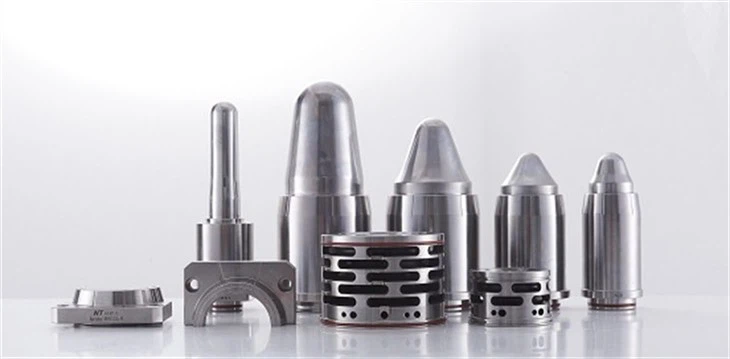
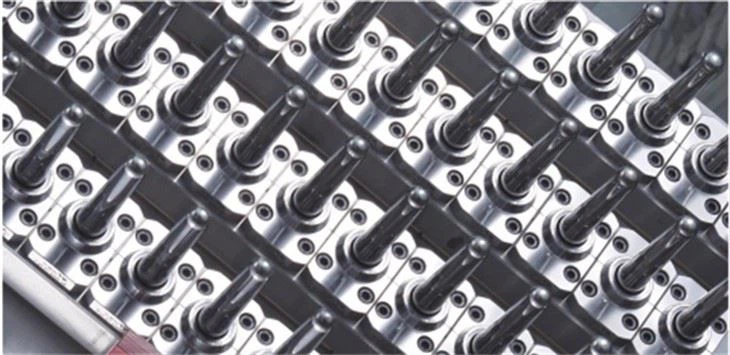
Another crucial thermal property is thermal expansion. When a preform die is heated during the injection molding process, it expands. And when it cools down after the cycle is complete, it contracts. The key here is to have a die material with a low coefficient of thermal expansion. If the die expands too much when heated, it can cause dimensional inaccuracies in the preforms. The preforms might end up being slightly larger than the desired size, which can be a big problem, especially in industries where precise dimensions are crucial.
Let's say you're manufacturing preforms for beverage bottles. If the preforms are not the right size, they might not fit properly on the filling machines, leading to production delays and increased costs. A die with a low coefficient of thermal expansion will maintain its shape and dimensions more accurately throughout the heating and cooling cycles, ensuring consistent preform quality.
Thermal stability is also something we can't overlook. A preform die needs to be able to withstand repeated heating and cooling cycles without significant degradation. High - temperature resistance is a part of thermal stability. During the injection molding process, the die is exposed to high temperatures from the molten plastic. If the die material can't handle these high temperatures, it might start to soften or lose its mechanical properties.
For instance, if the die softens under high temperatures, the surface finish of the preforms can be affected. The preforms might end up with a rough or uneven surface, which is not acceptable in most applications. A thermally stable die material will maintain its hardness and structural integrity, ensuring that the preforms have a smooth and consistent surface finish.
Now, let's talk about how these thermal properties tie into different types of preform molds. When it comes to Valve Gate Preform Mold, the thermal properties play a vital role in controlling the flow of molten plastic. The valve gate system allows for precise control of the plastic injection, but if the die doesn't have good thermal conductivity, the plastic might not flow evenly through the gate. This can lead to issues like short shots or uneven wall thickness in the preforms.
In the case of Injection Preform Mold, the thermal properties are essential for optimizing the injection process. A die with high thermal conductivity can help in quickly heating up the mold cavity to the right temperature before the plastic is injected. This ensures that the plastic flows smoothly and fills the cavity completely. And during the cooling phase, the same high thermal conductivity helps in rapid cooling, reducing the cycle time.
Pet Preform Mould is another area where thermal properties matter a great deal. PET (Polyethylene Terephthalate) is a commonly used material for preforms, especially in the packaging industry. The thermal properties of the die can affect the crystallization process of PET. If the die cools the PET preform too quickly or unevenly, it can lead to improper crystallization, which can impact the clarity, strength, and gas barrier properties of the final bottle.
As a preform die supplier, I understand the importance of getting these thermal properties right. We work hard to select the best materials for our dies, ones that offer the optimal combination of high thermal conductivity, low thermal expansion, and excellent thermal stability. We also use advanced manufacturing techniques to ensure that the dies are designed and built to make the most of these thermal properties.
If you're in the market for high - quality preform dies, you'll want to consider these thermal properties. Whether you're a small - scale manufacturer looking to improve your product quality or a large - scale operation aiming to increase productivity, the right preform die can make a huge difference.
So, if you're interested in learning more about our preform dies or want to discuss your specific requirements, don't hesitate to reach out. We're always happy to have a chat and see how we can help you with your preform production needs. Whether it's the thermal properties or any other aspect of the dies, we've got the expertise to guide you through the process. Let's work together to take your preform production to the next level!
References
- "Plastics Processing Technology" by John A. Brydson
- "Injection Molding Handbook" by O. John Rudolph


