

Hey there! As a supplier of Pet Preform Molds, I often get asked about the heat treatment process for these molds. It's a crucial step that can significantly impact the quality and performance of the molds, so I'm excited to share some insights with you.
First off, let's talk about why heat treatment is so important for Pet Preform Molds. These molds are used to produce preforms for PET bottles, which are widely used in the packaging industry. The preforms need to have precise dimensions, smooth surfaces, and excellent mechanical properties to ensure the final bottles meet the required standards. Heat treatment helps to achieve these goals by improving the hardness, toughness, and wear resistance of the mold material.
The heat treatment process for Pet Preform Molds typically consists of several stages, including annealing, quenching, and tempering. Let's take a closer look at each of these stages.
Annealing
Annealing is the first step in the heat treatment process. It involves heating the mold material to a specific temperature and then slowly cooling it down. This helps to relieve internal stresses in the material, improve its machinability, and refine its grain structure. The annealing temperature and time depend on the type of mold material being used. For example, for some common mold steels, the annealing temperature may range from 700°C to 800°C, and the holding time may be several hours.
During annealing, the mold material is placed in a furnace and heated at a controlled rate to the desired temperature. Once the temperature is reached, it is held constant for a certain period to allow the internal stresses to be relieved. After that, the furnace is turned off, and the mold is allowed to cool slowly inside the furnace. This slow cooling process is crucial to prevent the formation of new internal stresses and to ensure a uniform grain structure.
Quenching
Quenching is the next stage in the heat treatment process. It involves rapidly cooling the annealed mold material from a high temperature to a low temperature. This causes the material to harden by forming a martensitic structure, which is very hard and strong. However, quenching can also introduce significant internal stresses in the material, which need to be relieved in the subsequent tempering stage.
The quenching process typically involves heating the mold material to a temperature above its critical point and then quickly immersing it in a quenching medium, such as oil or water. The choice of quenching medium depends on the type of mold material and the desired hardness and toughness. For example, oil quenching is often used for mold steels because it provides a slower cooling rate compared to water quenching, which helps to reduce the risk of cracking.
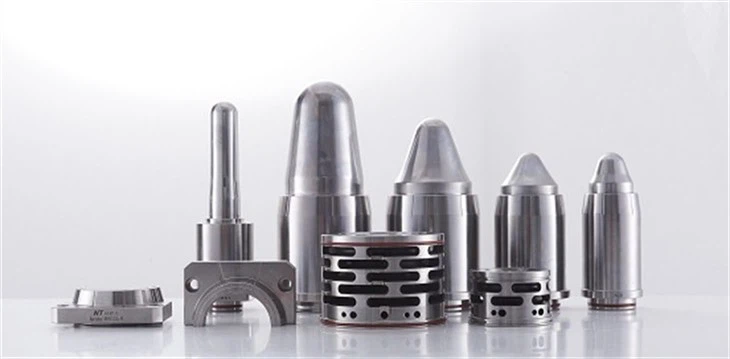

After quenching, the mold material is very hard but also brittle. It is essential to handle it carefully to avoid any damage.
Tempering
Tempering is the final stage in the heat treatment process. It involves reheating the quenched mold material to a temperature below its critical point and then holding it at that temperature for a certain period. This helps to relieve the internal stresses introduced during quenching, improve the toughness of the material, and reduce its brittleness.
The tempering temperature and time depend on the desired properties of the mold. Generally, a higher tempering temperature will result in lower hardness but higher toughness, while a lower tempering temperature will result in higher hardness but lower toughness. The tempering process is usually carried out in a furnace, and the mold is heated at a controlled rate to the desired temperature and held there for several hours. After that, it is cooled slowly in the furnace or in air.
Importance of Proper Heat Treatment
Proper heat treatment is crucial for the performance and longevity of Pet Preform Molds. If the heat treatment process is not carried out correctly, it can lead to various problems, such as cracking, warping, and premature wear of the mold. For example, if the quenching process is too rapid, it can cause the mold to crack due to the high internal stresses. On the other hand, if the tempering process is not sufficient, the mold may remain too brittle and prone to breakage.
As a Pet Preform Mold supplier, we pay great attention to the heat treatment process of our molds. We use advanced heat treatment equipment and follow strict quality control procedures to ensure that each mold meets the highest standards. Our experienced technicians monitor every step of the heat treatment process to ensure that the molds have the right hardness, toughness, and wear resistance.
Our Product Range
In addition to providing high - quality Pet Preform Molds with proper heat treatment, we also offer a wide range of other preform molds. You can check out our Wide Mouth Preform Mold and Injection Preform Mold Injection Preform Mold on our website. These molds are designed to meet the diverse needs of our customers in the packaging industry.
Contact Us for Purchase
If you're in the market for Pet Preform Molds or any of our other preform molds, we'd love to hear from you. We can provide you with detailed information about our products, including their specifications, performance, and pricing. Our team of experts is always ready to assist you in finding the right mold for your specific requirements. Whether you're a small - scale producer or a large - scale manufacturer, we have the solutions to meet your needs. So, don't hesitate to reach out and start a conversation with us. We're looking forward to working with you and helping you achieve success in your business.
References
- ASM Handbook Volume 4: Heat Treating. ASM International.
- Tool and Die Making Handbook. Industrial Press Inc.


