

Mold shrinkage is a critical factor that significantly influences the performance and quality of injection preform molds. As a leading supplier of Injection Preform Molds, we have witnessed firsthand the profound impact of mold shrinkage on the entire production process. In this blog, we will delve into the various aspects of mold shrinkage and its implications for injection preform molds.
Understanding Mold Shrinkage
Mold shrinkage refers to the reduction in the size of a molded part as it cools and solidifies after being injected into the mold cavity. This phenomenon occurs due to the thermal contraction of the plastic material and the relaxation of its molecular structure. Different plastic materials exhibit varying degrees of shrinkage, which can range from a few tenths of a percent to several percent.
The shrinkage rate is influenced by several factors, including the type of plastic resin, the processing conditions (such as temperature, pressure, and cooling rate), and the design of the mold. For example, crystalline plastics generally have a higher shrinkage rate compared to amorphous plastics because of their more ordered molecular structure. Additionally, higher processing temperatures and longer cooling times can lead to increased shrinkage.
Impact on Dimensional Accuracy
One of the most significant impacts of mold shrinkage is on the dimensional accuracy of the injection preforms. In the production of preforms, precise dimensions are crucial to ensure proper fit and function in subsequent processes, such as blow molding. Even a small deviation in the preform's dimensions can result in defective products, such as bottles with uneven walls or improper sealing.
To achieve the desired dimensional accuracy, mold designers must carefully consider the shrinkage rate of the plastic material and make appropriate adjustments to the mold cavity dimensions. This involves calculating the expected shrinkage and adding a compensation factor to the mold design. However, accurately predicting the shrinkage rate can be challenging due to the complex interplay of various factors. Therefore, extensive testing and optimization are often required to fine-tune the mold design and ensure consistent dimensional accuracy.
Influence on Surface Finish
Mold shrinkage can also affect the surface finish of the injection preforms. As the plastic material shrinks during cooling, it may pull away from the mold surface, resulting in surface defects such as sink marks, warping, or flow lines. These defects not only compromise the aesthetic appearance of the preforms but also can affect their mechanical properties and performance.
To minimize the impact of shrinkage on the surface finish, mold designers can employ several strategies. For instance, they can optimize the gate location and size to ensure uniform filling of the mold cavity and reduce the likelihood of flow-related defects. Additionally, using high-quality mold materials and proper surface treatments can help improve the surface finish of the preforms.
Effects on Mold Life
Another important aspect to consider is the impact of mold shrinkage on the mold life. Repeated cycles of heating and cooling during the injection molding process can cause the mold to expand and contract, leading to stress and wear on the mold components. If the shrinkage rate is not properly accounted for, it can result in excessive stress on the mold, which may lead to premature failure or damage.
To extend the mold life, it is essential to design the mold with appropriate structural support and to use materials that can withstand the thermal and mechanical stresses associated with mold shrinkage. Regular maintenance and inspection of the mold can also help detect and address any potential issues before they cause significant damage.
Strategies to Compensate for Mold Shrinkage
As an Injection Preform Mold supplier, we have developed several strategies to compensate for mold shrinkage and ensure the high quality of our products. One approach is to use advanced simulation software to predict the shrinkage behavior of the plastic material and optimize the mold design accordingly. This allows us to make accurate adjustments to the mold cavity dimensions and minimize the need for costly trial-and-error processes.
Another strategy is to conduct extensive testing and validation during the mold development process. We use prototype molds to produce sample preforms and measure their dimensions and properties to verify the accuracy of our shrinkage predictions. Based on the test results, we can fine-tune the mold design and make any necessary adjustments to ensure optimal performance.
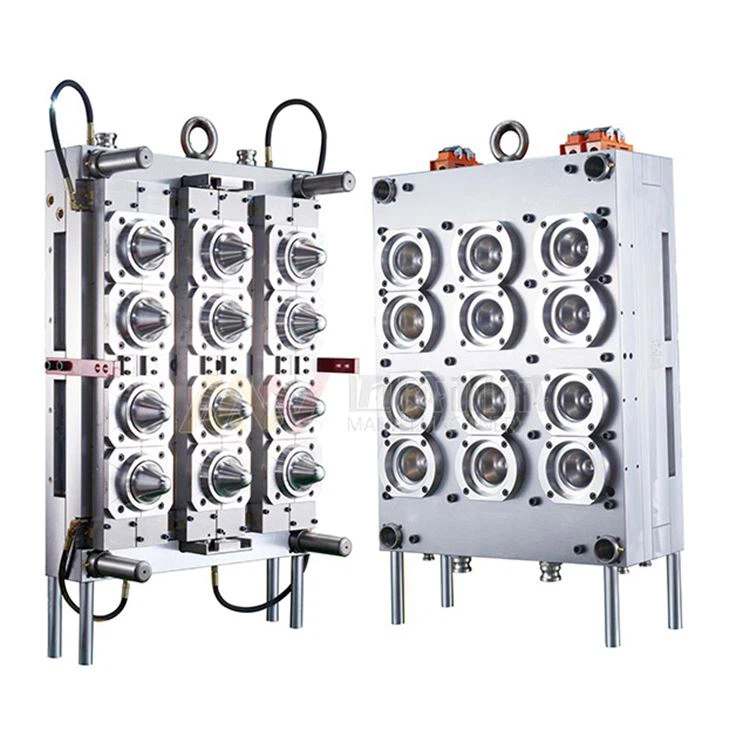

In addition, we work closely with our customers to understand their specific requirements and provide customized solutions. By collaborating with our customers from the early stages of the project, we can ensure that the mold design takes into account all the relevant factors, including the type of plastic material, the production volume, and the desired quality standards.
Conclusion
In conclusion, mold shrinkage has a significant impact on the performance and quality of injection preform molds. It affects the dimensional accuracy, surface finish, and mold life, and can lead to defective products if not properly managed. As a leading supplier of Injection Preform Molds, we are committed to providing our customers with high-quality molds that are designed to minimize the effects of mold shrinkage.
We offer a wide range of Hot Runner Preform Mold, Preform Die, and Pet Preform Mould solutions that are tailored to meet the specific needs of our customers. Our experienced team of engineers and technicians uses the latest technologies and techniques to ensure the accuracy and reliability of our molds.
If you are looking for a reliable Injection Preform Mold supplier, we invite you to contact us for a consultation. We will be happy to discuss your requirements and provide you with a customized solution that meets your needs and budget.
References
- Beaumont, J. P. (2009). Injection Molding Handbook. Hanser Publishers.
- Rosato, D. V., & Rosato, D. V. (2004). Injection Molding Technology. Kluwer Academic Publishers.
- Throne, J. L. (1996). Plastics Process Engineering. Marcel Dekker.


