

What is the Mould Closing Force of a Preform Mould?
As a preform mould supplier, I often encounter customers who are curious about the concept of mould closing force in preform moulds. Understanding the mould closing force is crucial for the efficient and effective operation of preform manufacturing processes. In this blog post, I will delve into the details of what mould closing force is, its significance, and how it impacts the production of preforms.
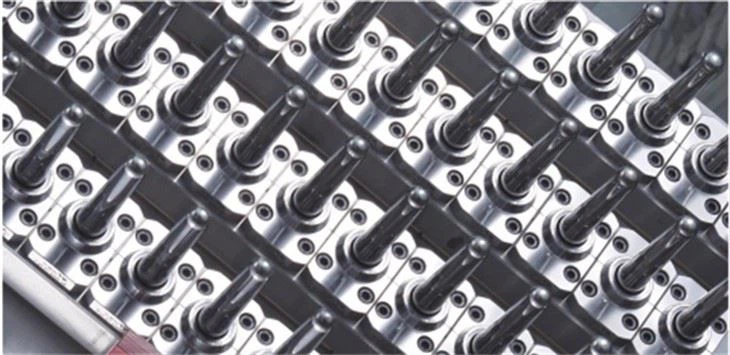

Definition of Mould Closing Force
The mould closing force, also known as clamping force, is the force applied by the injection - molding machine to keep the two halves of the preform mould tightly closed during the injection process. When molten plastic is injected into the mould cavity at high pressure, it exerts an outward force on the mould walls. If the mould closing force is insufficient, the mould may open slightly, leading to flash (excess plastic that seeps out between the mould halves), inconsistent part dimensions, and poor - quality preforms.
The mould closing force is typically measured in tons or kilonewtons (kN). Different preform moulds require different levels of closing force depending on several factors, such as the size of the preform, the number of cavities in the mould, the type of plastic material used, and the injection pressure.
Factors Affecting Mould Closing Force
Preform Size and Cavity Number
Larger preforms generally require a higher mould closing force because they have a larger surface area. The molten plastic in a large - sized preform exerts a greater outward force on the mould walls compared to a smaller preform. Similarly, a multi - cavity preform mould, which produces multiple preforms simultaneously, needs a higher closing force. As the number of cavities increases, the total force exerted by the molten plastic on the mould also increases. For example, a 64 - cavity preform mould will require a significantly higher closing force than a 16 - cavity mould.
Plastic Material
Different plastic materials have different flow properties and viscosities. High - viscosity plastics, such as some engineering plastics, require higher injection pressures to fill the mould cavity. Consequently, a higher mould closing force is needed to counteract the increased force exerted by the high - pressure injection of these materials. On the other hand, low - viscosity plastics, like some grades of polyethylene, may require relatively lower closing forces.
Injection Pressure
The injection pressure is the force with which the molten plastic is pushed into the mould cavity. Higher injection pressures result in a greater outward force on the mould walls, necessitating a higher mould closing force. The injection pressure is influenced by factors such as the thickness of the preform walls, the complexity of the preform design, and the flow path of the plastic within the mould.
Calculating Mould Closing Force
Calculating the exact mould closing force is a complex process that involves considering multiple variables. However, a simplified formula can be used as a starting point:
[F = P\times A]
where (F) is the mould closing force, (P) is the injection pressure, and (A) is the projected area of the preform(s) in the mould. The projected area is the area of the preform(s) as seen from the direction of the mould opening.
It's important to note that this formula provides a rough estimate. In practice, other factors such as friction between the mould components, the design of the hot runner system, and the presence of any undercuts or complex features in the preform need to be taken into account. Many injection - molding machine manufacturers provide guidelines and software tools to help calculate the appropriate mould closing force for a given preform mould.
Significance of Appropriate Mould Closing Force
Quality of Preforms
An appropriate mould closing force ensures that the preforms are produced with consistent dimensions and high quality. When the closing force is sufficient, the mould remains tightly closed during injection, preventing flash and ensuring that the preforms have smooth surfaces and accurate shapes. This is especially important for preforms that will be used in applications where precision is critical, such as in the packaging of pharmaceuticals or high - end beverages.
Mould Longevity
Using the correct mould closing force also extends the lifespan of the preform mould. Excessive closing force can cause undue stress on the mould components, leading to premature wear and tear, deformation, and even cracking. On the other hand, insufficient closing force can result in repeated opening and closing of the mould during injection, which can also damage the mould over time.
Production Efficiency
Proper mould closing force contributes to efficient production. When the force is set correctly, the injection - molding process can run smoothly without frequent interruptions due to quality issues or mould damage. This reduces downtime, increases the production output, and ultimately lowers the cost per preform.
Our Offerings as a Preform Mould Supplier
As a preform mould supplier, we understand the importance of the mould closing force in the production of high - quality preforms. We offer a wide range of Preform Die that are designed to work with different injection - molding machines and closing forces. Our Hot Runner Preform Mold systems are engineered to optimize the flow of molten plastic, reducing the injection pressure required and, in turn, the necessary mould closing force.
We also provide Pet Preform Mould solutions that are tailored to the specific needs of our customers. Our team of experienced engineers can assist in calculating the appropriate mould closing force for your specific preform design and production requirements. We take into account all the relevant factors, such as preform size, cavity number, plastic material, and injection pressure, to ensure that you get the best - performing preform mould.
Contact Us for Your Preform Mould Needs
If you are in the market for high - quality preform moulds and need expert advice on mould closing force, we are here to help. Our team is dedicated to providing you with the best solutions for your preform manufacturing processes. Whether you are a small - scale producer or a large - scale industrial manufacturer, we can offer customized preform moulds that meet your exact specifications. Contact us today to start a discussion about your preform mould requirements and take the first step towards improving your production efficiency and preform quality.
References
- "Injection Molding Handbook" by O. Olszewski
- "Plastics Processing Technology" by R. Crawford


