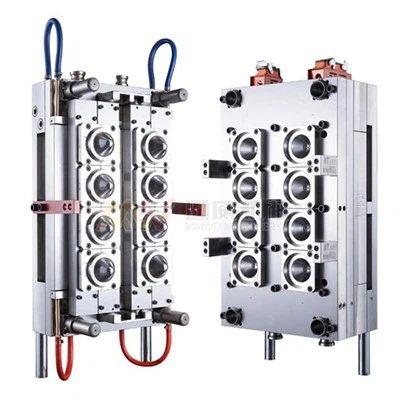
As a supplier of Wide Mouth Preform Molds, I often get asked about the production capacity of these molds. Understanding the production capacity is crucial for businesses looking to optimize their manufacturing processes and meet market demands efficiently. In this blog post, I'll delve into the factors that influence the production capacity of a wide mouth preform mold and provide insights to help you make informed decisions.
Understanding Wide Mouth Preform Molds
Before we discuss production capacity, let's briefly understand what wide mouth preform molds are. These molds are used to create preforms, which are the initial forms of plastic containers. Wide mouth preforms are typically used for products that require easy access, such as food items, beverages, and personal care products. The molds are designed to produce preforms with a larger opening diameter compared to standard preforms.
Factors Affecting Production Capacity
1. Cavity Number
One of the most significant factors influencing the production capacity of a wide mouth preform mold is the number of cavities. A cavity is a space within the mold where the preform is formed. Molds can have anywhere from a single cavity to multiple cavities, such as 4, 8, 16, 32, or even more. The more cavities a mold has, the more preforms it can produce in a single cycle. For example, a 32-cavity mold can produce 32 preforms per cycle, while a 4-cavity mold can only produce 4.
2. Cycle Time
Cycle time refers to the time it takes for a mold to complete one full production cycle, from the moment the plastic is injected into the mold until the finished preforms are ejected. Cycle time is influenced by several factors, including the size and complexity of the preform, the type of plastic used, and the cooling time required. Shorter cycle times result in higher production rates. For instance, if a mold has a cycle time of 10 seconds, it can produce approximately 360 preforms per hour. However, if the cycle time is reduced to 8 seconds, the production rate increases to around 450 preforms per hour.
3. Machine Compatibility
The production capacity of a wide mouth preform mold also depends on the compatibility with the injection molding machine. The machine's clamping force, injection volume, and screw speed must be sufficient to handle the mold's requirements. If the machine is not powerful enough, it may not be able to fill all the cavities evenly or may require longer cycle times to compensate. Therefore, it's essential to choose a mold and machine combination that is well-matched to achieve optimal production capacity.
4. Maintenance and Downtime
Regular maintenance is crucial to ensure the smooth operation of a wide mouth preform mold and minimize downtime. Over time, molds can wear out, develop cracks, or experience other issues that can affect their performance. Scheduled maintenance, such as cleaning, lubrication, and inspection, can help prevent these problems and extend the mold's lifespan. Additionally, having a contingency plan in place for unexpected breakdowns can reduce the impact of downtime on production capacity.
Calculating Production Capacity
To calculate the production capacity of a wide mouth preform mold, you need to consider the cavity number, cycle time, and the number of operating hours per day. Here's a simple formula to help you estimate the daily production capacity:
Daily Production Capacity = (Cavity Number / Cycle Time) x 3600 x Operating Hours
For example, let's say you have a 16-cavity mold with a cycle time of 12 seconds and you plan to operate the machine for 20 hours per day. Using the formula, the daily production capacity would be:
(16 / 12) x 3600 x 20 = 96,000 preforms per day
Optimizing Production Capacity
1. Choose the Right Mold Design
Selecting the appropriate mold design is crucial for maximizing production capacity. Consider factors such as the cavity number, gate type, and cooling system. For high-volume production, a multi-cavity mold with a Valve Gate Preform Mold design can help reduce cycle times and improve part quality. Valve gate systems allow for precise control of the plastic flow, resulting in more consistent preforms and faster production rates.
2. Use High-Quality Materials
Using high-quality materials for the mold construction can improve its durability and performance. High-grade steel alloys, such as P20 or H13, are commonly used for wide mouth preform molds due to their excellent strength, hardness, and heat resistance. These materials can withstand the high pressures and temperatures involved in the injection molding process, reducing the risk of wear and tear and ensuring longer mold life.
3. Implement Efficient Cooling Systems
Efficient cooling is essential for reducing cycle times and improving part quality. A well-designed cooling system can help dissipate heat quickly from the mold, allowing the preforms to solidify faster. Consider using advanced cooling technologies, such as conformal cooling channels, which can provide more uniform cooling and reduce cooling times by up to 50%. This can significantly increase the production capacity of the mold.
4. Train Your Operators
Proper training of operators is crucial for ensuring the efficient operation of the injection molding machine and the wide mouth preform mold. Operators should be familiar with the machine's controls, safety procedures, and maintenance requirements. They should also be trained to identify and troubleshoot common issues, such as clogging, flashing, or warping. By investing in operator training, you can minimize downtime and improve overall production efficiency.


Other Types of Preform Molds
In addition to wide mouth preform molds, we also offer a range of other preform molds, including Jar Preform Mold and Hot Runner Preform Mold. Jar preform molds are specifically designed for producing preforms for jars, which are commonly used for storing food, cosmetics, and other products. Hot runner preform molds, on the other hand, use a heated runner system to keep the plastic molten throughout the injection process, resulting in faster cycle times and better part quality.
Conclusion
The production capacity of a wide mouth preform mold is influenced by several factors, including the cavity number, cycle time, machine compatibility, and maintenance. By understanding these factors and implementing the right strategies, you can optimize the production capacity of your mold and meet your manufacturing goals efficiently. If you're interested in learning more about our wide mouth preform molds or other types of preform molds, please don't hesitate to contact us. We'd be happy to discuss your specific requirements and provide you with a customized solution.
References
- "Injection Molding Handbook" by O. Sabliov and C. Rauwendaal
- "Plastic Injection Molding: Principles and Practice" by Rosato, Rosato, and co-authors