

What is the production capacity of an injection preform mold?
As a provider of Injection Preform Mold, I often get asked about the production capacity of these molds. Understanding the production capacity of an injection preform mold is crucial for businesses looking to optimize their manufacturing processes, meet market demands, and manage costs effectively. In this blog post, I'll delve into the factors that influence the production capacity of an injection preform mold and provide insights on how to make the most of it.
Factors Affecting Production Capacity
The production capacity of an injection preform mold is not a fixed number; it is influenced by a variety of factors, both internal and external to the mold itself. Here are some of the key factors that play a role in determining how many preforms a mold can produce within a given time frame.
1. Cavity Number
One of the most significant factors affecting the production capacity of an injection preform mold is the number of cavities it has. A cavity is the space within the mold where the preform is formed. Molds can have anywhere from a single cavity to over 100 cavities. Generally, the more cavities a mold has, the higher its production capacity. For example, a 64-cavity mold can theoretically produce 64 preforms in one injection cycle, while a 16-cavity mold can only produce 16 preforms in the same cycle.
However, it's important to note that increasing the number of cavities also increases the complexity of the mold and the injection molding machine. More cavities require a larger machine with higher clamping force and more precise control systems to ensure uniform filling and cooling of all cavities.
2. Cycle Time
Cycle time is another critical factor in determining production capacity. Cycle time refers to the time it takes to complete one full injection molding cycle, from the moment the mold closes to the moment the finished preforms are ejected. Cycle time is influenced by several factors, including the size and complexity of the preform, the type of plastic material used, the cooling time required, and the speed of the injection molding machine.
For example, a small, simple preform made from a fast-cooling plastic material may have a cycle time of 10 - 15 seconds, while a larger, more complex preform made from a slow-cooling material may have a cycle time of 30 seconds or more. Shorter cycle times result in higher production capacity, as more cycles can be completed in a given time period.
3. Mold Design and Quality
The design and quality of the injection preform mold also have a significant impact on production capacity. A well-designed mold with proper gate placement, cooling channels, and venting can ensure uniform filling and cooling of the preforms, reducing the risk of defects and allowing for shorter cycle times. On the other hand, a poorly designed mold may result in uneven filling, long cooling times, and a high rate of defective parts, which can significantly reduce production capacity.

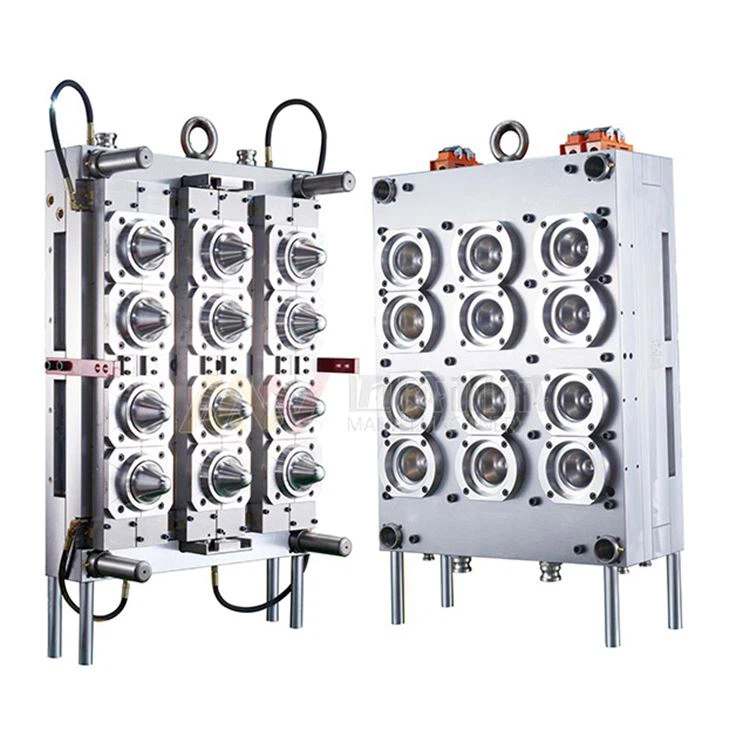
High-quality molds are also more durable and require less maintenance, which means less downtime for repairs and replacements. This can further increase the overall production capacity of the mold over its lifespan.
4. Injection Molding Machine Performance
The performance of the injection molding machine used with the preform mold is another important factor. The machine's clamping force, injection speed, and plasticizing capacity must be compatible with the mold's requirements. A machine with insufficient clamping force may not be able to keep the mold closed properly during the injection process, leading to flash and other defects. Similarly, a machine with low injection speed or plasticizing capacity may not be able to fill the mold cavities quickly enough, resulting in longer cycle times.
Modern injection molding machines are equipped with advanced control systems that can optimize the injection process and reduce cycle times. For example, some machines use servo-driven systems to control the movement of the mold and the injection unit, allowing for more precise and faster operation.
Calculating Production Capacity
To calculate the production capacity of an injection preform mold, you need to consider the number of cavities, the cycle time, and the operating hours of the injection molding machine. The following formula can be used to estimate the production capacity:
Production Capacity (preforms per hour) = (Number of Cavities / Cycle Time in seconds) x 3600
For example, if you have a 32-cavity mold with a cycle time of 15 seconds, the production capacity would be:
(32 / 15) x 3600 = 7680 preforms per hour
However, this is a theoretical calculation and does not take into account factors such as machine downtime for maintenance, changeovers, and quality control checks. In practice, the actual production capacity may be lower than the theoretical capacity.
Maximizing Production Capacity
As an Injection Preform Mold supplier, I understand the importance of maximizing production capacity for our customers. Here are some tips on how to get the most out of your injection preform mold:
1. Optimize Mold Design
Work with an experienced mold designer to ensure that the mold is designed for maximum efficiency. This includes proper gate placement, cooling channel design, and venting. A well-designed mold can reduce cycle times and improve the quality of the preforms.
2. Choose the Right Plastic Material
Select a plastic material that is suitable for your application and has good flow properties and fast cooling times. This can help reduce cycle times and improve the overall production capacity of the mold.
3. Maintain the Mold and Injection Molding Machine
Regular maintenance of the mold and the injection molding machine is essential to ensure optimal performance. This includes cleaning, lubricating, and inspecting the mold and machine components, as well as replacing worn parts. Proper maintenance can reduce downtime and extend the lifespan of the mold and machine.
4. Use Advanced Injection Molding Technologies
Consider using advanced injection molding technologies such as Valve Gate Preform Mold and Hot Runner Preform Mold. These technologies can improve the filling and cooling of the preforms, reduce cycle times, and improve the quality of the parts.
Conclusion
The production capacity of an injection preform mold is determined by a combination of factors, including the number of cavities, cycle time, mold design and quality, and the performance of the injection molding machine. By understanding these factors and taking steps to optimize them, businesses can maximize the production capacity of their preform molds, reduce costs, and improve their competitiveness in the market.
If you're looking to invest in an injection preform mold or need to improve the production capacity of your existing mold, I encourage you to reach out to us. Our team of experts can help you select the right mold for your application, optimize its design, and provide ongoing support to ensure maximum performance. Contact us today to start the conversation and explore how we can help you achieve your production goals.
References
- “Injection Molding Handbook” by O. Olanipekun
- “Plastic Injection Molding: Principles and Practice” by Rosato and Rosato


