The shrinkage rate of the preform in a Hot Runner Preform Mold is a crucial factor that significantly impacts the quality and dimensional accuracy of the final product. As a supplier of Hot Runner Preform Molds, understanding and controlling this shrinkage rate is essential for delivering high - quality molds to our customers.
Understanding Shrinkage in Preform Molding
Shrinkage in preform molding occurs due to the change in volume of the plastic material as it cools from a molten state to a solid state. When the plastic is injected into the mold cavity in a hot runner preform mold, it is in a highly fluid state. As it cools and solidifies, the molecules of the plastic material come closer together, resulting in a reduction in volume. This reduction in volume is manifested as shrinkage of the preform.
The shrinkage rate is usually expressed as a percentage and is calculated based on the difference between the dimensions of the preform in the mold cavity and the dimensions of the cooled preform. For example, if a preform has a diameter of 100 mm in the mold cavity and a diameter of 98 mm after cooling, the shrinkage rate for the diameter is calculated as ((100 - 98)/100\times100%=2%).
Factors Affecting the Shrinkage Rate
Material Properties
Different plastic materials have different shrinkage characteristics. For instance, semi - crystalline plastics such as polyethylene (PE) and polypropylene (PP) generally have higher shrinkage rates compared to amorphous plastics like polystyrene (PS) and polycarbonate (PC). Semi - crystalline plastics have a more ordered molecular structure in the solid state, which leads to a greater reduction in volume during cooling. The degree of crystallinity, molecular weight, and the presence of additives in the plastic material can also influence the shrinkage rate.

Processing Conditions
The processing conditions during preform molding play a vital role in determining the shrinkage rate. The melt temperature of the plastic is an important factor. A higher melt temperature can cause more significant shrinkage as the plastic has more energy to expand in the molten state and then contracts more when it cools. Injection pressure also affects shrinkage. Higher injection pressures can pack more plastic into the mold cavity, reducing the shrinkage rate by compensating for the volume reduction during cooling. Cooling time is another critical factor. Insufficient cooling time can result in the preform still being in a relatively soft state when ejected from the mold, leading to additional shrinkage after ejection.
Mold Design
The design of the Hot Runner Preform Mold can also impact the shrinkage rate. The size and shape of the mold cavity, the thickness of the preform walls, and the layout of the hot runner system all have an influence. For example, a preform with thicker walls will generally have a higher shrinkage rate because it takes longer to cool, and the plastic has more time to contract. The hot runner system should be designed to ensure uniform distribution of the molten plastic in the mold cavity. Uneven flow can lead to different cooling rates in different parts of the preform, resulting in non - uniform shrinkage.
Measuring and Controlling the Shrinkage Rate
Measuring the Shrinkage Rate
To measure the shrinkage rate accurately, we use precision measuring tools such as calipers, micrometers, and coordinate measuring machines (CMMs). We take measurements of the preform immediately after ejection from the mold and again after it has fully cooled and stabilized. By comparing these measurements, we can calculate the shrinkage rate for different dimensions of the preform.
Controlling the Shrinkage Rate
As a Hot Runner Preform Mold supplier, we employ several strategies to control the shrinkage rate. First, we carefully select the plastic material based on the required shrinkage characteristics of the final product. We work closely with our customers to understand their specific needs and recommend the most suitable plastic material. Second, we optimize the processing conditions. We conduct extensive trials to determine the optimal melt temperature, injection pressure, and cooling time for each type of plastic material and preform design. Third, we focus on the mold design. Our experienced mold designers use advanced software to simulate the flow of the molten plastic in the mold cavity and predict the shrinkage behavior. They can then make adjustments to the mold design, such as modifying the wall thickness or the hot runner layout, to minimize shrinkage and ensure uniform shrinkage across the preform.
Importance of Controlling Shrinkage Rate for Our Customers
For our customers, controlling the shrinkage rate in the preform is of utmost importance. A high or non - uniform shrinkage rate can lead to several quality issues. For example, if the shrinkage rate is too high, the preform may not fit properly into the subsequent blow - molding or injection - molding equipment, resulting in production delays and increased costs. Non - uniform shrinkage can cause warping, deformation, and dimensional inaccuracies in the final product, which can lead to product rejection and customer dissatisfaction.
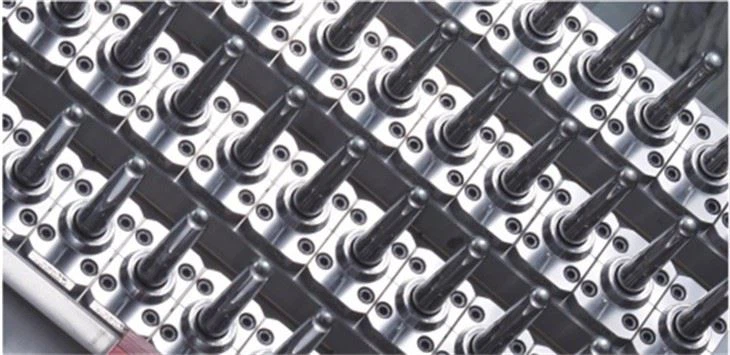
By providing Hot Runner Preform Molds that can produce preforms with a controlled and consistent shrinkage rate, we help our customers improve the quality of their products, increase production efficiency, and reduce costs. Our molds are designed to meet the strictest quality standards, ensuring that the preforms have the desired dimensions and properties.
Different Types of Preform Molds and Shrinkage
In addition to Hot Runner Preform Molds, we also offer Jar Preform Mold and Valve Gate Preform Mold. Each type of mold has its own characteristics and considerations regarding shrinkage.
Jar preform molds are specifically designed for producing preforms for jars. The shape and size of jar preforms are different from regular preforms, which can affect the shrinkage behavior. Our Jar Preform Molds are engineered to account for these differences and ensure that the jar preforms have the correct shrinkage rate.

Valve Gate Preform Molds use a valve gate system to control the flow of the molten plastic into the mold cavity. This system can provide more precise control over the filling process, which in turn can help in controlling the shrinkage rate. The valve gate can be opened and closed at specific times during the injection process, allowing for better control of the pressure and flow of the plastic, resulting in more uniform shrinkage.
Conclusion
As a supplier of Hot Runner Preform Mold, we understand the significance of the shrinkage rate in preform molding. By comprehensively understanding the factors that affect shrinkage, accurately measuring it, and implementing effective control strategies, we are able to provide our customers with high - quality molds that produce preforms with consistent and controlled shrinkage rates.
If you are in the market for preform molds and are concerned about the shrinkage rate of the preforms, we invite you to contact us for a detailed discussion. Our team of experts is ready to assist you in selecting the right mold and ensuring that your preform production meets the highest quality standards.

References
- Osswald, T. A., & Turng, L. - S. (2007). Injection Molding Handbook. Hanser Publishers.
- Beaumont, J. P. (2009). Success in Injection Molding. Hanser Gardner Publications.
- Rosato, D. V., Rosato, D. P., & coan, J. L. (2000). Injection Molding Handbook. Kluwer Academic Publishers.