

Hey there! As a preform mould supplier, I often get asked about the tolerance of a preform mould. So, let's dive right into it and break down what this whole "tolerance" thing is all about.
First off, what's tolerance in the context of a preform mould? Well, tolerance refers to the allowable variation in the dimensions of a preform mould. In simpler terms, it's the range within which the actual size of the mould can deviate from the specified or ideal size. And this is super important because even the tiniest deviation can have a huge impact on the quality of the preforms produced.
Let's talk about why tolerance matters. When you're making preforms, whether it's for bottles, jars, or other containers, the final product needs to meet certain standards. For example, if you're making a preform for a beverage bottle, it has to fit perfectly with the cap, and the bottle needs to have a consistent shape and volume. If the preform mould has a tolerance that's too large, the preforms might come out with uneven walls, inconsistent diameters, or other defects. This can lead to problems like leaks, poor sealing, or a less - than - perfect appearance.
Now, there are different types of tolerances that we need to consider when it comes to preform moulds. One of the most important ones is dimensional tolerance. This includes things like the length, diameter, and wall thickness of the preform. For instance, if the specified diameter of a preform is supposed to be 20 mm with a tolerance of ±0.1 mm, it means that the actual diameter of the preform produced by the mould can be anywhere between 19.9 mm and 20.1 mm. If the diameter goes outside this range, the preform might not fit properly with the other parts of the container or might not perform as expected.
Another type of tolerance is geometric tolerance. This has to do with the shape and form of the preform. For example, the preform should be straight and round. If there's a deviation in the roundness or straightness, it can cause issues during the blow - molding process, where the preform is expanded into the final container shape. Geometric tolerances ensure that the preform has the right shape to be transformed into a high - quality container.
So, how do we control the tolerance of a preform mould? Well, it all starts with the design and manufacturing process. At our company, we use state - of - the - art CAD/CAM technology to design the moulds with high precision. This allows us to specify the exact dimensions and tolerances right from the start. During the manufacturing process, we use advanced machining techniques like CNC (Computer Numerical Control) machining. CNC machines can cut and shape the mould with extremely high accuracy, ensuring that the final product meets the specified tolerances.
We also have a rigorous quality control process in place. After the mould is manufactured, we use precision measuring instruments like coordinate measuring machines (CMMs) to check the dimensions and geometric features of the mould. These machines can measure the mould to a very high degree of accuracy, and if any deviations are found, we can make the necessary adjustments to bring the mould within the acceptable tolerance range.
Let's take a look at some of the factors that can affect the tolerance of a preform mould. One of the main factors is the material used to make the mould. Different materials have different properties, such as thermal expansion and contraction. For example, if the mould is made of a material that expands a lot when heated, it can cause the dimensions of the mould to change during the injection - molding process. This can lead to variations in the preform dimensions. That's why we carefully select the materials for our moulds, taking into account their thermal properties and other characteristics to minimize the impact on tolerance.
The operating conditions also play a role. The temperature, pressure, and injection speed during the injection - molding process can all affect the final dimensions of the preform. If the temperature is too high or too low, or if the pressure is not consistent, it can cause the plastic to flow differently in the mould, resulting in dimensional variations. That's why we closely monitor and control these operating conditions to ensure that the preforms are produced within the specified tolerances.
Now, I want to introduce you to some of our great preform mould products. We offer a wide range of preform moulds, including Valve Gate Preform Mold. These moulds are designed with advanced valve gate technology, which allows for better control of the plastic flow during the injection process. This results in more consistent preforms with tighter tolerances.
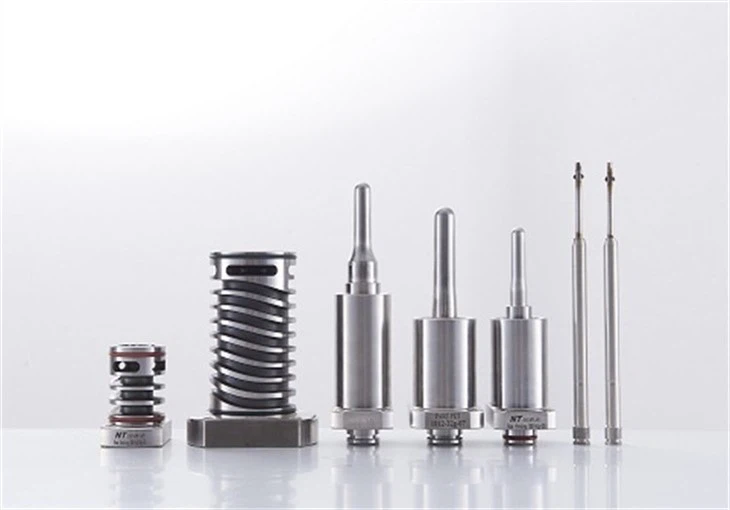

We also have Jar Preform Mold. These moulds are specifically designed for making preforms for jars. They are engineered to produce preforms with the right dimensions and shape to be transformed into high - quality jars. Whether you need small jars for cosmetics or large jars for food products, our jar preform moulds can meet your requirements.
And of course, we have Injection Preform Mold. Our injection preform moulds are built to last and are capable of producing preforms with high precision and tight tolerances. They are suitable for a variety of applications, from beverage bottles to industrial containers.
In conclusion, the tolerance of a preform mould is a crucial factor in ensuring the quality of the preforms and the final containers. By carefully controlling the design, manufacturing, and operating conditions, we can produce preform moulds with tight tolerances that meet the highest standards. If you're in the market for high - quality preform moulds with excellent tolerance control, we'd love to hear from you. Whether you're a small business just starting out or a large corporation looking for reliable mould suppliers, we have the expertise and products to meet your needs. So, if you're interested in learning more about our preform moulds or want to discuss your specific requirements, don't hesitate to reach out to us. Let's start a conversation and see how we can work together to create the perfect preform moulds for your products.
References:
- "Plastic Injection Molding Handbook" by Rosato and Rosato
- "Manufacturing Engineering and Technology" by Serope Kalpakjian and Steven Schmid


