

As a seasoned supplier of blow molding machines, I'm excited to delve into the intricacies of the working process of a single - stage blow molding machine. This technology is not only fascinating but also plays a crucial role in various industries, from packaging to automotive.
1. Understanding the Basics of Single - Stage Blow Molding
Before we dive into the working process, let's first understand what single - stage blow molding is. In single - stage blow molding, all the operations, including plasticizing the raw material, forming the preform, and blowing it into the final shape, are carried out in a single machine cycle. This is in contrast to two - stage blow molding, where the preform is made in one machine and then transferred to another for blowing.
The single - stage blow molding machine is highly efficient and versatile, capable of producing a wide range of products, such as bottles, containers, and even some automotive parts. Its flexibility makes it a popular choice for many manufacturers, especially those with smaller production runs or those requiring quick changeovers between different products.
2. The Working Process Step by Step
Step 1: Plasticizing the Raw Material
The process begins with the raw plastic material, which is usually in the form of pellets. These pellets are fed into the hopper of the blow molding machine. From the hopper, the pellets are gravity - fed into the extruder barrel. Inside the extruder barrel, there is a rotating screw. As the screw rotates, it conveys the plastic pellets forward while simultaneously applying heat and pressure.
The heat is generated by electric heaters wrapped around the extruder barrel. The combination of heat and mechanical shearing action from the screw causes the plastic pellets to melt and transform into a homogeneous molten plastic mass. This molten plastic is then pushed towards the end of the extruder barrel, ready for the next step.
Step 2: Preform Formation
Once the plastic is in a molten state, it is forced through a die head. The die head is designed to shape the molten plastic into a tubular form known as a parison or preform. The preform has a specific diameter and wall thickness, which are determined by the design of the die head and the settings of the machine.
The preform is then held in place by a set of molds. These molds are typically made of steel and are precisely machined to the desired shape of the final product. The molds are cooled by a water - cooling system to maintain a consistent temperature and ensure proper solidification of the plastic.
Step 3: Blowing the Preform into the Final Shape
After the preform is in position within the molds, a blow pin is inserted into the open end of the preform. Compressed air is then introduced through the blow pin at a high pressure. The compressed air expands the preform, forcing it to conform to the inner surface of the molds.
As the preform expands, it takes on the shape of the molds, creating the final product. The high - pressure air also helps to cool the plastic slightly, allowing it to solidify quickly. The cooling process is further enhanced by the water - cooling system in the molds.
Step 4: Ejection of the Finished Product
Once the plastic has solidified and the product has taken on its final shape, the molds are opened. A robotic arm or an ejection mechanism is used to remove the finished product from the molds. The product is then transferred to a conveyor belt or a collection area for further processing, such as trimming, labeling, or packaging.
3. Advantages of Single - Stage Blow Molding Machines
Single - stage blow molding machines offer several advantages over other types of blow molding technologies.
One of the main advantages is their efficiency. Since all the operations are carried out in a single machine cycle, there is no need for additional handling or transportation of the preforms between different machines. This reduces the overall production time and labor costs.
Another advantage is the ability to produce complex shapes and designs. The single - stage process allows for more precise control over the preform formation and blowing, resulting in products with better dimensional accuracy and surface finish.
Single - stage blow molding machines are also more suitable for small - to - medium - scale production runs. They can be easily adjusted to produce different products by changing the molds and adjusting the machine settings. This flexibility makes them a cost - effective solution for manufacturers who need to produce a variety of products.
4. Applications of Single - Stage Blow Molding Machines
Single - stage blow molding machines are used in a wide range of industries.
In the packaging industry, they are commonly used to produce bottles for beverages, cosmetics, and pharmaceuticals. For example, the Medicine Bottle Blow Molding Machine is specifically designed to produce high - quality medicine bottles with precise dimensions and excellent barrier properties.
In the automotive industry, single - stage blow molding machines can be used to produce various components, such as air ducts, fuel tanks, and coolant reservoirs. These components require high strength and durability, which can be achieved through the single - stage blow molding process.
The Pp Stretch Blow Molding Machine is suitable for producing products made from polypropylene (PP) with enhanced mechanical properties through stretching during the blowing process. And the Fully Automatic Blow Molding Machine offers a high level of automation, reducing the need for manual intervention and increasing production efficiency.
5. Quality Control in Single - Stage Blow Molding
Quality control is an essential aspect of the blow molding process. To ensure the production of high - quality products, several quality control measures are implemented.
During the plasticizing process, the temperature and pressure in the extruder barrel are closely monitored. Any fluctuations in these parameters can affect the quality of the molten plastic and, ultimately, the final product. Sensors are used to measure the temperature and pressure, and the machine's control system adjusts the settings accordingly to maintain optimal conditions.
In the preform formation stage, the dimensions of the preform, such as diameter and wall thickness, are measured using precision measuring tools. If the preform dimensions are out of tolerance, the machine settings are adjusted to correct the problem.
After the blowing process, the finished products are visually inspected for any defects, such as cracks, air bubbles, or uneven wall thickness. In some cases, non - destructive testing methods, such as ultrasonic testing or X - ray inspection, may be used to detect internal defects.
6. Conclusion and Invitation to Contact
In conclusion, the single - stage blow molding machine is a remarkable piece of technology that offers efficient and versatile solutions for various industries. Its unique working process, which combines plasticizing, preform formation, and blowing in a single cycle, allows for the production of high - quality plastic products with excellent precision.
Whether you are in the packaging industry looking for a reliable machine to produce bottles or in the automotive industry in need of custom - made components, our blow molding machines can meet your requirements. We have a wide range of blow molding machines, including the ones mentioned above, and our team of experts can provide you with professional advice and support.

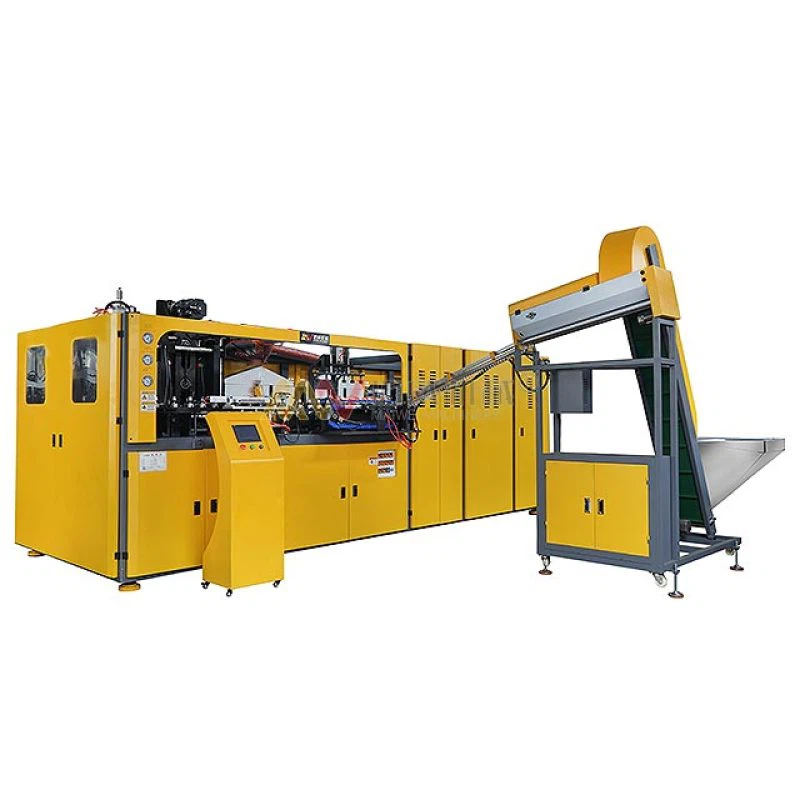
If you are interested in learning more about our blow molding machines or are considering a purchase, we encourage you to contact us. We are always ready to discuss your specific needs and provide you with a detailed quotation. Let's work together to take your production to the next level.
References
- "Blow Molding Handbook" by Rosato, Donald V., and Rosato, Dominick V.
- "Plastics Processing: Modeling and Simulation" by Osswald, Tim A., and Turng, Lih - Sing.
- Industry reports from leading plastics and blow molding associations.


