

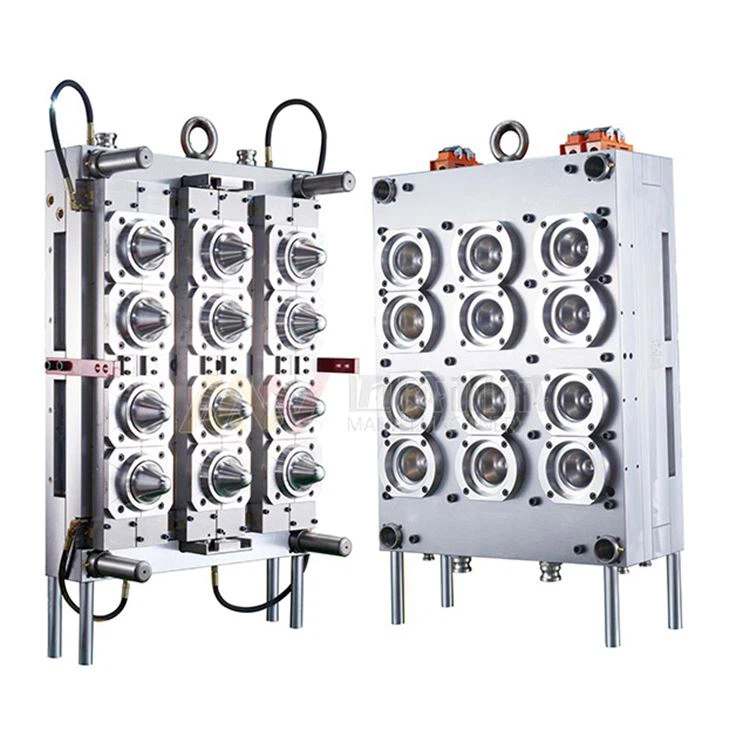
In the realm of pet preform manufacturing, the quality and efficiency of the production process heavily rely on the components used in pet preform moulds. As a seasoned Pet Preform Mould supplier, I've witnessed firsthand the diverse types of inserts that play a pivotal role in the success of pet preform production. In this blog post, I'll delve into the various types of inserts used in pet preform moulds, their functions, and how they contribute to the overall performance of the moulds.
Core Inserts
Core inserts are fundamental components in pet preform moulds. They are responsible for shaping the inner cavity of the preform. The design and precision of core inserts are crucial as they directly affect the wall thickness, diameter, and overall shape of the preform.
One of the key considerations in core insert design is the material. High - quality tool steels are commonly used due to their excellent hardness, wear resistance, and thermal stability. For instance, materials like H13 steel are favored for their ability to withstand the high pressures and temperatures involved in the injection molding process.
The surface finish of core inserts is also of utmost importance. A smooth surface finish not only ensures easy demolding of the preform but also helps in achieving a consistent wall thickness. Any roughness or irregularities on the core insert surface can lead to defects in the preform, such as surface scratches or uneven wall distribution.
Cavity Inserts
Cavity inserts, on the other hand, define the outer shape of the pet preform. Similar to core inserts, cavity inserts are made from high - performance materials. They are designed to be highly precise, as they determine the external dimensions and appearance of the preform.
The manufacturing process of cavity inserts often involves advanced machining techniques, such as CNC milling and electrical discharge machining (EDM). These techniques allow for the creation of complex shapes and fine details on the cavity inserts. For example, in the production of preforms for beverage bottles, cavity inserts may have specific features to create the threaded neck and the body shape of the bottle.
In addition to precision machining, cavity inserts may also undergo surface treatments. Chrome plating is a common surface treatment for cavity inserts. It enhances the corrosion resistance of the insert and provides a smooth surface, which is beneficial for the release of the preform during the ejection process.
Hot Runner Inserts
Hot runner systems are an integral part of modern pet preform moulds, and hot runner inserts play a crucial role in this system. Hot runner inserts are used to control the flow of molten plastic into the mould cavity. They ensure that the plastic remains at the optimal temperature throughout the injection process, which is essential for achieving high - quality preforms.
There are different types of hot runner inserts, including open nozzles and valve gate nozzles. Open nozzles are relatively simple in design and are suitable for applications where cost - effectiveness is a priority. However, they may have some limitations in terms of gate quality and the ability to control the plastic flow precisely.
Valve gate nozzles, on the other hand, offer more precise control over the plastic flow. They can open and close at specific times during the injection process, which helps in achieving better gate quality and reducing the formation of gate marks on the preform. If you're interested in learning more about valve gate preform moulds, you can visit Valve Gate Preform Mold.
Cooling Inserts
Proper cooling is essential in pet preform moulding to ensure fast cycle times and high - quality preforms. Cooling inserts are designed to facilitate the efficient removal of heat from the mould. They are typically made from materials with high thermal conductivity, such as copper alloys.
Cooling inserts are strategically placed within the mould to create a uniform cooling pattern. This helps in preventing thermal stress and warping of the preform. For example, in a multi - cavity pet preform mould, cooling inserts are arranged in a way that each cavity receives an equal amount of cooling, ensuring consistent quality across all preforms.
Gate Inserts
Gate inserts are responsible for controlling the entry of molten plastic into the mould cavity. The design of the gate insert has a significant impact on the quality of the preform. There are different types of gate designs, such as pin gates, submarine gates, and hot runner gates.
Pin gates are small, circular gates that leave a small mark on the preform. They are commonly used in applications where the gate mark can be easily removed or is not a critical issue. Submarine gates, on the other hand, are hidden gates that do not leave a visible mark on the preform surface. They are often used in high - quality preform production, such as for cosmetic or pharmaceutical packaging.
Hot runner gates, as mentioned earlier, are used in conjunction with hot runner systems. They offer precise control over the plastic flow and can provide a clean gate cut. If you want to explore more about injection preform moulds, which involve gate inserts and other components, you can visit Injection Preform Mold.
The Importance of Insert Quality
The quality of inserts used in pet preform moulds directly impacts the quality of the preforms and the overall efficiency of the production process. High - quality inserts ensure consistent preform dimensions, smooth surfaces, and minimal defects. They also contribute to longer mould life, reducing the need for frequent mould repairs and replacements.
As a Pet Preform Mould supplier, we understand the critical role of insert quality. That's why we source our inserts from trusted manufacturers and subject them to rigorous quality control measures. We use advanced inspection techniques, such as coordinate measuring machines (CMM), to ensure that the inserts meet the highest standards of precision and quality.
Choosing the Right Inserts
When choosing inserts for pet preform moulds, several factors need to be considered. Firstly, the type of plastic material used in the preform production is an important factor. Different plastics have different flow properties and processing requirements, and the inserts need to be selected accordingly.
Secondly, the production volume and cycle time requirements also play a role in insert selection. For high - volume production, inserts that can withstand high - speed injection and frequent cycling are preferred. Additionally, the complexity of the preform design will determine the type of inserts needed. Complex preform designs may require inserts with more intricate shapes and features.
Conclusion
In conclusion, the types of inserts used in pet preform moulds are diverse, and each type plays a specific and crucial role in the preform production process. From core and cavity inserts that shape the preform to hot runner, cooling, gate, and other inserts that ensure efficient operation and high - quality output, every component is essential.
As a Pet Preform Mould supplier, we are committed to providing our customers with the best - in - class moulds equipped with high - quality inserts. If you're in the market for pet preform moulds or need more information about preform dies, you can visit Preform Die.
We invite you to contact us for any procurement inquiries or to discuss your specific pet preform moulding needs. Our team of experts is ready to assist you in finding the most suitable solutions for your production requirements.

References
- "Injection Molding Handbook" by O. Olszewski
- "Plastic Mold Design and Manufacturing" by J. A. Schey


