


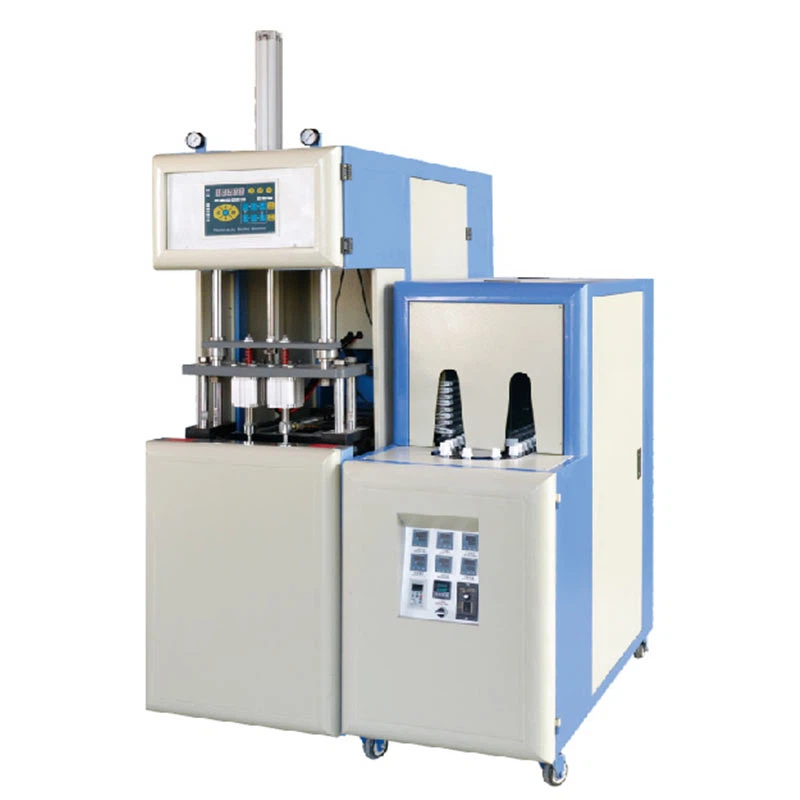
Pesticide Bottle Blow Molding Machine
Bottle Production Flowchart
Preform→Preform feeding→Auto blow molding machine→Bottle
Technical parameter
|
General Information |
MW-6L |
|
|
Clamping Force |
T |
20T |
|
Clamping Stroke |
mm |
230 |
|
Max. Stretching Stroke |
mm |
380 |
|
Number of Cavities |
mm |
2 |
|
Theoretical Output |
BPH |
0.1-2.5L;900BPH 3-6L;380BPH |
|
Max. mould Thickness |
mm |
300 |
|
Space Between Tie Bars |
mm |
280*500 |
|
Electrical System |
||
|
Voltage Standard |
|
380V/3PH/50HZ or Special Order |
|
Number of Heating Zone |
Sections |
2 |
|
Total power(full Loaded) |
KW |
11 |
|
Container |
||
|
Max. Container Volume |
|
0.1-2.5L(2Cav) 3-6L(1Cav) |
|
Neck Diameter Range |
mm |
15-60 |
|
Max. Container Diameter |
mm |
35-220 |
|
Max. Container Height |
mm |
450 |
|
Auxiliary System |
||
|
Low Pressure Air pressure |
Bar |
8-10 |
|
High Pressure Air pressure |
Bar |
30 |
|
Air Flow Rate |
|
1.2/30 |
|
Dimension &Weight(L*W*H) |
||
|
Blow Molding Machine |
cm |
160*63*190 |
|
Oven |
cm |
138*62*140 |
|
Net Weight |
Ton |
1 |


What is Pesticide Bottle Blow Molding Machine
A Pesticide Bottle Blow Molding Machine is a specialized piece of manufacturing equipment used to create plastic bottles, specifically those used for packaging pesticides.
High Production Efficiency
The bottle blowing machine can quickly and continuously produce a large number of plastic bottles, with a high degree of automation, greatly improving production efficiency.
Low Cost
Compared to manual production or some other molding methods, plastic bottles produced by blow molding machines have lower costs and are suitable for large-scale production.
Strong Adaptability
The blow molding machine can adapt to the production of plastic bottles of different shapes, sizes, and wall thicknesses, with high flexibility.
Stable Product Quality
Through precise mold design and control, the blow molding machine can produce plastic bottles with uniform wall thickness and precise shape, ensuring product quality.
Energy Conservation and Environmental Protection
Modern bottle blowing machines are increasingly emphasizing energy conservation and environmental protection in their design and manufacturing processes, such as using energy-saving heating systems, recycling and reusing scraps, etc.
Parts of Pesticide Bottle Blow Molding Machine
Extruder
The extruder melts the plastic resin and pushes it into the die. The extruder consists of a barrel, screw, and heater, which together ensure that the plastic material is evenly melted and conveyed to the next stage.
Die
The die forms the molten plastic into a parison, which is in the shape of a tube and is inflated to form a bottle. The design of the die is critical to achieving the wall thickness and uniformity required for the final product.
Mold Clamping Unit
The mold clamping unit holds the two halves of the mold together during the blow molding process. It applies the necessary force to ensure a tight seal and prevent air from escaping during the bottle molding process. The unit should be strong and precise to ensure consistent bottle quality.
Blow Pin
The blow pin is inserted into the parison to introduce compressed air, which expands the parison to the wall of the mold cavity to form the pesticide bottle. The blow pin must be precisely aligned to ensure even inflation and avoid defects.
Mold
The mold is a two-part metal cavity that is used to shape the final bottle. The mold determines the shape, size, and surface features of the bottle. High-quality molds ensure smooth and flawless bottles and are usually made of materials such as aluminum or steel.
Parison Control System
This system regulates the thickness of the parison, ensuring uniformity across the entire bottle. Proper control of parison thickness is critical to avoiding weak spots in the bottle and maintaining structural integrity.
Cooling System
The cooling system cools the bottle after it is formed to ensure it holds its shape. This system typically involves water or air cooling and is critical to maintaining production speeds and preventing deformation.
Ejector System
The ejector system removes the finished bottle from the mold after it has cooled and solidified. It must operate smoothly to avoid damaging the bottle during the removal process.
Control Panel
The control panel is the interface to the machine, allowing the operator to adjust settings such as temperature, pressure, and cycle time. Advanced control panels may include touch screens, real-time monitoring, and automatic diagnostics to ensure optimal operation.
Air Compressor
The air compressor produces the compressed air used in the blow molding process to inflate the parison into the shape of the bottle. The compressor must provide consistent air pressure to ensure that the bottle is evenly molded.
Hydraulic System
The hydraulic system powers the movement of the mold clamping unit and other machine components. It provides the necessary force to maintain a tight seal on the mold during the blow molding process.
Step-by-Step Guide to Operating a Pesticide Bottle Blow Molding Machine
Before operating the bottle blow molding machine, it is important to ensure that all components are properly assembled and in good working condition. This includes checking the heating unit, molds, and cooling system. Additionally, make sure that the raw materials, such as PET resin or other plastic materials, are readily available and of high quality.
Once the machine is set up, it's time to adjust the settings according to the specific requirements of the bottle or container being produced. This includes setting the temperature and pressure controls, as well as adjusting the mold and clamp settings. Our machines are equipped with user-friendly interfaces, making it easy to input the necessary parameters for the production process.
After the machine settings have been adjusted, the next step is to load the raw materials into the hopper of the machine. Our machines are designed to handle a wide range of plastic materials, ensuring flexibility in production. Once the raw materials are loaded, the machine will begin heating and melting the plastic in preparation for the molding process.
Once the raw materials are heated to the appropriate temperature, the molding process begins. The machine will close the mold and inject compressed air into the parison (hollow tube of molten plastic), forcing it to expand and take the shape of the mold. TECH-LONG machines are equipped with precise control systems to ensure consistent and high-quality molding results.
After the molding process is completed, the newly formed bottles or containers need to be cooled to a solid state before they can be ejected from the mold. Our machines are equipped with efficient cooling systems to expedite this process, allowing for high-speed production. Once the cooling is complete, the finished products are ejected from the mold and can be collected for further processing or packaging.
Tips For Maintaining and Troubleshooting a Pesticide Bottle Blow Molding Machine
Lubrication
Proper lubrication of the machine's moving parts is essential for smooth operation. Our machines come with recommended lubricants and a schedule for regular lubrication. It's important to follow this schedule and use the recommended lubricants to prevent wear and tear on the machine's components.
Cleaning
Keeping the machine clean is also important for maintaining its performance. Regularly clean the molds, extruders, and other components to prevent the buildup of debris and contaminants that can affect the quality of the finished bottles.
Inspections
Regular inspections of the machine's components are necessary to identify any signs of wear or damage. Our machines are equipped with sensors and monitoring systems to help identify potential issues, but visual inspections by maintenance personnel are also important.
Calibration
Ensuring that the machine is properly calibrated is crucial for producing high-quality bottles. Our machines have precise calibration settings, and it's important to regularly check and adjust these settings to maintain the desired bottle specifications.
Troubleshooting a Pesticide Bottle Blow Molding Machine is necessary when issues arise during production. Here are some common troubleshooting tips for our machines:
Quality Issues
If the finished bottles have defects such as uneven walls or inconsistent dimensions, it may indicate a problem with the mold or the machine's settings. Check the mold for damage and ensure that the machine is properly calibrated.
Leaks and Spills
If the machine is leaking air or plastic during the molding process, it can affect the quality of the bottles and the efficiency of the production. Check the seals and connections for any leaks and make sure they are properly tightened or replaced as needed.
Machine Malfunctions
If the machine stops or malfunctions during production, it's important to identify the cause of the issue.
Frequently Asked Questions
Hot Tags: pesticide bottle blow molding machine, China pesticide bottle blow molding machine manufacturers, suppliers, factory, , , Hand Feeding Blow Molding Machine
You Might Also Like


Send Inquiry