


Pp Blow Molding Machine
Bottle Production Flowchart
Preform→Preform feeding→Auto blow molding machine→Bottle
Technical parameter
|
Model |
Unit |
MW-SS4000 |
|
|
Clamping System |
Number of cabity |
cavities |
4 |
|
Clamping unit |
KG |
40000 |
|
|
Mold stroke |
mm |
90 |
|
|
Stretching stroke |
mm |
260 |
|
|
Bottom stroke |
mm |
50 |
|
|
Cavity pitch |
mm |
76.2 |
|
|
Number of holder |
PCS |
95 |
|
|
Container |
Max.container volume |
ml |
600 |
|
Max.container height |
mm |
260 |
|
|
Max.container diameter |
mm |
68 |
|
|
Max.preform height |
mm |
100 |
|
|
Max.neck diameter |
mm |
38 |
|
|
Theoretical |
B/H |
4500 |
|
|
Electrical System |
Heating oven qty |
PCS |
4*4 |
|
Number of lamp |
PCS |
4*7 |
|
|
Heating power |
KW |
42 |
|
|
Installed power |
KW |
45 |
|
|
Voltage |
voltage |
380V/50HZ |
|
|
Air System |
Operating pressure |
mpa |
0.7-0.9 |
|
Blowing pressure |
mpa |
2.5-3.0 |
|
|
High pressure air consumption |
L/min |
3.6/30 |
|
|
power |
KW |
45 |
|
|
Chiller System |
Temperature |
|
9-13 |
|
Pressure |
mpa |
0.4 |
|
|
Power |
HP |
5 |
|
|
Machine |
Machine dimension |
M |
3.9*1.8*2.2 |
|
Machine weight |
KG |
3500 |
|
Configuration List
|
Name |
Origin |
Brand |
|
Inductive Sensor |
Japan |
Omron |
|
Magnetic Sensor |
China |
Segula |
|
Proximity Sensor |
China |
Segula |
|
Power Switch |
France |
Schneider |
|
Breaker |
France |
Schneider |
|
Intermediary Relay 24V |
France |
Schneider |
|
AC Contactor 220V |
France |
Schneider |
|
Signal Amplification |
China |
Touchwin |
|
Touchscreen(PLC) |
JAPAN |
Mistubishi |
|
24V Power Box 24V |
Taiwan |
Delta |
|
Heating Lamp |
China |
Jieneng |
|
Motor in Preform elevator and unscramble |
China |
Taili |
|
Adjustable Voltage Module |
China |
Aoyi |
|
Temperature Regulator |
China |
Yatai |
|
Throttling Valve |
Taiwan |
Airtac |
|
Movement Valve |
Taiwan |
Airtac |
|
Stretching Cylinder |
|
|
|
Main Driving, Bottle |
China |
XinJie |
|
Clamping Cylinder |
|
|
|
stretching, Mould clamping) |
China |
XinJie |
|
Automatic type |
China |
XinJie |
|
Rail |
Taiwan |
PML |
|
Cylinder for Pushing Preform |
JAPAN |
SMC |
|
Cylinder in robot for evelating preform |
JAPAN |
SMC |
|
Cylinder in robot for preform transfer |
JAPAN |
SMC |
|
Preform Rotary Cylinder in Robot |
JAPAN |
SMC |
|
Cylinder for Robot Clip |
Taiwan |
Mindman |
|
Sealing Cylinder |
Taiwan |
Lind |


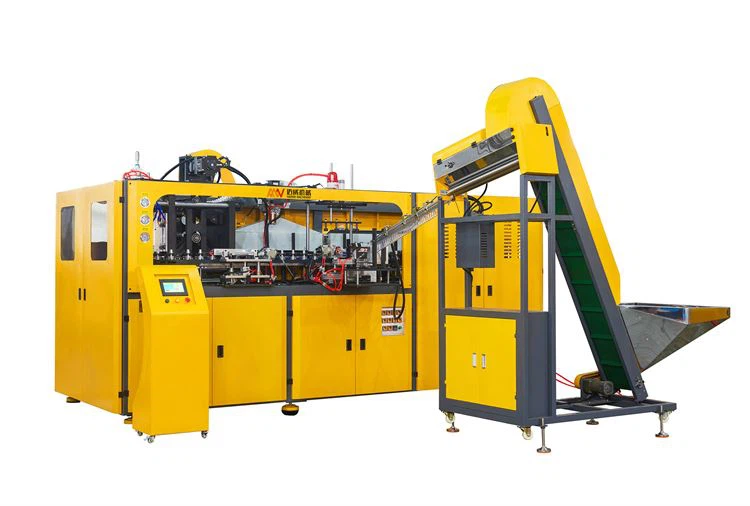
What is Pp Blow Molding Machine
A PP (Polypropylene) Blow Molding Machine is a specialized piece of manufacturing equipment designed to transform polypropylene resin into hollow plastic products through a process known as blow molding. This process is particularly effective for creating a wide range of containers, bottles, and other packaging solutions that require durability, clarity, and strength.
Exceptional Design Flexibility
Since the injection molding process places a great deal of pressure on the mold, injection molding machines allow for greater design flexibility. Due to the high pressure, the machinery can press the mold harder, making it possible to add more detail to the product. Additionally, injection molding's design flexibility can help you create more intricate and complex shapes.
Efficient and Fast Production
When you use an injection mold process, you can expect to produce a huge number of parts per hour. Additionally, your mold's size and design complexity can affect the cycle time, with cycle times ranging from 15 to 120 seconds. Since injection molding machines can produce thousands of parts before their tooling needs maintenance, the process is very efficient.
Clamping Unit
This unit holds the mold tightly together during the blow molding process. It ensures that the mold halves remain sealed under high pressure, preventing leakage of molten plastic or air used in the blow molding process.
Injection Unit
Although not part of the traditional blow molding process, in some integrated machines, the injection unit is used to form PP granules into preforms, which are then blown into the final shape.
Heating System
The system is usually equipped with infrared heaters to heat the PP preform to the optimal temperature for stretching and blow molding. Accurate temperature control is critical to product quality.
Stretching Mechanism
After the preform is heated, this mechanism stretches it axially before and during the blow molding process, which helps achieve uniform wall thickness and improves the mechanical properties of the final product.
Blow Needle and Air System
The blow needle is inserted into the preform, and then the air system inflates the preform to the shape of the mold. The air pressure is controlled to ensure that the preform fits the mold contours.
Molds
These are the cavities into which the heated and stretched preform is blown. The shape of the mold determines the shape of the final product.
Cooling System
After the product is formed, it is cooled rapidly within the mold to solidify the plastic. This system uses water or air cooling to reduce the temperature of the product.
Ejection System
After the product has cooled, the ejection system removes it from the mold. This can be done pneumatically or mechanically.
Conveyor System
This system moves the finished product out of the machine and onto a conveyor or other handling system.
Control System
Typically based on a programmable logic controller (PLC), this system monitors and controls all aspects of the machine's operation, ensuring the consistency and efficiency of the process.
Safety Devices
These include guards, emergency stop buttons, and safety sensors to protect the operator and prevent accidents during machine operation.
Lubrication System
This system keeps the moving parts of the machine lubricated, ensuring smooth operation and reducing wear.
Waste Removal System
This component removes excess plastic (called flash) from the product, ensuring the final product is clean and meets quality standards.
How to Choose Pp Blow Molding Machine
Identify your desired production volume. Consider the number of bottles or containers you need to produce per hour or day. Machines come with different output capacities, so match the machine's capability with your production needs.
Consider the size and shape of the products you plan to manufacture. Ensure the machine can accommodate the mold sizes required for your specific designs.
Material Compatibility
Verify that the machine is optimized for processing PP and can handle the thickness and quality of the material you intend to use.
Extrusion Blow Molding vs. Injection Blow Molding: Choose between extrusion blow molding (EBM) and injection blow molding (IBM) based on your product requirements. EBM is typically used for larger, simpler products, while IBM is better suited for smaller, more precise containers.
Single-Stage vs. Two-Stage Machines: Single-stage machines combine preform production and blow molding in one step, ideal for smaller production runs. Two-stage machines separate these processes, offering greater flexibility and higher production efficiency for larger volumes.
Manual, Semi-Automatic, or Fully Automatic: Determine the level of automation you need based on your budget and production demands. Fully automatic machines offer higher efficiency and lower labor costs, but at a higher initial investment. Semi-automatic machines may be more cost-effective for smaller operations.
Energy Consumption: Look for machines with energy-efficient features such as servo-driven systems or optimized heating elements. Lower energy consumption reduces operating costs and is more environmentally friendly.
Cooling System: Evaluate the machine's cooling system. Efficient cooling reduces cycle times and improves product quality, leading to higher productivity.
Control System: Choose a machine with an advanced control system, such as a PLC (Programmable Logic Controller), for precise operation and easy troubleshooting. A user-friendly interface is also important for ease of use.
Multi-Cavity Molds: If you require high-volume production, consider a machine that supports multi-cavity molds, allowing you to produce multiple items in one cycle.
Quick Mold Change: Look for machines with quick mold change capabilities if you need to switch between different product types frequently. This feature minimizes downtime and increases flexibility.
Build Quality: Assess the machine's build quality, including the materials used in its construction. A robust, durable machine will have a longer lifespan and require less maintenance.
Frequently Asked Questions
Hot Tags: pp blow molding machine, China pp blow molding machine manufacturers, suppliers, factory, , Hand Feeding Blow Molding Machine
You Might Also Like


Send Inquiry