

Hey there! As a preform die supplier, I know how crucial it is to ensure the precision of preform dies during manufacturing. Precision isn't just a buzzword; it's the backbone of producing high - quality preforms that meet the diverse needs of our clients. In this blog, I'm gonna share some key strategies we use to make sure our preform dies are as precise as possible.
1. Starting with High - Quality Materials
The first step in ensuring precision is choosing the right materials. We can't expect a die to be precise if the raw materials are sub - standard. High - grade steel alloys are our go - to choice. They offer excellent hardness, wear resistance, and thermal stability. Hardness is important because it helps the die maintain its shape over multiple production cycles. Wear resistance ensures that the die doesn't get damaged easily during the injection molding process. And thermal stability is crucial as the die is exposed to high temperatures during operation.
For example, when we're making a Hot Runner Preform Mold, the material needs to withstand the high - temperature environment of the hot runner system. A die made from a low - quality material might warp or degrade, leading to imprecise preforms. So, we always source our materials from trusted suppliers who can provide us with detailed material specifications and quality certifications.
2. Advanced Design and Simulation
Before we even start cutting metal, we spend a lot of time on the design phase. We use state - of - the - art CAD (Computer - Aided Design) software to create detailed 3D models of the preform die. This allows us to visualize every aspect of the die, from the cavity shape to the cooling channels.
But design isn't just about looks. We also use CAE (Computer - Aided Engineering) simulation tools to analyze how the die will perform during the injection molding process. These simulations can predict things like filling patterns, pressure distribution, and temperature gradients. For instance, if we're designing a Jar Preform Mold, the simulation can tell us if the plastic will flow evenly into all parts of the cavity. If there are potential issues, such as air traps or uneven filling, we can modify the design before manufacturing begins.
3. Precision Machining
Once the design is finalized, it's time for machining. We use advanced CNC (Computer Numerical Control) machining centers to manufacture the preform dies. CNC machines are incredibly precise because they are controlled by computer programs. This means that the same operation can be repeated with high accuracy, reducing the chances of human error.
We also use multi - axis machining to create complex shapes and features. For example, some preform dies have intricate cooling channels that need to be precisely machined to ensure efficient cooling. With multi - axis machining, we can access hard - to - reach areas and create channels with the exact dimensions required.
In addition to CNC machining, we also use electrical discharge machining (EDM) for certain applications. EDM is great for creating very small and precise features, such as fine details on the surface of the die. It works by using electrical discharges to remove material, allowing us to achieve a high level of precision.
4. Rigorous Quality Control
Quality control is an ongoing process throughout the manufacturing of preform dies. We have a team of experienced quality control inspectors who use a variety of measuring tools to check the dimensions and tolerances of the die components.
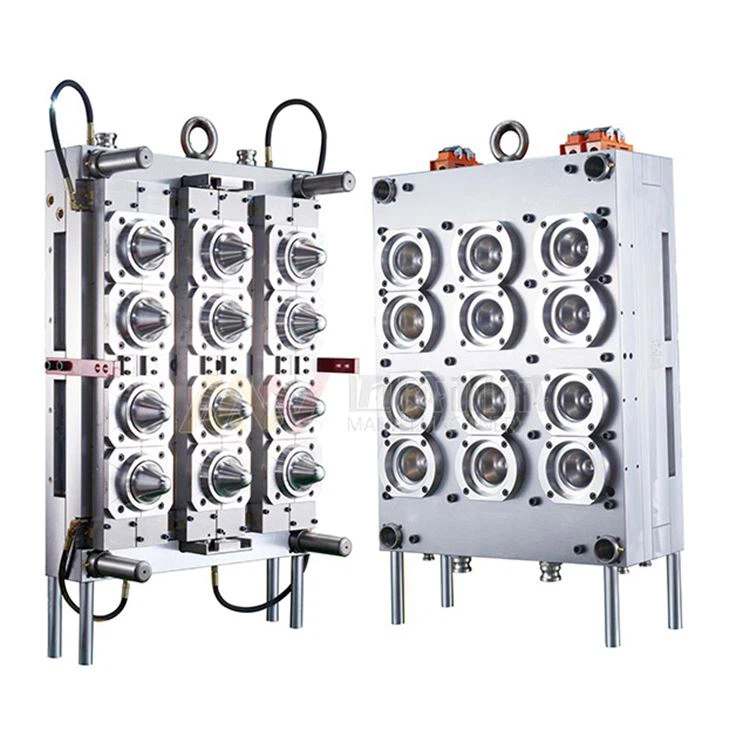
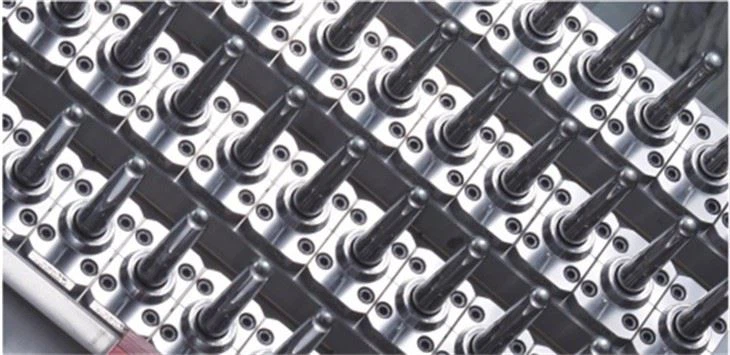
Coordinate measuring machines (CMMs) are one of our most important tools. These machines can measure the dimensions of a part with extremely high accuracy, down to a few micrometers. We use CMMs to check the critical dimensions of the die cavities, cores, and other components. If a part is out of tolerance, we can make adjustments or re - machine it to bring it back into spec.
We also perform visual inspections to look for any surface defects, such as scratches or cracks. Even a small defect can affect the quality of the preforms produced by the die. So, we take every defect seriously and make sure to address it before the die is assembled.
5. Proper Assembly and Testing
Assembling a preform die is like putting together a complex puzzle. Every component needs to fit together perfectly to ensure the overall precision of the die. We have a strict assembly process that includes cleaning all the components, applying the right amount of lubrication, and using precision fixtures to hold the parts in place during assembly.
After assembly, we perform comprehensive testing on the die. We use test molds to run trial injection molding cycles. During these tests, we monitor the quality of the preforms produced. We check for things like wall thickness uniformity, weight consistency, and surface finish. If any issues are detected, we disassemble the die and make the necessary adjustments.
For example, if we're testing an Injection Preform Mold, we'll run multiple cycles to ensure that the injection process is stable and that the preforms meet the required specifications. This testing phase is crucial because it allows us to fine - tune the die before it is shipped to the customer.
6. Staff Training and Expertise
Our team of engineers, machinists, and quality control inspectors are the heart of our operation. We invest heavily in their training and development to ensure that they have the skills and knowledge needed to produce precise preform dies.
We provide regular training on the latest manufacturing technologies, materials, and quality control methods. Our staff also has access to industry conferences and seminars where they can learn from experts in the field. This continuous learning environment helps us stay ahead of the curve and ensure that our manufacturing processes are as precise as possible.
Conclusion
Ensuring the precision of a preform die during manufacturing is a multi - step process that requires attention to detail at every stage. From choosing the right materials to rigorous testing, each step plays a crucial role in producing high - quality preform dies.
If you're in the market for a preform die, whether it's a Hot Runner Preform Mold, a Jar Preform Mold, or an Injection Preform Mold, we'd love to talk to you. We have the expertise and the technology to provide you with a preform die that meets your exact specifications. Contact us to start a discussion about your preform die needs, and let's work together to create the perfect solution for your business.
References
- "Injection Molding Handbook" by O.A. Johannaber
- "Precision Manufacturing Technology" by various authors in the field of manufacturing engineering


