

Preform moulds play a crucial role in the manufacturing industry, especially in the production of plastic containers. As a preform mould supplier, I have witnessed firsthand the numerous challenges that come with preform mould manufacturing. In this blog post, I will delve into these challenges, providing insights based on my experience in the field.
Precision and Tolerance Requirements
One of the most significant challenges in preform mould manufacturing is achieving the required precision and tolerance. Preform moulds are designed to produce high - quality preforms that will later be blow - molded into various plastic containers. Even the slightest deviation in the mould's dimensions can lead to defects in the preforms, such as inconsistent wall thickness, improper neck finish, or incorrect overall shape.

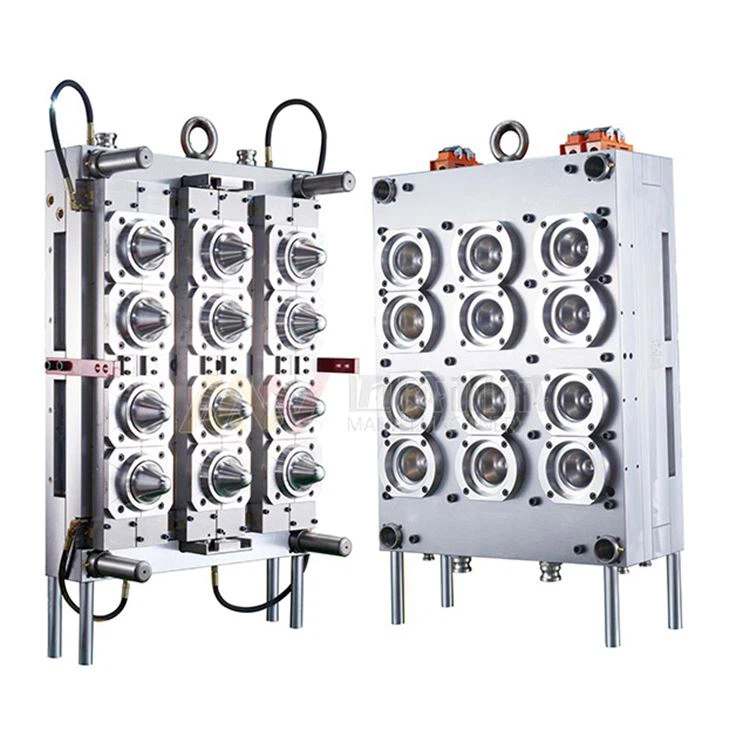
To meet these strict requirements, advanced machining techniques are essential. Computer Numerical Control (CNC) machining is commonly used, which allows for highly accurate cutting and shaping of the mould components. However, CNC machines are expensive to purchase and maintain, and the operators need to be highly skilled. Moreover, as the complexity of the preform design increases, so does the difficulty of achieving the desired precision. For example, preforms with intricate patterns or non - standard shapes demand even more precise machining and measurement.
Material Selection
The choice of material for preform moulds is another critical challenge. The material must be able to withstand high pressures, temperatures, and wear during the injection molding process. Common materials used for preform moulds include tool steel, stainless steel, and aluminum.
Tool steel is popular due to its high strength and wear resistance. It can handle the high - pressure injection of molten plastic without deforming. However, tool steel is relatively expensive, and its machining process is time - consuming. Stainless steel offers good corrosion resistance, which is important when dealing with certain types of plastics or in environments where moisture is present. Aluminum, on the other hand, is lightweight and has good thermal conductivity, which can reduce the cooling time of the preform. But it is less strong than steel and may not be suitable for high - volume production or applications with very high pressures.
Selecting the right material requires a careful balance between cost, performance, and the specific requirements of the preform manufacturing process. A wrong choice can lead to premature wear of the mould, increased production costs, or poor - quality preforms.
Cooling System Design
Efficient cooling is essential in preform mould manufacturing. A well - designed cooling system can significantly reduce the cycle time of the injection molding process, increase productivity, and improve the quality of the preforms. However, designing an effective cooling system is a complex task.
The cooling channels need to be strategically placed within the mould to ensure uniform cooling of the preform. Uneven cooling can cause warping, internal stresses, and surface defects in the preforms. The size, shape, and layout of the cooling channels must be optimized based on the size and shape of the preform, as well as the type of plastic being used.
In addition, the cooling medium, usually water or a coolant, needs to be maintained at the right temperature and flow rate. Any fluctuations in these parameters can affect the cooling performance. Monitoring and controlling the cooling system require advanced sensors and control systems, which add to the complexity and cost of the mould manufacturing process.
Hot Runner System Integration
Many modern preform moulds use hot runner systems to ensure a continuous flow of molten plastic into the cavities. Hot runner systems can improve the quality of the preforms by reducing the formation of gate marks and minimizing material waste. However, integrating a hot runner system into a preform mould presents several challenges.
Hot runner systems are complex and require precise installation and calibration. The temperature control of the hot runner is crucial, as any temperature variations can lead to inconsistent plastic flow and affect the quality of the preforms. Moreover, hot runner systems are prone to blockages, which can disrupt the production process and require time - consuming maintenance.
The cost of hot runner systems is also relatively high, including the initial purchase cost and the cost of maintenance and replacement parts. As a preform mould supplier, we need to ensure that our customers understand the benefits and challenges of hot runner systems and help them make the right decisions based on their production requirements. You can learn more about Hot Runner Preform Mold on our website.
Surface Finish and Texture
The surface finish and texture of the preform mould have a direct impact on the appearance and quality of the preforms. A smooth surface finish is often required to produce preforms with a high - gloss appearance, while a specific texture may be needed for certain applications, such as anti - slip grips.
Achieving the desired surface finish and texture requires advanced polishing and texturing techniques. Polishing the mould to a high - gloss finish is a labor - intensive process that requires skilled workers and specialized equipment. Texturing the mould, on the other hand, can be challenging, especially when creating complex or fine - detailed textures.
In addition, the surface finish and texture need to be maintained over time. During the injection molding process, the surface of the mould can be damaged by the flow of molten plastic, abrasion, or chemical reactions. Regular maintenance and re - finishing are necessary to ensure consistent quality of the preforms.
Quality Control and Inspection
Quality control is an integral part of preform mould manufacturing. Every mould must undergo rigorous inspection to ensure that it meets the design specifications and quality standards. This includes dimensional inspection, surface finish inspection, and functional testing.
Dimensional inspection is typically carried out using precision measuring instruments, such as coordinate measuring machines (CMMs). These machines can accurately measure the dimensions of the mould components to detect any deviations from the design. Surface finish inspection can be done using optical or tactile measurement devices.
Functional testing involves running test injections to check the performance of the mould. This includes evaluating the quality of the preforms, such as wall thickness, weight, and appearance. Any defects detected during the quality control process need to be corrected before the mould is delivered to the customer.
However, quality control and inspection are time - consuming and costly processes. They require trained personnel and expensive equipment. Moreover, as the complexity of the preform moulds increases, the difficulty of quality control also rises.
Cost Management
Cost management is a constant challenge in preform mould manufacturing. The cost of materials, machining, labor, and quality control can quickly add up. As a preform mould supplier, we need to balance the cost of manufacturing with the quality and performance of the moulds.
To reduce costs, we can optimize the design of the mould to minimize the use of materials and simplify the machining process. We can also explore alternative materials or manufacturing techniques that offer a good balance between cost and performance. However, cost - cutting measures should not compromise the quality of the moulds.
In addition, we need to manage our production schedule effectively to avoid delays and overtime costs. Efficient inventory management is also important to reduce the cost of raw materials and spare parts.
Environmental Regulations
In recent years, environmental regulations have become an important consideration in preform mould manufacturing. The manufacturing process involves the use of various chemicals, such as cutting fluids, coolants, and lubricants. These chemicals need to be handled and disposed of properly to comply with environmental regulations.
In addition, the choice of materials for preform moulds can also have an environmental impact. For example, some materials may be difficult to recycle or may release harmful substances during the manufacturing or disposal process. As a responsible preform mould supplier, we need to ensure that our manufacturing processes are environmentally friendly and comply with all relevant regulations.
Conclusion
Preform mould manufacturing is a complex and challenging process. From precision and tolerance requirements to cost management and environmental regulations, there are numerous factors that need to be considered. As a preform mould supplier, we are constantly striving to overcome these challenges to provide our customers with high - quality moulds at competitive prices.
If you are in the market for preform moulds, we invite you to contact us for a detailed discussion about your specific requirements. We have the expertise and experience to help you find the best solutions for your preform manufacturing needs. Whether you need a Preform Die or a Pet Preform Mould, we are here to assist you.
References
- "Injection Molding Handbook" by O. Olabisi
- "Tool and Manufacturing Engineers Handbook" by Society of Manufacturing Engineers
- Industry reports on preform mould manufacturing trends and challenges


