

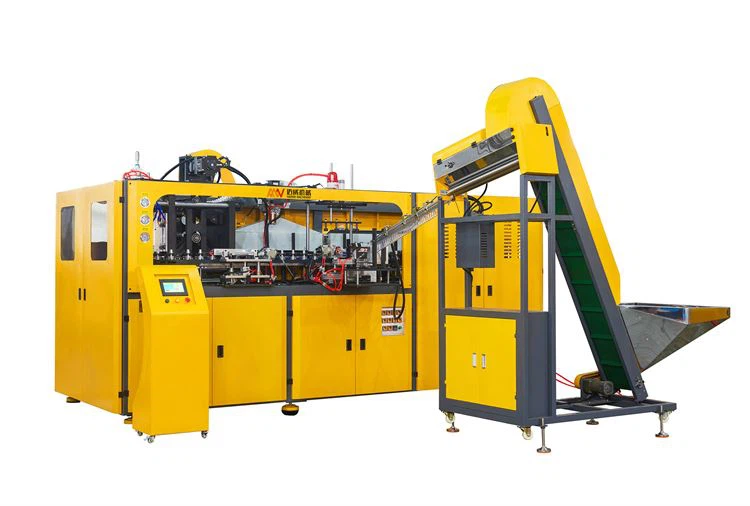
As a dedicated supplier of blow molding machines, I've encountered numerous inquiries about the clamping force of these essential industrial devices. In this blog, I'll delve into what clamping force is, why it matters, and how it impacts the performance of blow molding machines.
Understanding Clamping Force
Clamping force, in the context of a blow molding machine, refers to the amount of force applied by the machine's clamping unit to hold the mold halves together during the blow molding process. This force is crucial because it prevents the mold from opening under the pressure of the compressed air used to inflate the plastic parison (the pre - formed tube of plastic) into the desired shape of the product.
The clamping force is typically measured in tons (in the imperial system) or kilonewtons (in the metric system). For example, a small - scale blow molding machine might have a clamping force of 5 - 10 tons, while large industrial machines can have clamping forces exceeding 100 tons.
Why Clamping Force Matters
Product Quality
The right clamping force ensures that the mold remains closed tightly, resulting in products with consistent wall thickness and accurate dimensions. If the clamping force is too low, the mold may open slightly during the blow - molding process, causing flash (excess plastic) to form around the edges of the product. This not only affects the appearance of the product but also reduces its structural integrity. On the other hand, if the clamping force is too high, it can damage the mold, leading to premature wear and tear and increasing production costs.
Production Efficiency
Proper clamping force is essential for efficient production. A machine with insufficient clamping force may require multiple attempts to produce a合格product, leading to longer cycle times and lower productivity. In contrast, a machine with the correct clamping force can produce high - quality products in a single attempt, reducing waste and increasing the overall output.
Mold Longevity
The clamping force also has a significant impact on the lifespan of the mold. A well - calibrated clamping force distributes the pressure evenly across the mold surfaces, preventing excessive stress on any particular area. This helps to extend the mold's life, reducing the frequency of mold replacements and saving on tooling costs.

Factors Affecting Clamping Force Requirements
Product Size and Shape
Larger and more complex products require higher clamping forces. This is because the larger surface area of the product means that more pressure is exerted on the mold during the inflation process. For example, a 5L Bottle Blow Molding Machine used to produce large 5 - liter bottles will need a higher clamping force compared to a machine used for smaller bottles.
Material Type
Different plastics have different flow characteristics and require different levels of clamping force. For instance, high - density polyethylene (HDPE) is a relatively rigid material that requires more force to be properly molded compared to low - density polyethylene (LDPE). Similarly, polypropylene (PP) used in Pp Blow Molding Machine may have specific clamping force requirements based on its grade and processing conditions.
Blow Pressure
The pressure of the compressed air used to inflate the parison also affects the clamping force requirements. Higher blow pressures result in greater forces acting on the mold, necessitating a higher clamping force to keep the mold closed.
Calculating Clamping Force
Calculating the exact clamping force required for a specific blow - molding application can be complex and often involves a combination of theoretical calculations and practical experience. However, a general rule of thumb is that the clamping force should be proportional to the projected area of the product and the blow pressure.
The projected area is the area of the product as seen when looking at it from the direction of the mold opening. To calculate the approximate clamping force, you can use the following formula:
Clamping Force (F) = Projected Area (A) × Blow Pressure (P) × Safety Factor (S)
The safety factor is typically between 1.2 and 1.5 and accounts for variations in material properties, process conditions, and other factors that may affect the clamping force requirements.
Our Blow Molding Machines and Clamping Force
At our company, we understand the importance of providing blow molding machines with the right clamping force for each application. Our Bottle Blow Molding Machine series is designed to offer a wide range of clamping forces to meet the diverse needs of our customers.
We use advanced engineering techniques and high - quality components to ensure that our machines deliver consistent and reliable clamping force. Our team of experts works closely with customers to understand their specific requirements and recommend the most suitable machine with the appropriate clamping force.
Conclusion
In conclusion, the clamping force of a blow molding machine is a critical parameter that affects product quality, production efficiency, and mold longevity. By understanding the factors that influence clamping force requirements and ensuring that the machine is properly calibrated, manufacturers can achieve optimal results in their blow - molding operations.
If you're in the market for a blow molding machine and need help determining the right clamping force for your application, don't hesitate to reach out to us. Our experienced team is ready to assist you in selecting the perfect machine for your production needs. Contact us today to start a discussion about your blow - molding requirements and explore how our machines can enhance your manufacturing process.
References
- Beckmann, J. (2018). Blow Molding Handbook. Hanser Publishers.
- Rosato, D. V., & Rosato, D. V. (2011). Blow Molding Technology. Kluwer Academic Publishers.
- Strong, A. B. (2000). Plastics Materials and Processing. Prentice Hall.


