

As a seasoned supplier of Jar Preform Molds, I've witnessed firsthand the significant impact that the choice between cold runner and hot runner systems can have on the manufacturing process and the final product. In this blog, I'll delve into the differences between these two types of molds, exploring their respective advantages, disadvantages, and ideal applications.
Understanding the Basics
Before we dive into the differences, let's first understand what cold runner and hot runner systems are.
A cold runner system is the traditional method of injecting molten plastic into a mold. In this system, the plastic is injected through a series of channels, known as runners, which are at room temperature. Once the plastic has filled the mold cavity and cooled, the runners are removed from the part, resulting in a separate piece of waste plastic.

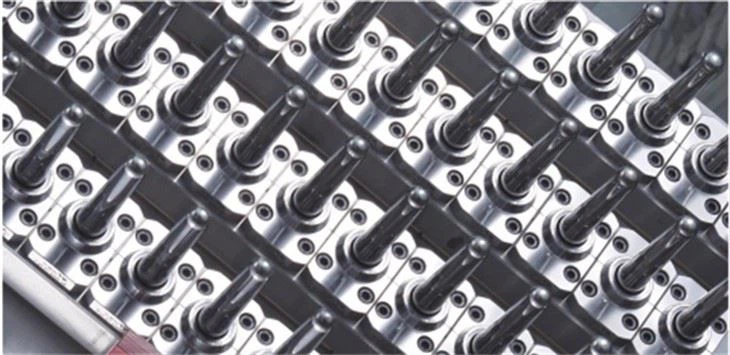
On the other hand, a Hot Runner Preform Mold keeps the plastic in the runners at a constant, molten temperature throughout the injection process. This eliminates the need for runners to be removed from the part, reducing waste and increasing efficiency.
Key Differences
Material Waste
One of the most significant differences between cold runner and hot runner systems is the amount of material waste generated. In a cold runner system, the plastic in the runners cools and solidifies with each cycle, resulting in a significant amount of scrap material. This not only increases material costs but also requires additional handling and disposal.
In contrast, a hot runner system keeps the plastic in the runners molten, allowing it to be reused for the next injection cycle. This eliminates the need for runners to be removed and discarded, reducing material waste and saving costs in the long run.
Cycle Time
Cycle time is another crucial factor to consider when choosing between cold runner and hot runner systems. In a cold runner system, the plastic in the runners needs to cool and solidify before the mold can be opened and the part ejected. This cooling time adds to the overall cycle time, reducing productivity.
A hot runner system, on the other hand, eliminates the need for runner cooling, allowing the mold to be opened and the part ejected as soon as the plastic in the cavity has solidified. This significantly reduces cycle time, increasing productivity and throughput.
Part Quality
The quality of the final product can also be affected by the choice of runner system. In a cold runner system, the plastic in the runners cools and solidifies, which can cause variations in the temperature and pressure of the plastic as it enters the mold cavity. This can result in part defects such as warping, sink marks, and flow lines.
A hot runner system, however, maintains a constant temperature and pressure in the runners, ensuring a more consistent flow of plastic into the mold cavity. This results in higher-quality parts with fewer defects and a better surface finish.
Initial Investment
One of the main drawbacks of a hot runner system is the higher initial investment required. Hot runner systems are more complex and expensive to manufacture than cold runner systems, which can make them a less attractive option for small-scale production or low-budget projects.
Cold runner systems, on the other hand, are simpler and less expensive to manufacture, making them a more cost-effective option for short production runs or projects with limited budgets.

Ideal Applications
Cold Runner Systems
Cold runner systems are best suited for applications where cost is a primary concern and where the amount of material waste is not a significant issue. They are also a good choice for short production runs or projects where the part design does not require a high level of precision or quality.
Examples of applications where cold runner systems are commonly used include the production of disposable plastic products, such as food containers and packaging, as well as low-cost consumer goods.
Hot Runner Systems
Hot runner systems are ideal for applications where high productivity, part quality, and material efficiency are required. They are commonly used in the production of high-volume, precision parts, such as medical devices, automotive components, and electronic housings.
Hot runner systems are also a good choice for applications where the part design requires a consistent flow of plastic and a high level of precision, such as in the production of thin-walled parts or parts with complex geometries.
Conclusion
In conclusion, the choice between a cold runner and hot runner Pet Preform Mould depends on a variety of factors, including the production volume, part quality requirements, material costs, and initial investment. While cold runner systems are a more cost-effective option for short production runs and low-budget projects, hot runner systems offer significant advantages in terms of productivity, part quality, and material efficiency for high-volume production and precision applications.
As a supplier of Jar Preform Molds, we understand the importance of choosing the right runner system for your specific application. We offer a wide range of cold runner and Hot Runner Preform Mold solutions to meet the diverse needs of our customers. Whether you're looking for a cost-effective solution for a short production run or a high-performance system for high-volume production, we have the expertise and experience to help you make the right choice.
If you're interested in learning more about our Jar Preform Molds or would like to discuss your specific requirements, please don't hesitate to contact us. Our team of experts is always ready to assist you and provide you with the best possible solutions for your manufacturing needs.
References
- Throne, J. L. (2017). Plastics Processing: Modeling and Simulation. Hanser Publishers.
- Osswald, T. A., & Turng, L. -S. (2019). Injection Molding Handbook. Hanser Publishers.
- Rosato, D. V., & Rosato, D. P. (2018). Injection Molding Handbook. Kluwer Academic Publishers.


