

Hey there! As a supplier of Hot Runner Preform Mold, I often get asked about the ejection time in a hot runner preform mold. So, I thought I'd write this blog to share some insights on this topic.
First off, let's understand what ejection time means. In the context of a hot runner preform mold, ejection time is the period it takes to push the finished preforms out of the mold cavity after the plastic has cooled and solidified. It's a crucial part of the injection molding process, and getting it right can make a big difference in the quality and efficiency of production.
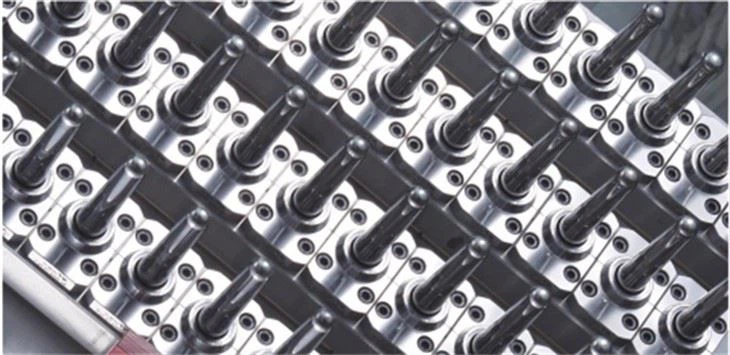
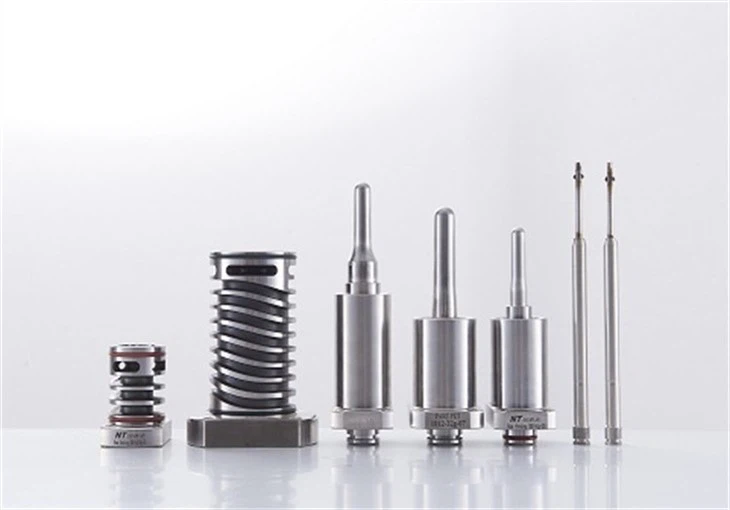
Now, what factors affect the ejection time in a hot runner preform mold? Well, there are quite a few. One of the most significant factors is the material being used. Different plastics have different cooling rates and shrinkage properties. For example, PET (Polyethylene Terephthalate), which is commonly used in Pet Preform Mould, has its own unique characteristics. PET has a relatively high melting point and a specific cooling behavior. If the ejection time is too short, the preform might not be fully solidified, leading to deformation or other quality issues. On the other hand, if the ejection time is too long, it can slow down the production cycle and increase costs.
The design of the mold also plays a huge role. A well - designed hot runner preform mold will have an efficient ejection system. This includes the type and number of ejector pins, their placement, and the overall mechanism for pushing the preforms out. For instance, if the ejector pins are too few or not properly placed, it can cause uneven ejection forces, resulting in damaged preforms or problems with the mold itself.
The temperature of the mold is another key factor. The mold temperature needs to be carefully controlled throughout the process. If the mold is too hot, the plastic will take longer to cool, and the ejection time will have to be extended. Conversely, if the mold is too cold, the plastic might solidify too quickly, which can also lead to issues like part sticking in the mold.
Let's talk about how to determine the optimal ejection time. One way is through trial and error. When starting a new production run, you can start with an estimated ejection time based on the material and mold design. Then, you can make small adjustments based on the quality of the preforms. If the preforms are coming out with defects like warping or flash, it might be a sign that the ejection time needs to be changed.
Another approach is to use simulation software. There are some really advanced software tools available that can simulate the injection molding process, including the cooling and ejection phases. These tools can take into account factors like material properties, mold design, and temperature distribution to predict the optimal ejection time.
As a Hot Runner Preform Mold supplier, we work closely with our customers to help them optimize the ejection time. We provide detailed information about the mold design and its capabilities, and we also offer technical support during the production process.
We understand that every customer's needs are different. Some might be looking for high - volume production, in which case minimizing the ejection time without sacrificing quality is crucial. Others might be more focused on producing high - quality preforms for specific applications, and they might be willing to adjust the production speed to ensure the best possible results.
If you're in the market for a hot runner preform mold, it's important to choose a supplier who can not only provide a high - quality mold but also offer support in optimizing the ejection time and the overall production process. At our company, we have a team of experienced engineers who are always ready to help you with any questions or issues you might have.
We also keep up with the latest trends and technologies in the industry. For example, new materials are constantly being developed, and these can have different requirements when it comes to ejection time. By staying informed, we can offer our customers the most up - to - date solutions and advice.
In conclusion, the ejection time in a hot runner preform mold is a complex but important aspect of the injection molding process. It's affected by multiple factors such as the material, mold design, and temperature. By carefully considering these factors and using appropriate methods to determine the optimal ejection time, you can achieve high - quality preforms and an efficient production process.
If you're interested in learning more about hot runner preform molds or have any questions about ejection time, feel free to reach out. We're here to help you make the most of your production and get the best results from your investment. Let's work together to take your preform production to the next level!
References:
- Injection Molding Handbook by O. Osswald and T. Turng
- Plastics Processing: Modeling and Simulation by R. A. Pearson


