

As a preform mould supplier deeply involved in the industry, I've witnessed firsthand the pivotal role that heat treatment plays in preform mould manufacturing. Heat treatment is not just an optional step; it's a fundamental process that significantly impacts the quality, performance, and longevity of preform moulds.
Understanding Preform Moulds
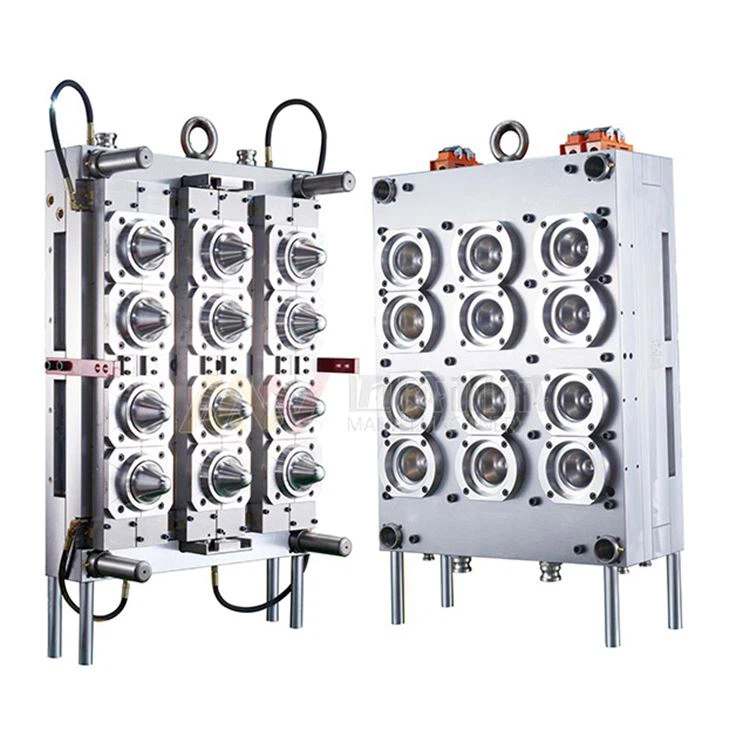
Before delving into the role of heat treatment, it's essential to understand what preform moulds are. Preform moulds are used in the production of preforms, which are the initial shapes of plastic containers. These preforms are then blown into their final container shapes, such as bottles for beverages, cosmetics, and other consumer products. At our company, we offer a wide range of preform moulds, including Wide Mouth Preform Mold, Hot Runner Preform Mold, and Injection Preform Mold, each designed to meet specific industry requirements.
The Basics of Heat Treatment
Heat treatment is a group of industrial and metalworking processes used to alter the physical, and sometimes chemical, properties of a material. The most common heat treatment processes for preform moulds include annealing, quenching, and tempering.
Annealing is a process that involves heating the mould material to a specific temperature and then slowly cooling it. This process relieves internal stresses, softens the material, and improves its machinability. When we receive the raw materials for our preform moulds, annealing is often the first step to prepare the material for further processing.
Quenching is a rapid cooling process that follows heating. It involves immersing the heated mould material in a quenching medium, such as oil or water. Quenching hardens the material by transforming its microstructure. This increased hardness is crucial for preform moulds as they need to withstand high pressures and wear during the injection moulding process.
Tempering is a process that follows quenching. It involves reheating the quenched material to a lower temperature and then cooling it at a controlled rate. Tempering reduces the brittleness induced by quenching while maintaining the desired hardness. This balance between hardness and toughness is essential for preform moulds to ensure they can withstand the rigors of continuous use without cracking or breaking.
Role of Heat Treatment in Preform Mould Manufacturing
Improving Mechanical Properties
One of the primary roles of heat treatment in preform mould manufacturing is to improve the mechanical properties of the mould material. By carefully controlling the heating and cooling processes, we can achieve the desired hardness, toughness, and wear resistance. For example, a preform mould that has been properly heat-treated can withstand the high pressures and temperatures of the injection moulding process without deforming or wearing out quickly. This results in a longer service life for the mould, reducing the need for frequent replacements and saving our customers money in the long run.
Enhancing Dimensional Stability
Dimensional stability is crucial in preform mould manufacturing. Preform moulds need to produce preforms with consistent dimensions to ensure the quality of the final plastic containers. Heat treatment helps to relieve internal stresses in the mould material, which can cause distortion during machining and use. By annealing the material before machining and then properly quenching and tempering it after machining, we can minimize dimensional changes and ensure that the mould produces preforms with high precision.
Resistance to Corrosion and Wear
Preform moulds are often exposed to harsh environments during the injection moulding process, including high temperatures, pressures, and contact with molten plastics. Heat treatment can improve the corrosion and wear resistance of the mould material. For example, some heat treatment processes can form a protective oxide layer on the surface of the mould, which acts as a barrier against corrosion. Additionally, the increased hardness achieved through heat treatment reduces the wear and tear on the mould surface, extending its service life.

Achieving Microstructural Control
The microstructure of the mould material has a significant impact on its mechanical properties. Heat treatment allows us to control the microstructure of the material to achieve the desired properties. For example, by carefully controlling the quenching and tempering processes, we can obtain a fine-grained microstructure that provides excellent strength and toughness. This microstructural control is essential for producing high-quality preform moulds that can meet the demanding requirements of the injection moulding industry.
Quality Control in Heat Treatment
Quality control is a critical aspect of heat treatment in preform mould manufacturing. At our company, we have a comprehensive quality control system in place to ensure that each heat treatment process is carried out accurately and consistently.
We use advanced heat treatment equipment, such as electric furnaces and quenching tanks, to precisely control the temperature, time, and cooling rate of each process. Our technicians are highly trained and experienced in heat treatment, and they follow strict operating procedures to ensure the quality of the heat-treated moulds.
In addition to in-process monitoring, we also conduct various tests on the heat-treated moulds. These tests include hardness testing, microstructure analysis, and dimensional inspection. By performing these tests, we can verify that the heat treatment has achieved the desired results and that the mould meets our quality standards.
Case Studies
To illustrate the importance of heat treatment in preform mould manufacturing, let's look at a few case studies.
Case Study 1: A customer came to us with a problem of frequent mould failures in their injection moulding process. After analyzing the moulds, we found that the heat treatment process had not been properly carried out. The moulds were too brittle and prone to cracking under the high pressures of the injection moulding process. We re-heat-treated the moulds using our advanced heat treatment techniques, including proper quenching and tempering. After the re-treatment, the moulds showed significantly improved toughness and wear resistance, and the customer reported a dramatic reduction in mould failures.
Case Study 2: Another customer was looking for a preform mould that could produce high-precision preforms with consistent dimensions. We used a combination of annealing, quenching, and tempering processes to ensure the dimensional stability of the mould. By carefully controlling the heat treatment parameters, we were able to minimize the internal stresses in the mould material and achieve the desired dimensional accuracy. The customer was very satisfied with the quality of the preforms produced by our moulds.
Conclusion
In conclusion, heat treatment plays a vital role in preform mould manufacturing. It improves the mechanical properties, enhances dimensional stability, provides resistance to corrosion and wear, and allows for microstructural control. As a preform mould supplier, we understand the importance of heat treatment in producing high-quality moulds. Our commitment to using advanced heat treatment techniques and strict quality control measures ensures that our preform moulds meet the highest standards of performance and reliability.
If you are in the market for high-quality preform moulds, we invite you to contact us for a detailed discussion. Our team of experts is ready to provide you with the best solutions for your specific needs.
References
- Metals Handbook: Heat Treating, ASM International
- Fundamentals of Heat Treatment for Tool and Die Makers, Society of Manufacturing Engineers
- Injection Molding Handbook, Carl Hanser Verlag


