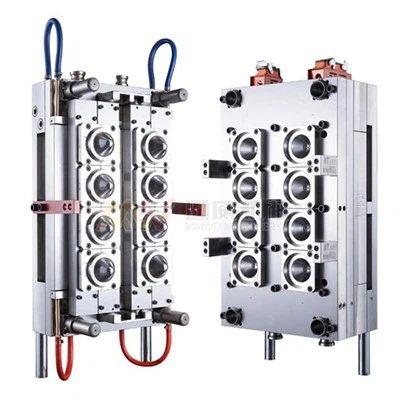
Hey there! As a supplier of Wide Mouth Preform Molds, I've seen firsthand how crucial the mold ejection system is in preventing preform deformation. In this blog, I'll share my insights on this topic and explain why it matters so much in our industry.
Let's start by understanding what preform deformation is. Preforms are the initial shapes that are later blown into bottles or other containers. Deformation can occur during the manufacturing process, and it's a big headache for us and our customers. It can lead to issues like uneven wall thickness, improper neck finish, and overall poor quality of the final product.
So, what's the role of the mold ejection system in all this? Well, the ejection system is responsible for getting the preform out of the mold after it's been formed. Sounds simple, right? But it's actually a pretty complex process that can make or break the quality of the preform.
One of the main ways the ejection system prevents deformation is by ensuring a smooth and even release of the preform from the mold. If the ejection is too forceful or uneven, it can cause the preform to distort. For example, if one side of the preform is ejected faster than the other, it can lead to a bend or a twist in the preform. This is where a well - designed ejection system comes in handy.
A good ejection system uses a combination of ejector pins, sleeves, and other components to gently and evenly push the preform out of the mold. The ejector pins are strategically placed around the mold cavity to distribute the ejection force evenly. This way, the preform is released without any unnecessary stress or pressure points that could cause deformation.
Another important aspect is the timing of the ejection. The ejection system needs to be synchronized with the cooling process of the preform. If the preform is ejected too early, it's still too soft and can easily deform. On the other hand, if it's ejected too late, it might stick to the mold, and the ejection process can become more difficult and potentially damaging.
We at our Wide Mouth Preform Mold business have spent a lot of time perfecting the ejection systems in our molds. We've experimented with different materials for the ejector pins and sleeves to ensure smooth operation and minimal friction. For instance, using high - quality steel for the ejector pins can reduce wear and tear and provide a more consistent ejection force.
Now, let's talk about some of the different types of preform molds we offer and how the ejection system plays a role in each. First up, we have the Pet Preform Mould. PET (Polyethylene Terephthalate) is a widely used material for preforms, and it has its own unique characteristics. The ejection system in our PET preform molds is designed to handle the specific properties of PET, such as its relatively low melting point and high shrinkage rate.
The Hot Runner Preform Mold is another type we offer. In a hot runner system, the plastic is kept molten in the runner channels until it's injected into the mold cavity. This allows for faster cycle times and better quality preforms. However, it also means that the ejection system needs to be able to handle the hot and viscous plastic. Our ejection systems in hot runner preform molds are built to withstand the high temperatures and ensure a clean and efficient ejection.
Then there's the Valve Gate Preform Mold. Valve gate systems offer more control over the injection process, but they also require a precise ejection system. The valve gates need to close at the right time, and the ejection system needs to work in harmony with this process. A well - coordinated ejection system in a valve gate preform mold can prevent issues like gate vestiges and ensure a high - quality preform.
In addition to the mechanical design of the ejection system, we also pay attention to the surface finish of the mold components. A smooth surface finish on the ejector pins and sleeves reduces friction during the ejection process. This not only helps in preventing deformation but also extends the lifespan of the mold.
We also conduct regular maintenance and testing on our molds to ensure that the ejection system is working properly. This includes checking the alignment of the ejector pins, the movement of the sleeves, and the overall functionality of the system. By doing so, we can catch any potential issues early and make the necessary adjustments before they lead to preform deformation.
If you're in the market for high - quality preform molds, you know how important it is to have a reliable ejection system. A mold with a good ejection system can save you a lot of time and money in the long run by reducing the number of defective preforms. Whether you're producing small - scale or large - scale preforms, our Wide Mouth Preform Molds are designed to meet your needs.
If you're interested in learning more about our products or have any questions regarding the mold ejection system and preform deformation, don't hesitate to reach out. We're always happy to have a chat and discuss how we can help you with your preform manufacturing requirements. Let's work together to ensure that you get the best - quality preforms for your business.


References
- "Plastic Injection Molding Handbook" by O. W. Boston
- "Mold Design for Injection Molding" by R. A. Malloy