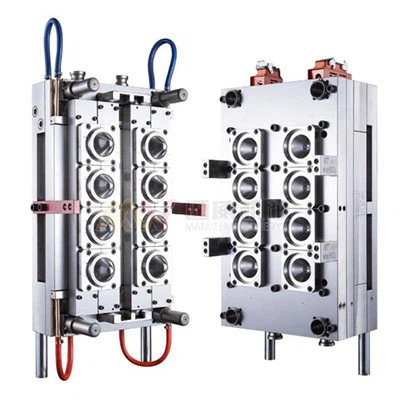
As a trusted supplier of Wide Mouth Preform Molds, I understand the critical role that injection pressure plays in the manufacturing process. Correctly adjusting the injection pressure can significantly impact the quality, efficiency, and overall success of producing wide - mouth preforms. In this blog, I'll share some insights on how to adjust the injection pressure for a wide mouth preform mold.
Understanding the Basics of Injection Pressure in Preform Molding
Injection pressure is the force applied to the molten plastic to fill the mold cavity. For wide mouth preform molds, achieving the right pressure is essential. Too low pressure may result in incomplete filling, short shots, or poor surface finish. On the other hand, excessive pressure can cause flash, mold damage, and increased stress on the preforms, leading to potential defects during subsequent processing.
The injection pressure is influenced by several factors, including the type of plastic resin used, the design of the preform, the size and complexity of the mold, and the injection molding machine's capabilities. For example, high - viscosity plastics like PET (Polyethylene Terephthalate) often require higher injection pressures compared to lower - viscosity resins.
Factors to Consider Before Adjusting Injection Pressure
Plastic Resin Properties
Different plastic resins have unique flow characteristics. PET, which is commonly used in wide mouth preform production, has a relatively high melting point and viscosity. Before adjusting the injection pressure, it's crucial to understand the resin's recommended processing parameters provided by the resin manufacturer. These parameters usually include the ideal temperature range, shear rate, and injection pressure for optimal flow and part quality.
Preform Design
The design of the wide mouth preform, such as its wall thickness, diameter, and length, affects the injection pressure requirements. Preforms with thicker walls may need higher pressure to ensure complete filling, while those with complex geometries might require a more precise pressure adjustment to avoid air traps or uneven filling.
Mold Design and Condition
The mold's design, including the number of cavities, runner system, and gate design, plays a significant role in determining the injection pressure. A well - designed runner system should provide uniform flow distribution to all cavities, minimizing pressure differences. Additionally, the mold's condition, such as wear and tear, can also impact the pressure requirements. A worn - out mold may require higher pressure to compensate for any leakage or reduced flow efficiency.
Step - by - Step Guide to Adjusting Injection Pressure
Initial Setup
When starting a new production run, it's advisable to begin with the injection pressure recommended by the resin manufacturer or based on previous successful runs. Set the injection molding machine to this initial pressure and run a few test shots. Inspect the preforms for any visible defects such as short shots, flash, or uneven wall thickness.
Analyzing the Test Shots
If the preforms show signs of incomplete filling (short shots), it indicates that the injection pressure is too low. In this case, gradually increase the pressure in small increments, typically by 5 - 10% of the initial pressure. Run another set of test shots after each adjustment and carefully examine the results.
Conversely, if there is excessive flash around the preforms or the mold is showing signs of stress, the injection pressure is likely too high. Reduce the pressure in small steps and repeat the testing process until the optimal pressure is achieved.
Monitoring and Fine - Tuning
During the production process, continuously monitor the injection pressure and the quality of the preforms. Factors such as resin temperature, ambient temperature, and machine performance can change over time, affecting the injection pressure requirements. Make small adjustments as needed to maintain consistent preform quality.
Using Advanced Techniques for Pressure Adjustment
Pressure Profiling
Pressure profiling involves adjusting the injection pressure at different stages of the filling process. For wide mouth preforms, a multi - stage pressure profile can be used. In the initial stage, a relatively high pressure can be applied to quickly fill the mold cavity. As the cavity nears full capacity, the pressure can be reduced to prevent over - packing and flash formation. This technique helps to optimize the filling process and improve the preform's quality.
Feedback Control Systems
Many modern injection molding machines are equipped with feedback control systems. These systems use sensors to monitor the injection pressure in real - time and automatically adjust the pressure based on pre - set parameters. By using a feedback control system, you can achieve more precise and consistent injection pressure, reducing the risk of human error and improving the overall production efficiency.
The Importance of Correct Injection Pressure for Wide Mouth Preform Quality
Correct injection pressure is crucial for ensuring the quality of wide mouth preforms. Well - molded preforms have uniform wall thickness, smooth surfaces, and proper dimensional accuracy. These qualities are essential for the subsequent blow - molding process, where the preforms are transformed into final containers.
In addition to quality, the right injection pressure also affects the production efficiency. By optimizing the pressure, you can reduce cycle times, minimize scrap rates, and extend the lifespan of the mold. This ultimately leads to cost savings and improved competitiveness in the market.


Related Products and Their Impact on Injection Pressure
When dealing with wide mouth preform molds, it's important to note the relationship with other related products. For instance, an Injection Preform Mold is the foundation of the preform production process. The design and quality of the injection preform mold can influence the injection pressure requirements. A high - quality injection preform mold with a well - designed runner system and gate can help to distribute the pressure evenly, reducing the need for excessive pressure.
Similarly, a Valve Gate Preform Mold offers more control over the filling process. Valve gates can be opened and closed at specific times during the injection process, allowing for better pressure management and more precise filling. This can be particularly beneficial for wide mouth preforms, where achieving uniform filling is crucial.
Pet Preform Mould is specifically designed for PET resin, which is widely used in wide mouth preform production. These molds are engineered to handle the unique properties of PET, such as its high viscosity and crystallization behavior. Using a suitable Pet Preform Mould can help to optimize the injection pressure and ensure the best possible preform quality.
Conclusion
Adjusting the injection pressure for a wide mouth preform mold is a complex but essential task. By understanding the factors that influence injection pressure, following a systematic approach to adjustment, and using advanced techniques, you can achieve optimal preform quality and production efficiency.
As a supplier of Wide Mouth Preform Molds, we are committed to providing our customers with high - quality molds and expert advice on the injection molding process. If you are interested in purchasing our wide mouth preform molds or need further assistance with injection pressure adjustment, please feel free to contact us for a detailed discussion. We look forward to working with you to meet your production needs.
References
- "Injection Molding Handbook" by O. Olszewski
- Technical data sheets provided by plastic resin manufacturers
- Industry research reports on preform molding technology