

As a supplier of Jar Preform Molds, I understand the critical importance of evaluating the performance of these molds. A well - performing Jar Preform Mold can significantly enhance production efficiency, reduce costs, and ensure the high - quality of the final products. In this blog, I will share some key aspects and methods to evaluate the performance of a Jar Preform Mold.
1. Dimensions and Tolerance Accuracy
One of the primary factors in evaluating a Jar Preform Mold is its ability to produce preforms with accurate dimensions and tight tolerances. The preform's dimensions directly affect the final shape and size of the jar after blow - molding.
- Measurement Tools: Use precise measurement tools such as calipers, micrometers, and coordinate measuring machines (CMMs). These tools can accurately measure the outer diameter, inner diameter, length, and wall thickness of the preform. For example, if the design specification requires a preform with an outer diameter of 25mm ± 0.1mm, the mold should be able to produce preforms within this tolerance range consistently.
- Sampling and Inspection: Implement a regular sampling and inspection plan. Take samples from different cavities of the mold at regular intervals during the production process. This helps to identify any variations between cavities, which may indicate problems with the mold, such as wear or improper machining.
2. Surface Finish
The surface finish of the preform has a significant impact on the appearance and functionality of the final jar. A smooth surface finish can prevent issues like streaks, haze, and poor printability on the jar.
- Visual Inspection: Conduct a visual inspection of the preforms under proper lighting conditions. Look for any signs of scratches, pits, or uneven surfaces. A high - quality Jar Preform Mold should produce preforms with a uniform and glossy surface finish.
- Surface Roughness Measurement: Use surface roughness measurement equipment to quantify the surface finish. The roughness value should meet the specified requirements. For example, in some applications, a surface roughness of Ra 0.2 - 0.4μm may be required.
3. Cavity Balance
In multi - cavity Jar Preform Molds, cavity balance is crucial for consistent production. Uneven filling or cooling between cavities can lead to variations in preform quality.
- Filling Analysis: Use simulation software to analyze the filling process of the mold. This can help to identify any potential flow imbalances between cavities. In addition, during the actual production, measure the weight of the preforms from each cavity. If there are significant differences in weight, it may indicate a filling imbalance.
- Cooling System Design: Ensure that the cooling system is designed to provide uniform cooling to all cavities. Check the temperature distribution across the mold using thermal imaging cameras. Uneven cooling can cause warping and dimensional variations in the preforms.
4. Cycle Time
Cycle time is an important performance indicator as it directly affects the production efficiency and cost. A shorter cycle time means more preforms can be produced in a given period.
- Monitoring and Analysis: Use a timer to record the cycle time of the mold during production. Analyze the data over time to identify any trends or fluctuations. Factors that can affect cycle time include the injection speed, cooling time, and ejection time.
- Optimization: Look for opportunities to optimize the cycle time. For example, improving the cooling system design can reduce the cooling time, or adjusting the injection parameters can speed up the filling process.
5. Durability and Maintenance
The durability of a Jar Preform Mold is essential for long - term cost - effectiveness. A mold that can withstand a large number of production cycles without significant wear or damage will result in lower replacement costs.
- Material Quality: The choice of mold materials is crucial for durability. High - quality tool steels, such as P20 or H13, are commonly used for Jar Preform Molds. These materials offer good hardness, toughness, and corrosion resistance.
- Maintenance Records: Keep detailed maintenance records of the mold. Regularly clean, lubricate, and inspect the mold to prevent premature wear. Check for signs of wear on critical components such as the cores, cavities, and hot runner nozzles.
6. Compatibility with Production Equipment
The Jar Preform Mold should be compatible with the injection molding machine and other production equipment.
- Mold Size and Clamping Force: Ensure that the mold size is suitable for the injection molding machine's platen size and that the required clamping force is within the machine's capacity.
- Hot Runner System Compatibility: If the mold uses a hot runner system, make sure it is compatible with the machine's temperature control system and injection unit. For more information on hot runner systems, you can visit our Hot Runner Preform Mold page.
7. Production Yield
The production yield is a measure of the percentage of good preforms produced compared to the total number of preforms produced. A high production yield indicates a well - performing mold.
- Defect Analysis: Identify and analyze the types of defects in the preforms, such as short shots, flash, or burn marks. Determine the root causes of these defects, which may be related to the mold, the injection molding process, or the raw material.
- Continuous Improvement: Use the defect analysis data to implement continuous improvement measures. This may include adjusting the mold, optimizing the process parameters, or changing the raw material.
8. Energy Efficiency
In today's environmentally conscious and cost - sensitive manufacturing environment, energy efficiency is an important consideration.

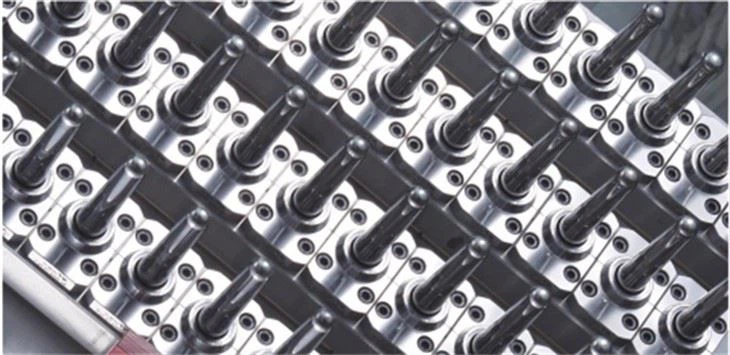
- Cooling System Efficiency: A well - designed cooling system can reduce energy consumption by minimizing the cooling time. Look for features such as optimized cooling channels and efficient water flow rates.
- Hot Runner System Efficiency: The hot runner system should be designed to minimize heat loss and energy consumption. For example, using insulated hot runner components can reduce the energy required to maintain the melt temperature.
9. Compatibility with Different Resins
The Jar Preform Mold should be able to process different types of resins effectively. Different resins have different flow properties, shrinkage rates, and processing temperatures.
- Resin Testing: Conduct tests with different resins to ensure that the mold can produce high - quality preforms consistently. Adjust the process parameters, such as injection temperature and pressure, as needed for each resin.
- Material Compatibility: Ensure that the mold materials are compatible with the resins used. Some resins may be corrosive, so the mold should be made of materials that can resist corrosion.
10. Service and Support
As a supplier, we understand the importance of providing excellent service and support to our customers.
- Technical Support: Our team of experienced engineers can provide technical support for mold installation, operation, and troubleshooting. We can also offer advice on process optimization and mold maintenance.
- Spare Parts Availability: We maintain a stock of spare parts for our Jar Preform Molds to ensure quick replacement in case of any breakdowns. This helps to minimize production downtime.
In conclusion, evaluating the performance of a Jar Preform Mold requires a comprehensive approach that considers multiple factors. By focusing on dimensions and tolerance accuracy, surface finish, cavity balance, cycle time, durability, compatibility with production equipment, production yield, energy efficiency, compatibility with different resins, and service and support, you can ensure that you are getting a high - quality mold that meets your production requirements.
If you are interested in our Pet Preform Mould or Injection Preform Mold products and would like to discuss your specific needs, please feel free to contact us for a detailed consultation. We are committed to providing the best solutions for your preform production.
References
- "Injection Molding Handbook" by O. Olszewski
- "Mold Design for Injection Molding" by Peter F. Bruins
- Industry standards and guidelines for plastic injection molding


