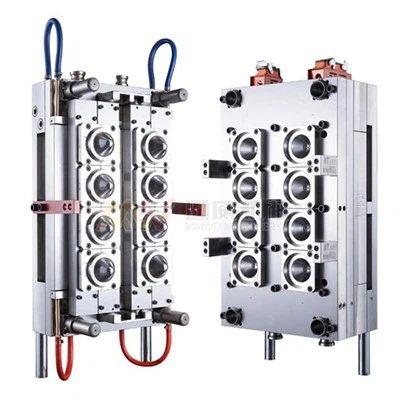
As a supplier of water bottle preforms, I've witnessed firsthand the critical role these preforms play in the production of high - quality water bottles. However, like any manufacturing product, water bottle preforms are prone to certain defects that can significantly impact the final product. In this blog, I'll discuss some of the common defects in water bottle preforms and their potential causes.
1. Surface Defects
1.1 Scratches
Scratches on the surface of water bottle preforms are a prevalent issue. These can occur during the handling, transportation, or storage of the preforms. For instance, if the preforms are not properly packed and come into contact with rough surfaces or sharp objects, scratches may form. Additionally, the machinery used in the production process, such as conveyors or molds, can sometimes have rough edges that cause scratches on the preform surface.
Scratches are not just a cosmetic problem. They can weaken the structural integrity of the preform, making it more likely to break during the blow - molding process. Moreover, in the final water bottle, scratches can create areas where bacteria can accumulate, posing a health risk.
1.2 Haze
Haze is another surface defect that can affect water bottle preforms. It appears as a cloudy or milky appearance on the preform surface. Haze can be caused by several factors, including improper drying of the raw materials before the injection - molding process. If the PET (polyethylene terephthalate) resin contains moisture, it can lead to the formation of haze during the melting and molding process.
Incorrect processing temperatures can also contribute to haze. If the temperature is too high, the PET material may degrade, resulting in a hazy appearance. Hazy preforms can give the final water bottle an unappealing look, which can be a major drawback for consumers.
2. Wall Thickness Variations
2.1 Uneven Wall Thickness
One of the most critical defects in water bottle preforms is uneven wall thickness. This defect can occur due to issues in the injection - molding process. For example, if the mold is not properly designed or maintained, the molten PET material may not flow evenly into all parts of the mold cavity. As a result, some areas of the preform may have a thicker wall, while others may be thinner.
Uneven wall thickness can have a significant impact on the performance of the final water bottle. Thinner areas may be more prone to punctures or leaks, while thicker areas can make the bottle heavier and more expensive to produce. It can also affect the blow - molding process, as the preform may not expand uniformly, leading to a misshapen bottle.
2.2 Thin Spots
Thin spots are a specific type of wall thickness variation. They are areas on the preform where the wall is significantly thinner than the rest of the preform. Thin spots can be caused by factors such as improper gate design in the mold. The gate is the opening through which the molten PET material enters the mold cavity. If the gate is too small or is located in an inappropriate position, it can cause the material to flow unevenly, resulting in thin spots.
Thin spots are a major concern as they can lead to bottle failure during use. A water bottle with thin spots may burst under normal pressure or when dropped, which can be dangerous for consumers.
3. Neck Defects
3.1 Thread Defects
The neck of a water bottle preform is a crucial part, especially when it comes to the closure system. Thread defects are common in water bottle preforms. These can include incomplete threads, misaligned threads, or damaged threads. Incomplete threads may occur if the mold for the neck is not filled properly during the injection - molding process. Misaligned or damaged threads can be caused by issues such as mold wear or improper handling of the preforms.
Thread defects can prevent the water bottle from having a proper seal with the cap. This can lead to leaks, which can be a major problem for both the manufacturer and the consumer. A leaking water bottle can damage the product packaging and can also be unhygienic.
3.2 Neck Finish Issues
Neck finish issues refer to problems with the shape or smoothness of the neck area of the preform. For example, the neck may be misshapen, or there may be rough edges or burrs. These issues can be caused by problems in the mold, such as improper machining or wear and tear.


Neck finish issues can affect the functionality and aesthetics of the final water bottle. A misshapen neck may not fit properly with the cap, while rough edges can be uncomfortable for consumers to handle.
4. Color and Clarity Defects
4.1 Color Variation
Color variation is a defect that can occur when the preforms are supposed to have a specific color. It can be caused by inconsistent mixing of the colorant with the PET resin. If the colorant is not evenly distributed in the resin, some preforms may have a different shade of color compared to others.
Contamination of the raw materials can also lead to color variation. For example, if the resin is contaminated with other materials or if the colorant is of poor quality, it can result in an inconsistent color in the preforms. Color variation can be a problem for brand image, as consumers expect products to have a consistent appearance.
4.2 Lack of Clarity
In some cases, water bottle preforms may lack clarity. This can be due to the same factors that cause haze, such as improper drying of the raw materials or incorrect processing temperatures. A lack of clarity can make the final water bottle look less appealing and can also make it difficult to see the water level inside the bottle.
Impact on the Final Product and Business
These defects in water bottle preforms can have a significant impact on the final water bottle and the business. Defective preforms can lead to a higher rate of product rejection during the manufacturing process, which increases production costs. They can also result in customer complaints and returns, which can damage the brand reputation.
As a water bottle preform supplier, we understand the importance of providing high - quality preforms. We use advanced manufacturing techniques and strict quality control measures to minimize these defects. Our Water Bottle Preform production process is carefully monitored to ensure that each preform meets the highest standards.
We also offer a wide range of preforms, including 3 Gallon Water Bottle Preform and 5 Gallon Water Bottle Preform, to meet the diverse needs of our customers.
If you are in the market for high - quality water bottle preforms, we invite you to contact us for a purchase negotiation. We are committed to providing you with the best products and services to help you succeed in your business.
References
- "Plastic Packaging Technology" by Wilmer A. Jenkins and James P. Harrington
- "PET Packaging: Technology, Processing, Applications and Regulations" by Vikas Mittal