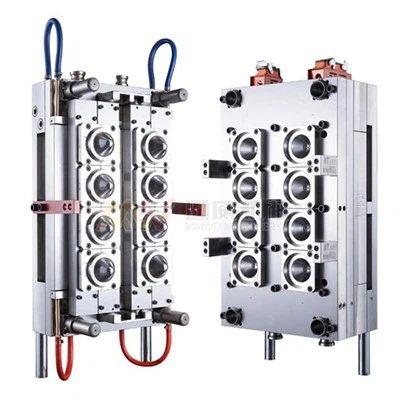
Flash in injection preform molds is a common yet troublesome issue that can significantly impact the quality of preforms and the efficiency of the production process. As a professional Injection Preform Mold supplier, I have witnessed firsthand the challenges that flash presents to manufacturers. In this blog, I will delve into the reasons for flash in injection preform molds, providing insights based on my industry experience and technical knowledge.
1. Mold Design and Manufacturing Defects
- Insufficient Clamping Force: One of the primary reasons for flash is insufficient clamping force during the injection molding process. When the clamping force is not strong enough to keep the mold halves tightly closed, molten plastic can seep out between the parting surfaces, resulting in flash. This can occur if the mold is not properly designed to withstand the pressure generated during injection or if the clamping system of the injection molding machine is not calibrated correctly.
- Poor Parting Surface Design: The parting surface of the mold is where the two halves of the mold meet. If the parting surface is not designed properly, it can create gaps or uneven surfaces that allow plastic to escape. For example, if the parting line is not straight or if there are rough edges, it can lead to flash. Additionally, improper alignment of the mold halves can also cause gaps at the parting surface.
- Worn or Damaged Mold Components: Over time, mold components can wear out or become damaged, especially in high - volume production environments. Worn ejector pins, guides, or other moving parts can create gaps in the mold, allowing plastic to leak out. Damaged mold cavities or cores can also cause flash if they are not repaired or replaced in a timely manner.
2. Material and Processing Factors
- High Melt Temperature: The temperature of the molten plastic plays a crucial role in the injection molding process. If the melt temperature is too high, the plastic becomes more fluid and is more likely to seep out of the mold. High melt temperatures can be caused by improper heating settings on the injection molding machine or by using a plastic resin with a lower melting point than recommended for the mold design.
- Excessive Injection Pressure: Injection pressure is used to force the molten plastic into the mold cavity. However, if the injection pressure is too high, it can overcome the clamping force and cause flash. This can happen when the injection speed is too fast or when the mold is filled too quickly. Additionally, variations in the viscosity of the plastic resin can also lead to fluctuations in injection pressure, increasing the risk of flash.
- Incorrect Material Viscosity: Different plastic resins have different viscosities, which affect how they flow during the injection molding process. If the viscosity of the plastic is too low, it will flow more easily and is more likely to cause flash. On the other hand, if the viscosity is too high, it can lead to incomplete filling of the mold cavity. It is essential to select the right plastic resin with the appropriate viscosity for the mold design and processing conditions.
3. Machine and Operational Issues
- Machine Malfunctions: Injection molding machines are complex pieces of equipment, and malfunctions can occur due to various reasons. Faulty sensors, controllers, or hydraulic systems can lead to inconsistent clamping force, injection pressure, or temperature control. For example, a malfunctioning pressure sensor may not accurately measure the injection pressure, resulting in over - pressurization and flash.
- Operator Error: Human error can also contribute to flash in injection preform molds. Incorrect setting of the injection molding machine parameters, such as temperature, pressure, and speed, can lead to improper filling of the mold and flash. Additionally, improper handling of the mold during setup or maintenance can cause damage to the mold components, leading to flash.
4. Solutions and Preventive Measures
- Mold Design Optimization: To address mold design - related issues, it is crucial to work with experienced mold designers. They can ensure that the mold is designed with the appropriate clamping force requirements, proper parting surface design, and accurate alignment features. Regular maintenance and inspection of the mold can also help detect and address any wear or damage to the mold components before they cause flash.
- Material and Process Control: Controlling the material and processing parameters is essential to prevent flash. This includes carefully selecting the right plastic resin with the appropriate melting point and viscosity, and accurately setting the melt temperature, injection pressure, and injection speed. Regular monitoring of the processing conditions can help identify and correct any deviations that may lead to flash.
- Machine Maintenance and Operator Training: Regular maintenance of the injection molding machine is necessary to ensure its proper functioning. This includes checking and calibrating the clamping force, injection pressure, and temperature control systems. Operator training is also crucial to ensure that they understand the correct operating procedures and can recognize and address potential issues that may lead to flash.
As an Injection Preform Mold supplier, we offer a wide range of high - quality molds, including Hot Runner Preform Mold and Wide Mouth Preform Mold. Our Hot Runner Preform Mold is designed with advanced technology to minimize the risk of flash and ensure consistent product quality.


If you are facing issues with flash in your injection preform molds or are looking for a reliable mold supplier, we encourage you to contact us for a detailed discussion. Our team of experts is ready to provide you with customized solutions based on your specific requirements. We are committed to helping you improve your production efficiency and product quality.
References
- Throne, J. L. (1996). Plastics Process Engineering. Hanser Publishers.
- Rosato, D. V., & Rosato, D. P. (2004). Injection Molding Handbook. Kluwer Academic Publishers.