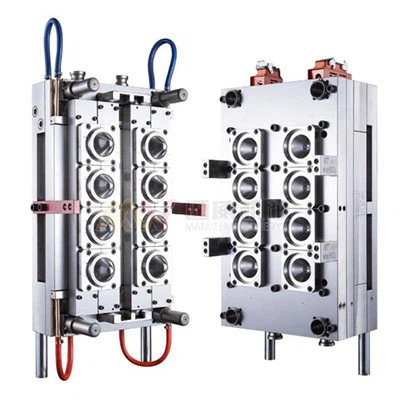
In the dynamic world of bottle manufacturing, the choice between single - stage and two - stage bottle making machines can significantly impact production efficiency, quality, and cost - effectiveness. As a leading supplier of bottle making machines, I've witnessed firsthand the diverse needs of our clients and the unique advantages each machine type offers. In this blog post, we'll explore the differences between single - stage and two - stage bottle making machines, helping you make an informed decision for your business.
Understanding the Basics
Let's start by defining what single - stage and two - stage bottle making machines are.
A single - stage bottle making machine combines the processes of preform injection and bottle blowing into one continuous operation. In a single cycle, the machine takes raw plastic material, melts it, injects it into a preform mold, and then blows the preform into a finished bottle. This all - in - one approach simplifies the production process and is ideal for small - to - medium - scale production runs.
On the other hand, a two - stage bottle making machine separates the preform injection and bottle blowing processes. First, preforms are produced in a dedicated injection molding machine. These preforms are then stored and later transferred to a separate blowing machine for the final bottle formation. This method is more suitable for large - scale production and offers greater flexibility in terms of production scheduling.
Production Efficiency
One of the key differences between the two types of machines lies in their production efficiency.
Single - stage machines are known for their simplicity and quick setup. Since the entire process occurs in one machine, there's no need for additional handling or transportation of preforms between different machines. This reduces the overall production time and minimizes the risk of preform damage during transfer. For businesses that require small batches of bottles with quick turnaround times, single - stage machines are an excellent choice. They can produce a wide range of bottle sizes and shapes, making them versatile for various applications.
However, when it comes to high - volume production, two - stage machines have the upper hand. The separation of the injection and blowing processes allows for parallel production. While the blowing machine is continuously producing bottles from the preforms, the injection machine can be working on creating new preforms. This results in a much higher production rate compared to single - stage machines. For example, a large - scale beverage manufacturer can benefit greatly from the high - speed production capabilities of two - stage machines to meet the constant demand for their products.
Quality of Bottles
The quality of the bottles produced is another important factor to consider.

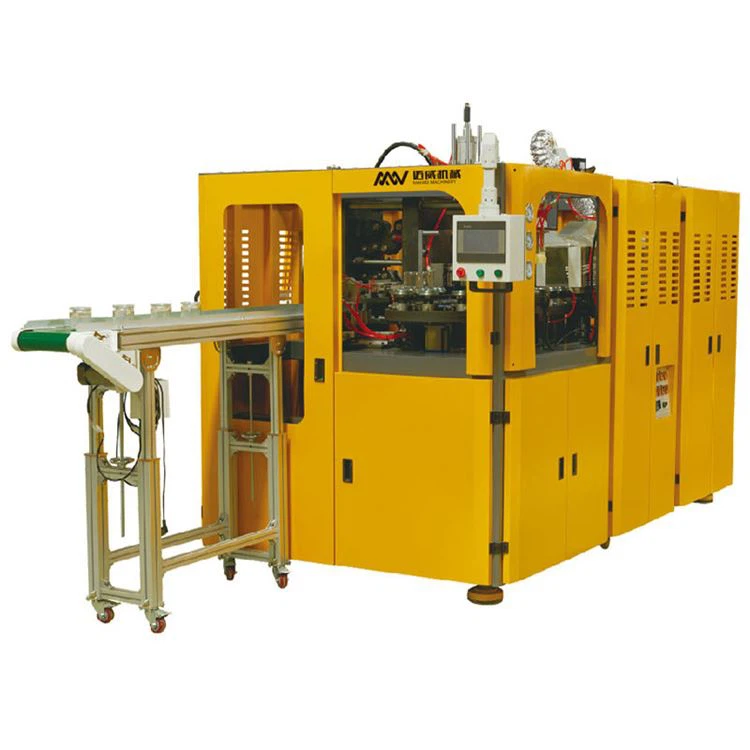
Single - stage machines often produce bottles with a more consistent wall thickness. Since the preform is immediately blown into a bottle without any intermediate storage, there's less chance of the preform cooling unevenly or developing stress points. This leads to a more uniform bottle structure, which is crucial for applications where strength and durability are important, such as in the packaging of chemicals or pharmaceuticals.
Two - stage machines, on the other hand, can offer better control over the preform quality. The dedicated injection molding machine allows for precise control of the preform's dimensions, weight, and material distribution. This precision can be further optimized during the blowing process, resulting in high - quality bottles with excellent clarity and surface finish. For industries like cosmetics and luxury beverages, where the appearance of the bottle is as important as its functionality, two - stage machines are often the preferred choice.
Cost Considerations
Cost is always a significant factor in any business decision.
Single - stage machines generally have a lower upfront cost. They require less floor space and fewer auxiliary equipment compared to two - stage machines. Additionally, the simplified production process reduces labor costs as fewer operators are needed to run the machine. However, the energy consumption of single - stage machines can be relatively high, especially for larger machines. This is because the machine needs to maintain a high temperature throughout the combined injection and blowing process.
Two - stage machines, although more expensive to purchase initially, can be more cost - effective in the long run for large - scale production. The higher production rate means that the cost per bottle is lower. Moreover, the ability to store preforms allows for better inventory management, reducing the risk of production delays due to material shortages. The energy consumption of two - stage machines can also be more efficient as the injection and blowing processes can be optimized separately.
Flexibility and Adaptability
Flexibility in production is crucial for businesses that need to adapt to changing market demands.
Single - stage machines offer great flexibility in terms of product changeover. Since the entire process is contained within one machine, it's relatively easy to switch between different bottle sizes and shapes. This makes them ideal for businesses that produce a variety of products or need to respond quickly to new market trends. For example, a custom bottle manufacturer can use a single - stage machine to produce unique bottle designs for different clients.
Two - stage machines, while less flexible in terms of immediate product changeover, offer more flexibility in terms of production scheduling. The ability to store preforms means that the blowing process can be adjusted according to the market demand. For instance, if there's a sudden increase in the demand for a particular bottle size, the blowing machine can be quickly adjusted to produce more of those bottles from the existing preform inventory.
Applications
Both single - stage and two - stage machines have a wide range of applications.
Single - stage machines are commonly used in industries such as food and beverage packaging for small - scale producers, pharmaceutical packaging for small - batch medications, and the production of custom - made bottles. You can explore our Pet Blow Molding Machine for more details on suitable machines for PET bottle production using the single - stage method.
Two - stage machines are prevalent in large - scale beverage production, cosmetic packaging, and the production of high - volume standard bottles. Our Medicine Bottle Blow Molding Machine and Pc Bottle Making Machine are examples of two - stage machines that are well - suited for these applications.
Conclusion
In conclusion, the choice between single - stage and two - stage bottle making machines depends on various factors such as production volume, bottle quality requirements, cost considerations, flexibility, and application. Single - stage machines are ideal for small - to - medium - scale production, quick turnaround times, and businesses that value simplicity and versatility. Two - stage machines, on the other hand, are better suited for large - scale production, high - quality bottle requirements, and businesses that need greater flexibility in production scheduling.
As a supplier of bottle making machines, we understand that each client has unique needs. We're committed to providing you with the best solution that meets your specific requirements. Whether you're a startup looking for a cost - effective single - stage machine or a large corporation in need of a high - speed two - stage machine, we have the expertise and product range to assist you.
If you're interested in learning more about our bottle making machines or would like to discuss your specific needs, please don't hesitate to contact us. Our team of experts is ready to help you make the right choice for your business.
References
- Blow Molding Handbook, by Rosato, D.V. and Rosato, D.V. Jr.
- Plastics Processing: Modeling and Simulation, by Osswald, T.A. and Turng, L.S.
- Injection Molding Handbook, by Rosato, D.V., Rosato, D.V. Jr., and Bordereau, A.E.