

Hey there! As a preform mould supplier, I've been getting a lot of questions lately about the fatigue resistance of preform moulds. So, I thought I'd take a few minutes to break it down and explain what it is, why it matters, and how we ensure our moulds have top-notch fatigue resistance.
What is Fatigue Resistance?
Let's start with the basics. Fatigue resistance, in the context of preform moulds, is all about how well a mould can handle repeated stress and strain over time without failing. You see, preform moulds are used in the manufacturing process to create plastic preforms, which are then blown into bottles, jars, and other containers. This process involves a lot of pressure, heat, and mechanical forces, and these factors can take a toll on the mould.
Think of it like a car engine. Every time you start your car, the engine goes through a cycle of compression, ignition, and exhaust. Over time, the constant stress and strain on the engine components can cause them to wear out. Similarly, every time a preform mould is used to make a plastic preform, it experiences a cycle of heating, cooling, and pressure changes. If the mould doesn't have good fatigue resistance, these cycles can lead to cracks, deformation, and other types of damage, which can ultimately affect the quality of the preforms and the efficiency of the manufacturing process.
Why Does Fatigue Resistance Matter?
Now that we know what fatigue resistance is, let's talk about why it's so important. There are a few key reasons why fatigue resistance is a critical factor in the performance of preform moulds:
1. Quality of the Preforms
A mould with poor fatigue resistance is more likely to develop defects over time, such as cracks or surface roughness. These defects can transfer to the plastic preforms, resulting in products with inconsistent wall thickness, poor clarity, or other quality issues. On the other hand, a mould with high fatigue resistance can maintain its shape and surface finish over a longer period, ensuring that the preforms produced are of consistent quality.
2. Productivity
When a mould fails due to fatigue, it can cause downtime in the manufacturing process. This means that production has to stop while the mould is repaired or replaced, which can be costly and time-consuming. By using a mould with good fatigue resistance, you can reduce the frequency of mould failures and keep your production line running smoothly, increasing overall productivity.
3. Cost Savings
Investing in a preform mould with high fatigue resistance may cost a bit more upfront, but it can save you money in the long run. Since these moulds last longer and require fewer repairs and replacements, you'll spend less on maintenance and new equipment over time. Additionally, the consistent quality of the preforms produced by a high-fatigue-resistance mould can reduce waste and rework, further lowering your production costs.
How We Ensure High Fatigue Resistance in Our Preform Moulds
At our company, we take fatigue resistance very seriously. We use a combination of advanced materials, precision manufacturing techniques, and rigorous testing to ensure that our preform moulds can withstand the demands of the manufacturing process. Here's a closer look at what we do:
1. Material Selection
The choice of material is crucial when it comes to fatigue resistance. We use high-quality steel alloys that are specifically designed to have excellent mechanical properties, including high strength, hardness, and toughness. These materials can withstand the high pressures and temperature changes associated with preform manufacturing without losing their shape or integrity.
2. Precision Manufacturing
Our manufacturing process is highly precise, using state-of-the-art CNC machining and EDM (electrical discharge machining) techniques to create moulds with tight tolerances and smooth surfaces. This precision helps to reduce stress concentrations in the mould, which can lead to fatigue failure. Additionally, we use advanced heat treatment processes to further enhance the mechanical properties of the mould materials, improving their fatigue resistance.
3. Rigorous Testing
Before we release a preform mould to our customers, we subject it to a series of rigorous tests to ensure that it meets our high standards for fatigue resistance. These tests include simulated production cycles, where the mould is subjected to repeated heating, cooling, and pressure changes to mimic the real-world conditions it will encounter. We also use non-destructive testing methods, such as ultrasonic testing and magnetic particle inspection, to detect any potential defects or cracks in the mould.
Types of Preform Moulds We Offer
We offer a wide range of preform moulds to meet the diverse needs of our customers. Here are a few of our popular products:
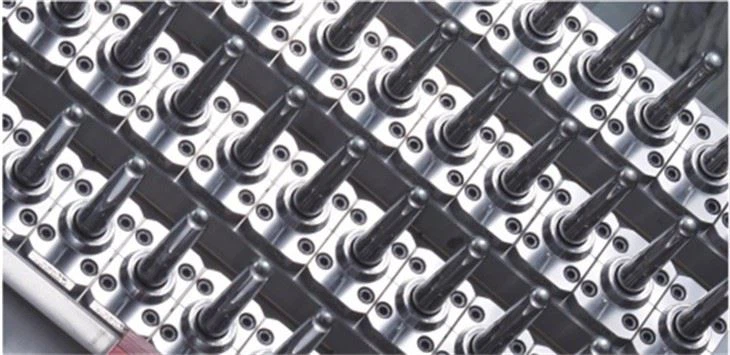
Valve Gate Preform Mold
Our valve gate preform molds are designed to provide precise control over the flow of plastic into the mould cavity, resulting in high-quality preforms with excellent surface finish and consistent wall thickness. These moulds are ideal for applications where a high level of precision is required, such as in the production of pharmaceutical or cosmetic containers.
Valve Gate Preform Mold
Another type of valve gate preform mold we offer is designed for high-speed production. These moulds feature a unique valve gate system that allows for rapid filling of the mould cavity, reducing cycle times and increasing productivity. They are suitable for large-scale manufacturing operations where efficiency is key.
Jar Preform Mold
Our jar preform molds are specifically designed for the production of jars and other wide-mouth containers. These moulds are engineered to produce preforms with the right shape and dimensions to ensure a perfect fit when blown into jars. They are available in a variety of sizes and configurations to meet the specific requirements of our customers.

Contact Us for Your Preform Mould Needs
If you're in the market for a high-quality preform mould with excellent fatigue resistance, we'd love to hear from you. Our team of experts can help you choose the right mould for your specific application and provide you with all the information you need to make an informed decision. Whether you're a small startup or a large multinational corporation, we have the experience and expertise to meet your preform moulding needs.
So, don't hesitate to reach out to us today to start the conversation. We're here to help you take your preform manufacturing to the next level!
References
- "Plastic Injection Molding Handbook" by Dominick V. Rosato, Donald V. Rosato, and Michael G. Rosato
- "Fundamentals of Machine Component Design" by Robert C. Juvinall and Kurt M. Marshek
- Industry standards and best practices for preform mould manufacturing


