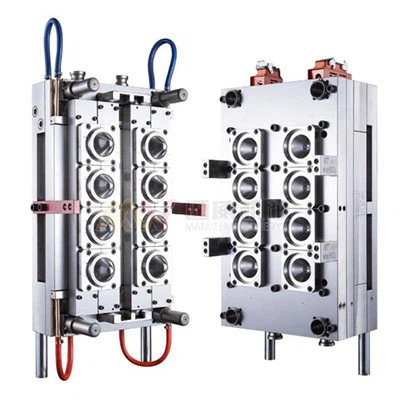
What is the suitable viscosity range of PET resin for a pet preform mould?
As a leading supplier of Pet Preform Mould, I've witnessed firsthand the critical role that the viscosity of PET resin plays in the production of high - quality preforms. In this blog, I'll delve into the suitable viscosity range of PET resin for a pet preform mould, and explain how it impacts the manufacturing process and the final product.
Understanding PET Resin Viscosity
Viscosity is a measure of a fluid's resistance to flow. In the context of PET (Polyethylene Terephthalate) resin, it indicates how easily the molten resin can be injected into the preform mould. The viscosity of PET resin is typically expressed in terms of Intrinsic Viscosity (IV), which is a measure of the molecular weight of the polymer. A higher IV value means a higher molecular weight and a more viscous resin.
The viscosity of PET resin is influenced by several factors, including the resin's molecular structure, the presence of additives, and the processing conditions. For pet preform moulding, the right viscosity is crucial for achieving a uniform wall thickness, good clarity, and sufficient mechanical properties in the final preform.
The Impact of Viscosity on Preform Moulding
Filling the Mould
When the viscosity of the PET resin is too low, the molten resin may flow too quickly during the injection process. This can lead to problems such as flashing, where the resin leaks out of the mould cavity. On the other hand, if the viscosity is too high, the resin may not flow evenly into all parts of the mould, resulting in incomplete filling, short shots, or uneven wall thickness in the preform.
A suitable viscosity range ensures that the resin can fill the mould cavity smoothly and completely, following the intricate shape of the preform mould. This is essential for producing preforms with consistent dimensions and high - quality surfaces.
Molecular Orientation
During the injection moulding process, the flow of the PET resin causes the polymer molecules to orient themselves in the direction of flow. The viscosity of the resin affects the degree of molecular orientation. A resin with an appropriate viscosity allows for optimal molecular orientation, which is beneficial for the mechanical properties of the preform.
Proper molecular orientation can enhance the strength and barrier properties of the preform, making it more resistant to breakage and better at preventing the permeation of gases and liquids. If the viscosity is not within the suitable range, the molecular orientation may be inconsistent, leading to weaker preforms with poor performance.
Cooling and Solidification
The viscosity of the PET resin also influences the cooling and solidification process. A resin with the right viscosity will cool and solidify at an appropriate rate, allowing the preform to maintain its shape and avoid defects such as warping or shrinkage.

If the resin has a very low viscosity, it may cool too quickly, causing internal stresses that can lead to cracking or deformation. Conversely, a highly viscous resin may take longer to cool, increasing the cycle time and potentially reducing production efficiency.
Suitable Viscosity Range for Pet Preform Moulds
In general, the suitable intrinsic viscosity (IV) range of PET resin for pet preform moulding is between 0.70 and 0.85 dL/g. This range provides a good balance between flowability and mechanical properties.
Resins with an IV around 0.70 dL/g have relatively lower viscosity, which means they flow more easily. This can be advantageous for moulds with complex geometries or for high - speed injection moulding processes. However, preforms made from resins with lower IV may have slightly lower mechanical strength and barrier properties.
On the other hand, resins with an IV of around 0.85 dL/g are more viscous. They offer better mechanical properties, such as higher tensile strength and improved barrier performance. But they require more energy and higher injection pressures to fill the mould, and the cycle time may be longer.
It's important to note that the optimal viscosity range can vary depending on the specific requirements of the preform, such as its size, shape, and intended application. For example, preforms for carbonated beverage bottles may require a resin with a slightly higher viscosity to ensure better gas barrier properties, while preforms for non - carbonated drinks or water bottles may be able to use a resin with a lower viscosity.
Selecting the Right PET Resin Viscosity for Your Mould
As a Pet Preform Mould supplier, I often work closely with our customers to help them select the most suitable PET resin viscosity for their specific moulds. Here are some steps to consider:
- Understand the Preform Requirements: Determine the size, shape, and end - use of the preform. This will help you identify the key properties, such as mechanical strength, clarity, and barrier performance, that the preform needs to have.
- Evaluate the Mould Design: Consider the complexity of the mould design, including the number of cavities, the flow channels, and the gate design. A more complex mould may require a resin with better flowability.
- Test Different Resins: Conduct small - scale tests with different PET resins within the suitable viscosity range. Evaluate the performance of the preforms in terms of filling, cooling, and final properties. This will allow you to fine - tune the resin selection.
Our Moulds and Resin Compatibility
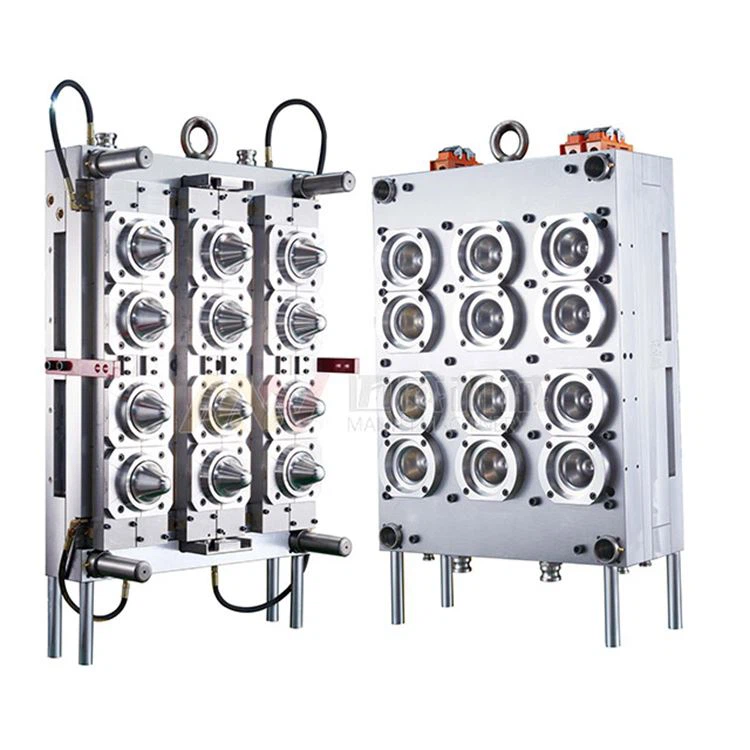
At our company, we specialize in manufacturing high - quality Hot Runner Preform Mold and Injection Preform Mold. Our moulds are designed to work effectively with a wide range of PET resin viscosities within the suitable range.
We use advanced manufacturing techniques and high - precision machining to ensure that our moulds have smooth flow channels and optimal gate designs. This allows for efficient resin flow and uniform filling, regardless of the specific viscosity of the resin.
In addition, our technical support team is always available to provide advice on resin selection and processing parameters. We can help you optimize the injection moulding process to achieve the best results with your chosen PET resin.
Conclusion
The suitable viscosity range of PET resin for a pet preform mould is a critical factor in the production of high - quality preforms. A viscosity range between 0.70 and 0.85 dL/g generally provides a good balance between flowability and mechanical properties. However, the optimal viscosity may vary depending on the specific requirements of the preform and the mould design.
As a trusted Pet Preform Mould supplier, we are committed to helping our customers select the right PET resin and optimize their injection moulding processes. If you are in the market for high - quality pet preform moulds or need advice on resin selection, please feel free to contact us. We look forward to discussing your needs and providing you with the best solutions.
References
- “Handbook of PET Technology” by G. Menges, K. Mohren, and K. Spinnler
- “Injection Molding Handbook” by O. Janssen