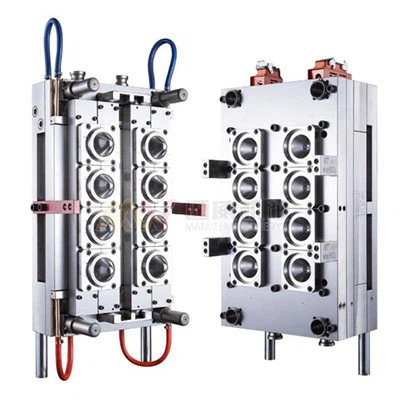
In the dynamic world of preform mould manufacturing, risk management is not just a strategy; it's a necessity for long - term success. As a preform mould supplier, I've navigated through various challenges and learned the ropes of effective risk management. This blog will delve into the key aspects of risk management in preform mould manufacturing, providing insights and practical tips to help you steer clear of potential pitfalls.
Understanding the Risks in Preform Mould Manufacturing
Before we can manage risks, we need to understand what they are. In preform mould manufacturing, risks can be broadly categorized into four main areas: design, material, production, and market risks.
Design Risks
Design is the foundation of any preform mould. Poor design can lead to a host of problems, such as uneven wall thickness, poor gate design, and incorrect cooling channels. These issues can result in defective preforms, increased production costs, and longer lead times. For example, if the cooling channels are not properly designed, the preform may cool unevenly, causing warping and dimensional inaccuracies.
Material Risks
The choice of materials for preform moulds is crucial. Using sub - standard materials can lead to premature wear and tear, reduced mould lifespan, and lower quality preforms. Additionally, material shortages or price fluctuations can disrupt the manufacturing process and increase costs. For instance, if there is a sudden shortage of a specific type of steel used in mould making, it can delay production and force the supplier to look for alternative materials, which may not be as suitable.
Production Risks
Production risks include issues such as machine breakdowns, operator errors, and quality control problems. Machine breakdowns can halt production, leading to delays and increased costs. Operator errors, such as incorrect programming or improper handling of equipment, can also result in defective products. Quality control problems, such as inconsistent preform dimensions or surface defects, can lead to customer dissatisfaction and loss of business.
Market Risks
Market risks are related to changes in customer demand, competition, and technological advancements. A sudden drop in customer demand can lead to excess inventory and financial losses. Intense competition can force suppliers to lower prices, which may affect profitability. Technological advancements can render existing moulds obsolete, requiring suppliers to invest in new equipment and technologies.
Strategies for Managing Risks
Now that we've identified the risks, let's explore some strategies for managing them.
Design Risk Management
- Collaborative Design Process: Engage with customers early in the design process to understand their requirements and expectations. This can help avoid design errors and ensure that the final product meets the customer's needs. For example, by having in - depth discussions with the customer about the intended use of the preform, we can design the mould to produce preforms with the appropriate wall thickness and shape.
- Computer - Aided Design (CAD) and Simulation: Use CAD software to create detailed 3D models of the mould and simulate the manufacturing process. This can help identify potential design flaws before the mould is actually manufactured, saving time and money. For instance, simulation can predict how the preform will cool and solidify, allowing us to optimize the cooling channel design.
Material Risk Management
- Supplier Evaluation and Selection: Carefully evaluate potential material suppliers based on their quality, reliability, and pricing. Establish long - term partnerships with reliable suppliers to ensure a stable supply of high - quality materials. For example, we can conduct on - site inspections of suppliers' facilities and review their quality control processes.
- Inventory Management: Maintain an appropriate level of inventory to buffer against material shortages. However, avoid overstocking, as it can tie up capital and increase storage costs. Implement inventory management systems to track material usage and reorder levels.
Production Risk Management
- Preventive Maintenance: Develop a preventive maintenance schedule for all manufacturing equipment. Regular maintenance can help identify and fix potential problems before they cause breakdowns, reducing downtime and increasing productivity. For example, we can schedule regular inspections and servicing of injection moulding machines.
- Operator Training and Certification: Provide comprehensive training to operators to ensure they have the necessary skills and knowledge to operate the equipment safely and efficiently. Encourage operators to obtain relevant certifications to demonstrate their proficiency.
- Quality Control Systems: Implement strict quality control systems throughout the production process. Use inspection tools and techniques, such as coordinate measuring machines (CMMs) and optical inspection systems, to detect and correct any quality issues early.
Market Risk Management
- Market Research: Conduct regular market research to stay informed about industry trends, customer demand, and competitor activities. This can help us anticipate changes in the market and adjust our strategies accordingly. For example, by monitoring emerging technologies, we can invest in research and development to stay ahead of the competition.
- Diversification: Diversify our product portfolio and customer base to reduce our dependence on a single product or customer. This can help mitigate the impact of market fluctuations. For instance, we can offer different types of preform moulds, such as Hot Runner Preform Mold, Valve Gate Preform Mold, and Pet Preform Mould.
Case Studies
Let's look at a couple of case studies to illustrate how effective risk management can make a difference in preform mould manufacturing.
Case Study 1: Design Risk Management
A customer approached us with a request for a new preform mould for a unique beverage bottle. By engaging in a collaborative design process, we were able to understand the customer's specific requirements, such as the shape of the bottle and the desired filling volume. We used CAD and simulation software to design the mould and optimize the cooling channels. As a result, the final product had excellent wall thickness uniformity and a smooth surface finish. The customer was very satisfied with the quality of the preforms, and we were able to build a long - term relationship with them.


Case Study 2: Market Risk Management
A few years ago, there was a sudden drop in demand for a particular type of preform mould due to a change in consumer preferences. However, because we had diversified our product portfolio and customer base, we were able to offset the loss by focusing on other types of moulds and serving different industries. This allowed us to maintain our profitability and continue to grow our business.
Conclusion
Risk management is an ongoing process in preform mould manufacturing. By understanding the risks, implementing effective strategies, and learning from real - world case studies, we can minimize the impact of potential problems and ensure the long - term success of our business.
If you're in the market for high - quality preform moulds and want to work with a supplier who understands the importance of risk management, we'd love to hear from you. Contact us to discuss your specific requirements and explore how we can help you achieve your goals.
References
- "Mould Design and Manufacturing Handbook"
- "Risk Management in Manufacturing Industries"
- Industry reports on preform mould manufacturing trends